


SULAIMANI, Kurdistan Region – “If my project is used in Kurdistan, peoples’ lives will be better protected,” says Hasan Ali, whose doctoral thesis was awarded a distinction this week. He is a Kurd who went to Poland four years ago to pursue his postgraduate studies.
He chose to study in Poland for two reasons. “The quality of education in this country is high and tuition fees are cheap here too. Compared to other European countries, people can study here for cheaper. I sponsored my studies by myself.”
He studies at the University of Technology in the city of Poznan. In his thesis, he asks: “How can we review our engineering system – designs and strengthening important buildings in cities to withstand explosions and terrorist activities. In my research, I have invented a system that has a strong ability to protect buildings that through this system will absorb energy from explosions. This is an invention in the patent process.”
He hopes his research can help engineers minimize casualties when explosions occur near buildings.
This kind of engineering is typically used in military complexes, but developed countries have found ways to use it in civilian buildings to protect them from terrorist attack.
“This review or redesign doesn’t reduce the beauty of cities. Their look will be protected. More work is being done to invent new systems and material,” he said.
Academic supervisors have warmly welcomed his thesis and invention, which they think will help thousands of Iraqi families as terrorism and ISIS remnants still threaten the country.
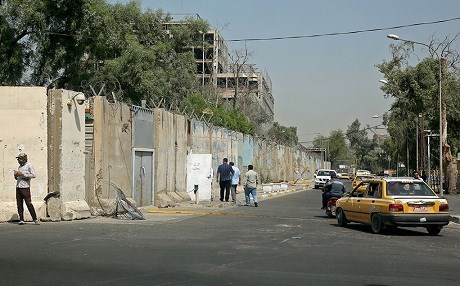
Hasan said he is sure if his project is implemented in Iraq it will “protect peoples’ lives and will reduce material damage. And this will lead to a reduction in the number of defensive concrete walls in cities or these walls will no longer be needed. This will also restore an urban image to cities and will clean the environment as well.”
He denies the innovation is merely a replica of the system used in developed countries.
“Developed countries constantly work on strengthening their buildings, with each using different materials. In cooperation with the competent staff of this university, I managed to create a new system which has not yet been used in any country,” he said.
Hasan is from the city of Kirkuk, but completed high school and his bachelor’s degree in Erbil.
Two large Polish companies have taken an interest in Hasan’s project.
“Doors and windows are the weakest parts of a building. The new system I have designed in my thesis will help protect people from the danger of explosions and other terrorist activities. We should rebuild our buildings with new systems and designs as there are increasing numbers of natural incidents like earthquakes in addition to explosions and terrorist activities,” he said.
“Factories should be built in Kurdistan to make the materials needed for this system.”
Zyad Raouf, the representative of the Kurdistan Regional Government (KRG) in Warsaw, praised Hasan’s work.
“Dr Hasan has conducted his research in the area of designing and constructing towers and buildings in a way to withstand explosions and natural disasters. His research and results are new to the science of civil engineering in Poland, Europe and the world,” Raouf said.
He chose to study in Poland for two reasons. “The quality of education in this country is high and tuition fees are cheap here too. Compared to other European countries, people can study here for cheaper. I sponsored my studies by myself.”
He studies at the University of Technology in the city of Poznan. In his thesis, he asks: “How can we review our engineering system – designs and strengthening important buildings in cities to withstand explosions and terrorist activities. In my research, I have invented a system that has a strong ability to protect buildings that through this system will absorb energy from explosions. This is an invention in the patent process.”
He hopes his research can help engineers minimize casualties when explosions occur near buildings.
This kind of engineering is typically used in military complexes, but developed countries have found ways to use it in civilian buildings to protect them from terrorist attack.
“This review or redesign doesn’t reduce the beauty of cities. Their look will be protected. More work is being done to invent new systems and material,” he said.
Academic supervisors have warmly welcomed his thesis and invention, which they think will help thousands of Iraqi families as terrorism and ISIS remnants still threaten the country.
Hasan said he is sure if his project is implemented in Iraq it will “protect peoples’ lives and will reduce material damage. And this will lead to a reduction in the number of defensive concrete walls in cities or these walls will no longer be needed. This will also restore an urban image to cities and will clean the environment as well.”
He denies the innovation is merely a replica of the system used in developed countries.
“Developed countries constantly work on strengthening their buildings, with each using different materials. In cooperation with the competent staff of this university, I managed to create a new system which has not yet been used in any country,” he said.
Hasan is from the city of Kirkuk, but completed high school and his bachelor’s degree in Erbil.
Two large Polish companies have taken an interest in Hasan’s project.
“Doors and windows are the weakest parts of a building. The new system I have designed in my thesis will help protect people from the danger of explosions and other terrorist activities. We should rebuild our buildings with new systems and designs as there are increasing numbers of natural incidents like earthquakes in addition to explosions and terrorist activities,” he said.
“Factories should be built in Kurdistan to make the materials needed for this system.”
Zyad Raouf, the representative of the Kurdistan Regional Government (KRG) in Warsaw, praised Hasan’s work.
“Dr Hasan has conducted his research in the area of designing and constructing towers and buildings in a way to withstand explosions and natural disasters. His research and results are new to the science of civil engineering in Poland, Europe and the world,” Raouf said.
Comments
Rudaw moderates all comments submitted on our website. We welcome comments which are relevant to the article and encourage further discussion about the issues that matter to you. We also welcome constructive criticism about Rudaw.
To be approved for publication, however, your comments must meet our community guidelines.
We will not tolerate the following: profanity, threats, personal attacks, vulgarity, abuse (such as sexism, racism, homophobia or xenophobia), or commercial or personal promotion.
Comments that do not meet our guidelines will be rejected. Comments are not edited – they are either approved or rejected.
Post a comment