



Error occured during this request! Please try again later.
WASHINGTON, D.C. — As Syrian Democratic Forces (SDF) supported by the US-led international coalition continue to squeeze Islamic State (ISIS) fighters into their last stronghold in Syria of al-Baghouz, the group has effectively lost its "caliphate" but will return to insurgency tactics.
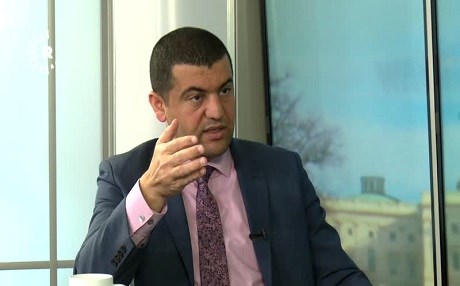
"Nobody expected this many people to stay until the end in that piece of land between Iraq and Syria," said Hassan Hassan.
He also contributed underestimations of remaining ISIS fighters to a "lack of visibility" among the coalition.
"They thought ISIS is already finished after Raqqa," Hassan said, referring to the international coalition.
He argued even ISIS was unsure whether Baghouz would be the spot of their final battle against the SDF and coalition.
Hassan mentions that ISIS was active on multiple fronts in southern Hasaka and there were even talks of an Iraqi Security Forces offensive across the border.
"I don't think ISIS knew Baghouz would be the last stand, but they prepared for this kind of scenario in different areas. So if wouldn't have been Baghouz, it would have been probably either Hajin or Sousa or Shafa..." he surmised.
Hassan predicts the next phase for ISIS is "insurgency" similar to conditions in 2014.
Shift in Sunni extremism
Hassan argues that jihadism by Sunnis has become more localized, offering examples in Syria, Iraq, Yemen, Afghanistan and Libya.
"What happened from 2011 until now is we started to see the jihadis and jihadists groups across the region — Sunni groups — being submerged in local struggles, in local conflicts," he said.
"It changed their priorities. Their enemies are local."
He offers the example of the difference in Osama bin Laden and Abu Bakir al-Baghdadi's forms of jihadism.
"Nobody expected this many people to stay until the end in that piece of land between Iraq and Syria," said Hassan Hassan.
He also contributed underestimations of remaining ISIS fighters to a "lack of visibility" among the coalition.
"They thought ISIS is already finished after Raqqa," Hassan said, referring to the international coalition.
He argued even ISIS was unsure whether Baghouz would be the spot of their final battle against the SDF and coalition.
Hassan mentions that ISIS was active on multiple fronts in southern Hasaka and there were even talks of an Iraqi Security Forces offensive across the border.
"I don't think ISIS knew Baghouz would be the last stand, but they prepared for this kind of scenario in different areas. So if wouldn't have been Baghouz, it would have been probably either Hajin or Sousa or Shafa..." he surmised.
Hassan predicts the next phase for ISIS is "insurgency" similar to conditions in 2014.
Shift in Sunni extremism
Hassan argues that jihadism by Sunnis has become more localized, offering examples in Syria, Iraq, Yemen, Afghanistan and Libya.
"What happened from 2011 until now is we started to see the jihadis and jihadists groups across the region — Sunni groups — being submerged in local struggles, in local conflicts," he said.
"It changed their priorities. Their enemies are local."
He offers the example of the difference in Osama bin Laden and Abu Bakir al-Baghdadi's forms of jihadism.
Comments
Rudaw moderates all comments submitted on our website. We welcome comments which are relevant to the article and encourage further discussion about the issues that matter to you. We also welcome constructive criticism about Rudaw.
To be approved for publication, however, your comments must meet our community guidelines.
We will not tolerate the following: profanity, threats, personal attacks, vulgarity, abuse (such as sexism, racism, homophobia or xenophobia), or commercial or personal promotion.
Comments that do not meet our guidelines will be rejected. Comments are not edited – they are either approved or rejected.
Post a comment