کوردیKURDÎENGLISHTÜRKÇEعربي
Rudaw Logo
Live
Kurdistan
Middle East
OpinionsAnalysisWorldECONOMYInterviewCultureMultimedia
Live
Rudaw

Download the Rudaw app

App StoreGoogle Play
Privacy Policy•Terms of Use

© 2026 All rights reserved.

Rudaw

Download the Rudaw app

App StoreGoogle Play
Privacy PolicyTerms of Use

© 2026 All rights reserved.

Iraqi Prime Minister Haider al-Abadi chairs a meeting on the topic of support for the Hashd al-Shaabi in Baghdad on Saturday. Photo: Iraqi PMO

Iraqi Prime Minister Haider al-Abadi chairs a meeting on the topic of support for the Hashd al-Shaabi in Baghdad on Saturday. Photo: Iraqi PMO

middleeast

Iraqi PM Abadi: Hashd al-Shaabi is from us and we are from them

RUDAW English

RUDAW English

22-07-2017
Listen
0:00
0:00
Text Size
RUDAW English
RUDAW English22-07-2017

Related Articles

Trump backs Iraqi PM Zaidi’s efforts to assert state authority, disarm factions
World27-11-2026

Trump backs Iraqi PM Zaidi’s efforts to assert state authority, disarm factions

‘We are still alive’: Baghdad Jewish museum evokes mixed reactions, memories from former students, visitors
Iraq27-11-2026

‘We are still alive’: Baghdad Jewish museum evokes mixed reactions, memories from former students, visitors

Australia sanctions two men accused of orchestrating Iran-backed attacks on Jewish sites
World27-11-2026

Australia sanctions two men accused of orchestrating Iran-backed attacks on Jewish sites

ERBIL, Kurdistan Region - The Iraqi prime minister described the Shiite Hashd al-Shaabi as a neutral party and said it was his government's duty to defend them. 

After meeting with high-ranking commanders of the Hashd al-Shaabi on Saturday, Haider al-Abadi, the Iraqi premier and commander of all Iraqi armed forces, said the Hashd group "is a security, main and neutral institution and will stay within the framework of the Iraqi state."


Abadi stressed "it is our duty to protect them."

He added "the Hashd is from us and we are from them. And the state is commanding the security system in order to preserve the security of the community."

Last week, Abadi declared in a press release that they would increase the budget for Hashd.

The 100,000-estimated-strong Shiite force played major roles in evicting ISIS in many areas of the Anbar and Diyala province. Since the Mosul operation to liberate the city from ISIS was launched in October 2016, the Hashd has been tasked to fight ISIS in west Mosul and into the direction of the Turkmen populated town of Tal Afar, still under ISIS control.

And in a wide-scale operation by the group in May, they defeated ISIS in the southern parts of the Shingal region and in Baaj town, advancing to the Syrian border.


A Yezidi commander in Hashd announced preparations earlier this month to politically administrate areas of the Shingal region, which local provincial officials questioned the legality of.

It is against Iraqi law for military members to hold positions in the parliament, also a problem that is seemingly coming to a head before the anticipated 2018 elections.


The Hashd al-Shaabi, or the Popular Mobilization Force, was established in the wake of ISIS’ rampage across Iraq as the Shiite Grand Ayatollah Ali Sistani called on his followers to defend the country against the group. 

The paramilitary, which consists of more than 60 smaller mostly-Shiite groupings, was officially funded and brought under the umbrella of the army after the Iraqi parliament voted to do so last December.

Related Articles

Trump backs Iraqi PM Zaidi’s efforts to assert state authority, disarm factions
World27-11-2026

Trump backs Iraqi PM Zaidi’s efforts to assert state authority, disarm factions

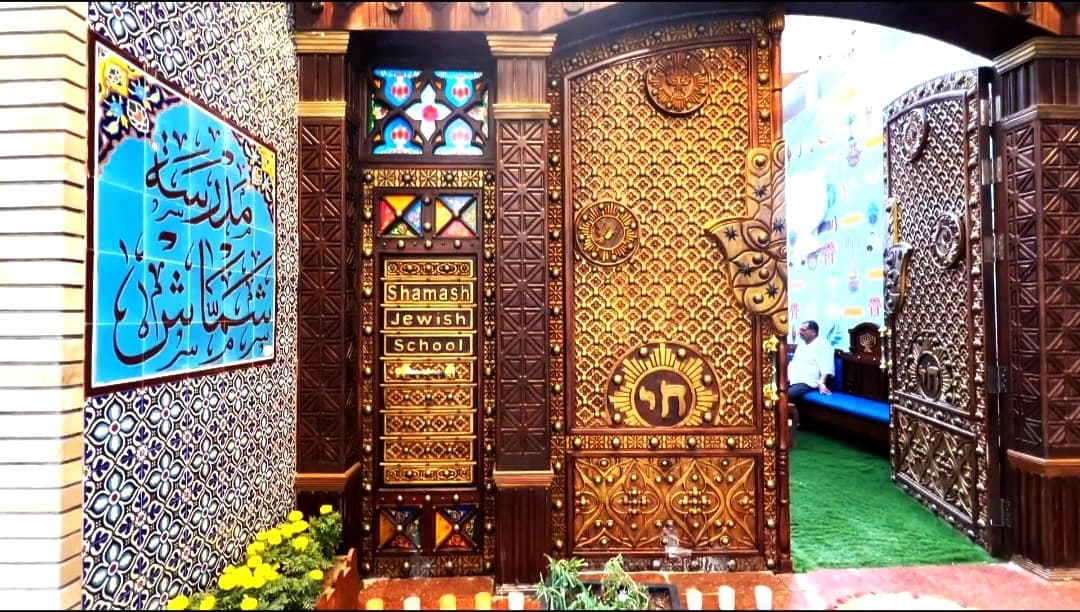
‘We are still alive’: Baghdad Jewish museum evokes mixed reactions, memories from former students, visitors
Iraq27-11-2026

‘We are still alive’: Baghdad Jewish museum evokes mixed reactions, memories from former students, visitors

Australia sanctions two men accused of orchestrating Iran-backed attacks on Jewish sites
World27-11-2026

Australia sanctions two men accused of orchestrating Iran-backed attacks on Jewish sites

Questions