



Error occured during this request! Please try again later.
The memory of once obvious results that were disproved haunts anyone predicting elections. My rational side inclines to thinking the Conservatives will pull off the Mother of all Landslides and I am clear that Labour will not win.
Foreign policy may not matter much in the election but underpins voters' assessments of the credibility of competing leaders. Labour leader, Jeremy Corbyn will weaponise Saddam's non-existent weapons of mass destruction to demonstrate that he was on the right side of history. This will consolidate his internal party support but make little difference because the decision was made thirteen years ago and PM May has said that 'the days of Britain and America intervening in sovereign countries in an attempt to remake the world in our own image are decisively over.' It will be fighting a phantom and does little to overcome widespread worries about his instincts on foreign and security policy.
Labour is also lumbered with a non-credible twin track policy on the nuclear deterrent. The Leader has one policy and the party has another. Corbyn opposes nuclear weapons but senior party leaders insist that Labour supports the deterrent. This is the worst of all worlds.
There is also what I call the Baltic Criterion or the Tallinn Test - what would PM Corbyn do if Russia attacked Estonia, for example? My guess is that he would refuse firm action and take refuge in bland bromides about political solutions. Such wobbling makes it more likely that Russia would chance its arm. The stop the war candidate could encourage aggression.
Corbyn has much experience in foreign issues but the question is how he processes the facts amassed over decades of criss-crossing the world, including Kurdistan in the early 1990s. For instance, he has argued that Nato should have been wound up at the end of the Cold War and complains, as Russia does, about how Nato was extended to cover the Baltic States and Eastern Europe. Using the passive formulation shows he does not understand that joining Nato was the wish of peoples who are not pawns without rights of their own.
Apart from the bomb, Corbyn will largely determine the tone and content of the manifesto. It will, if I am right about Labour losing, be seen as his defeat. This could have profound consequences for Labour's post-election battle.
Corbyn won two years ago because the party's ideological boundaries were breached and a candidate with negligible parliamentary support was allowed on to the ballot paper. The journalist Stephen Bush memorably said the choice for party members when they elected Corbyn was like whether they should go to the gym or enjoy a curry - head or heart. If I am right, that option will lead to electoral meltdown and Tony Blair cannot be blamed. There will be a bare knuckle fight to take back control from Corbyn and his supporters.
The factional fight would be fraught and the longer term battle to regain electoral competitiveness even harder given the likely size of the Conservative victory. Some say Labour could go from 229 to between 110 and 150 seats out of 650.
One Conservative MP has cautiously reminded me about the 1992 election when John Major surprisingly secured a sensational victory only to suffer tremendous economic setbacks, divisions (over Europe) and political scandals that resulted in Blair's landslide in 1997. Looking back, Labour was lucky to avoid victory and facing crises which increasingly shredded the authority of Major's government.
A Conservative government with a larger majority in 2017 will fully own the Brexit process and failure could be punished. Large majorities are as dangerous as small ones. The lack of an effective opposition could tempt tired and hubristic ministers to go too far and meet their nemeses.
The huge difference, however, between Labour's comeback in 1997 and the next election in 2021/22 is that Labour was not far behind and Blair was exceptionally well-placed to lead a revival. That requires an ideological reset that transcends Blairism whose specific policies better suited circumstances of a previous generation but which, minus Corbyn's hard left cul de sac, must be completely rethought for the age of Brexit that could also prompt a radical reassessment of the UK's political economy. The Labour leader capable of doing that may not yet be an MP or it could be that the Conservatives themselves make the most of Brexit and own UK politics for a good generation. The next few weeks are crucial to these and other futures.
Foreign policy may not matter much in the election but underpins voters' assessments of the credibility of competing leaders. Labour leader, Jeremy Corbyn will weaponise Saddam's non-existent weapons of mass destruction to demonstrate that he was on the right side of history. This will consolidate his internal party support but make little difference because the decision was made thirteen years ago and PM May has said that 'the days of Britain and America intervening in sovereign countries in an attempt to remake the world in our own image are decisively over.' It will be fighting a phantom and does little to overcome widespread worries about his instincts on foreign and security policy.
Labour is also lumbered with a non-credible twin track policy on the nuclear deterrent. The Leader has one policy and the party has another. Corbyn opposes nuclear weapons but senior party leaders insist that Labour supports the deterrent. This is the worst of all worlds.
There is also what I call the Baltic Criterion or the Tallinn Test - what would PM Corbyn do if Russia attacked Estonia, for example? My guess is that he would refuse firm action and take refuge in bland bromides about political solutions. Such wobbling makes it more likely that Russia would chance its arm. The stop the war candidate could encourage aggression.
Corbyn has much experience in foreign issues but the question is how he processes the facts amassed over decades of criss-crossing the world, including Kurdistan in the early 1990s. For instance, he has argued that Nato should have been wound up at the end of the Cold War and complains, as Russia does, about how Nato was extended to cover the Baltic States and Eastern Europe. Using the passive formulation shows he does not understand that joining Nato was the wish of peoples who are not pawns without rights of their own.
Apart from the bomb, Corbyn will largely determine the tone and content of the manifesto. It will, if I am right about Labour losing, be seen as his defeat. This could have profound consequences for Labour's post-election battle.
Corbyn won two years ago because the party's ideological boundaries were breached and a candidate with negligible parliamentary support was allowed on to the ballot paper. The journalist Stephen Bush memorably said the choice for party members when they elected Corbyn was like whether they should go to the gym or enjoy a curry - head or heart. If I am right, that option will lead to electoral meltdown and Tony Blair cannot be blamed. There will be a bare knuckle fight to take back control from Corbyn and his supporters.
The factional fight would be fraught and the longer term battle to regain electoral competitiveness even harder given the likely size of the Conservative victory. Some say Labour could go from 229 to between 110 and 150 seats out of 650.
One Conservative MP has cautiously reminded me about the 1992 election when John Major surprisingly secured a sensational victory only to suffer tremendous economic setbacks, divisions (over Europe) and political scandals that resulted in Blair's landslide in 1997. Looking back, Labour was lucky to avoid victory and facing crises which increasingly shredded the authority of Major's government.
A Conservative government with a larger majority in 2017 will fully own the Brexit process and failure could be punished. Large majorities are as dangerous as small ones. The lack of an effective opposition could tempt tired and hubristic ministers to go too far and meet their nemeses.
The huge difference, however, between Labour's comeback in 1997 and the next election in 2021/22 is that Labour was not far behind and Blair was exceptionally well-placed to lead a revival. That requires an ideological reset that transcends Blairism whose specific policies better suited circumstances of a previous generation but which, minus Corbyn's hard left cul de sac, must be completely rethought for the age of Brexit that could also prompt a radical reassessment of the UK's political economy. The Labour leader capable of doing that may not yet be an MP or it could be that the Conservatives themselves make the most of Brexit and own UK politics for a good generation. The next few weeks are crucial to these and other futures.
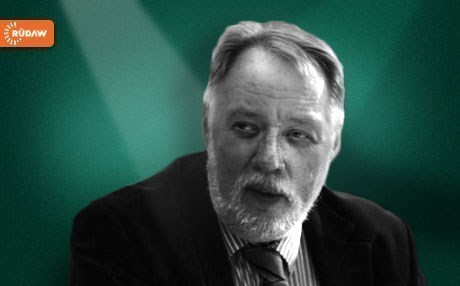
Gary Kent became the Director of the all-party parliamentary group on the Kurdistan Region in 2007 but the group has been formally dissolved for the duration of the UK general election. He writes in a strictly personal capacity.
Gary Kent is the director of All Party Parliamentary Group (APPG). He writes this column for Rudaw in a personal capacity. The address for the all-party group is appgkurdistan@gmail.com.
The views expressed in this article are those of the author and do not necessarily reflect the position of Rudaw.
Comments
Rudaw moderates all comments submitted on our website. We welcome comments which are relevant to the article and encourage further discussion about the issues that matter to you. We also welcome constructive criticism about Rudaw.
To be approved for publication, however, your comments must meet our community guidelines.
We will not tolerate the following: profanity, threats, personal attacks, vulgarity, abuse (such as sexism, racism, homophobia or xenophobia), or commercial or personal promotion.
Comments that do not meet our guidelines will be rejected. Comments are not edited – they are either approved or rejected.
Post a comment