Alistair Burt's offer to temporarily retake his position as Middle East minister, despite resigning over Brexit, did not in the end come about but seemed to prompt the prime minister to make a fresh appointment after a vacancy of nearly two months.
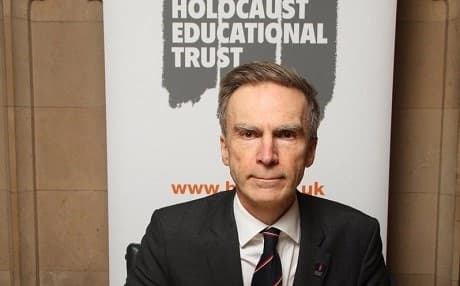
The new minister is Dr Andrew Murrison, who was the chairman of the Northern Ireland Affairs Committee, having previously been a minister in the Northern Ireland Office.
That ministry is one of the most powerful in times of direct rule because its ministerial team are basically running a small country and cover many more policy areas than a normal department. Experience of a divided society gives ministers object lessons in conflict resolution and efforts to overcome historical enmities.
I first met the new minister at a meeting in October 2014 of the British-Irish Parliamentary Assembly, which brings together parliamentarians from the UK, Ireland and other parts of what is known as the British archipelago. For nearly 30 years, it has done much to create dialogue between the two major nations of Ireland and the UK, whose relations were once fraught but which are now warm, although Brexit is a major challenge.
Minister Murrison who was then the prime minister's envoy on the Great War centenary, told me of his hope that understanding the complexity of 1916 – the Somme and the Uprising – would enable a shared understanding to emerge by "addressing history as objectively as possible."
The same can be said about work in the Middle East, where 1916 was also the centenary of the Sykes-Picot agreement and with a few more memorable anniversaries to come.
Dr Murrison was also in the Royal Navy, served in Iraq in 2003 and has been the minister for International Security Strategy in the Ministry of Defence and a prime ministerial trade envoy to Tunisia and Morocco.
This political hinterland will prove very useful in his new post where history is paramount in the present and needs to be precise, as we have seen in recent statements from the Foreign Office on Kurdistan.
First, a relatively minor difference. The Foreign Office issued a formal statement on Anfal Day in April. It now does this every year following an agreement made by the then Middle East minister, Alistair Burt and his Labour counterpart, Ian Lucas, when the APPG secured and won official parliamentary recognition of the Anfal genocide in 2013.
The marking of Anfal has taken various forms in these last few years and once included a minister speaking at a public meeting organised by the KRG High Representation.
The government did not want to formally recognise the genocide on the grounds that its policy is that genocides need to be recognised judicially rather than politically.
We can park that difference and hope that a future government will change its mind. But, without wishing to be churlish, I question the terms of the statement, which said: "Today marks the 31st anniversary of the Anfal Campaign, Saddam Hussein’s brutal assault against the Kurdish people in Iraq, in which between fifty and one hundred thousand men, women and children were slaughtered. Countless others were driven from their homes. On this poignant occasion, our thoughts are with those families mourning loved ones.
In recent years the people of Iraq, including those of the Kurdistan Region of Iraq, have faced a new threat in the form of Daesh [the Islamic State] – a barbaric organisation that has sought to propagate a hateful ideology. The UK is proud to have stood by the Iraqi people in the fight against Daesh, and we will continue to support them in building a peaceful and prosperous future."
I note the FCO's insistence on using its own figures of the numbers killed rather than the figure most often used in Kurdistan of 182,000 deaths. Perhaps it would have been better to talk in vaguer terms about many thousands but I was more disappointed that the statement did not contain the sometimes stated policy of supporting a strong KRG within a unified Iraq.
The second difference is more serious. In the Westminster Hall debate in March on bilateral relations with the Kurdistan Region, the Minister for Africa Harriett Baldwin, who was standing in for Burt, said of the 2017 referendum that "We believe that any referendum or political process towards independence must be taken as a result of an agreement with Baghdad and in line with the Iraqi constitution." However, there is nothing in the Iraqi constitution that mandates any agreement on holding a referendum in agreement with the federal government, although there had been prior discussions on this between Erbil and Baghdad.
Baldwin went on to say that the UK "continues to encourage the Iraqi Government to resolve outstanding disputes with the Kurdistan Regional Government, and we continue to encourage the Kurdistan Regional Government to respect the Iraqi federal court ruling that the referendum was unconstitutional."
However, the federal court precedes the 2005 constitution and no Federal Supreme Court has been established within the terms of that constitution, which stipulates that it is the only body that can adjudicate issues between the federal government and the regions and governorates.
We have moved on since the referendum but clarity of analysis remain vital. I fully accept that the priority is building better relations between Erbil and Baghdad based on the full implementation of the Iraqi constitution. I feel sure that a new minister who has been dealing with the most sensitive issues of Northern Ireland and Anglo-Irish relations as well as international security will see its importance.
* The new minister took part in his first session of oral questions by MPs on foreign affairs today. APPG Vice-Chair Mary Glindon MP asked him to finalise the long delayed official visit by the KRG President and Prime Minister to the UK to boost the important bilateral relationship with a strong KRG in a federal Iraq. The visit has been on the cards for some time but has been waiting the formation of the 9th cabinet. Murrison seemed open to the idea and Mary Glindon's intervention could renew the urgency of such a visit, which will be the first one since May 2014 when there was detailed discussion of improving and increasing the bilateral relationship but which was the overshadowed by Daesh capture of Mosul and years of war.
 | Gary Kent is the Secretary of the All Party Parliamentary Group (APPG) and a Fellow of Soran University. He writes this column for Rudaw in a personal capacity. The address for the all-party group is appgkurdistan@gmail.com.
|