


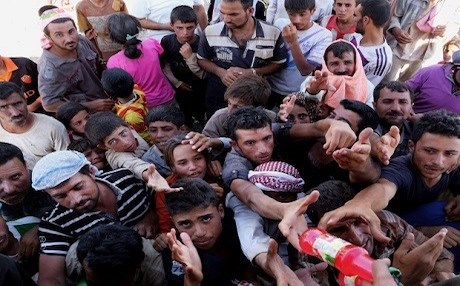
ERBIL, Kurdistan Region — With Kurdish officials pleading for humanitarian assistance, and a shortage of mental health services available in the Kurdistan Region and in Iraq, Canada announced its plans to provide refuge to approximately 1,200 Yezidis and other survivors of ISIS from inside and outside of Iraq by the end of the year, its minister of immigration announced.
“Our Government is committed to offering protection to survivors of Daesh, and we are committed to taking the necessary time to do this right,” said Ahmed Hussein in a statement on Tuesday, using the Arabic acronym for ISIS.
“Our operation aims to bring to Canada those at the greatest risk, and to give them the support and services they need to make a new home, and to restart their lives here.”
Nearly 400 government-assisted refugees will have arrived by Wednesday just four months after the House of Commons passed the motion which is expected to cost $28 million.
“We’re taking steps to make sure Yezidi and other survivors of Daesh have the support they need when they get here,” Canadian Prime Minister Justin Trudeau tweeted on Tuesday.
Nadia Murad, a UN Goodwill Ambassador who escaped ISIS captivity after six of her brothers were killed in a massacre in Kocho, Iraq, welcomed the decision last fall to open the door for the first 400 refugees.
“I would like to thank Canada on behalf of the victims who will come here and who will start a new life. They will start a new life where they will have rights, where they will have safety, where they will have a new life that is different than the life they had at the hands of ISIS,” Murad said.
The Globe and Mail newspaper reported that although the motion only referred to providing asylum to women, the 1,200 refugees “will include male family members.”
Canada requested that the United Nations Refugee Agency (UNHCR) in collaboration with its protection partners submit the cases of another 1,200 persons “in particular, extremely vulnerable cases of survivors of violence/torture at the hands of extremist groups suffering trauma because of their experience and, where applicable, their family members,” UNHCR stated in an email to Rudaw English on Wednesday.
Approximately 195,000 Yezidis are currently in displacement camps in the Kurdistan Region with 90 percent of those in the Duhok Governorate.
The Yezidi community has expressed concerns over security, infrastructure, and livelihood support as reasons for their inability to return to their homes, primarily in the Shingal region, west of Mosul.
Because of the lack of mental health specialists, the Kurdistan Regional Government has worked with Germany to treat 1,000 women there, and it recently announced hundreds more affected persons are expected to receive similar treatment in Romania and then return.
Comments
Rudaw moderates all comments submitted on our website. We welcome comments which are relevant to the article and encourage further discussion about the issues that matter to you. We also welcome constructive criticism about Rudaw.
To be approved for publication, however, your comments must meet our community guidelines.
We will not tolerate the following: profanity, threats, personal attacks, vulgarity, abuse (such as sexism, racism, homophobia or xenophobia), or commercial or personal promotion.
Comments that do not meet our guidelines will be rejected. Comments are not edited – they are either approved or rejected.
Post a comment