


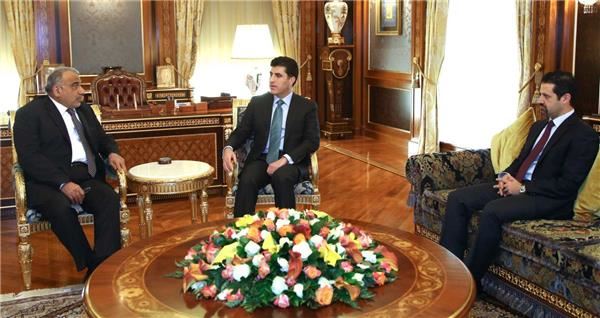
ERBIL, Kurdistan Region - Iraqi and Kurdish leaders struck a deal over the contentious issue of independent Kurdish oil exports in Erbil on Thursday, but analysts are skeptical this draws either side closer to a permanent solution.
The deal involved an upfront payment of $500 million by Baghdad to pay the salaries of Kurdish civil servants. In return, Kurdistan would provide the federal government 150,000 barrels of Kurdish oil a day.
“This covers the month of October,” Iraqi Finance Minister told Rudaw on Thursday. “In November, there will be another payment of $1 billion and the KRG will again hand over 150,000 barrels of oil per day (bpd) to the federal government.”
But until the money and oil are delivered, analysts remain cautious, remembering a similar deal that fell apart in March.
“It is not a permanent solution, and it is dependent upon both sides implementing it - and this is not at all obvious that it will happen,” said Gareth Stansfield, an Iraq expert at the University of Exeter.
Stansfield suggested that both sides were driven to the negotiation table by necessity.
“Both sides were in appallingly weak positions,” he said. “It was this shared weakness that allowed them to find a stopgap solution – and that is just what it is.”
Both the Kurdistan Regional Government (KRG) and the Iraqi Federal Government are suffering from fiscal pressures. The KRG hasn’t received its share of the national budget since January because of the oil dispute, and both sides are grappling to fund the fight against ISIS amidst falling global oil prices, with oil the largest source of revenue for both parties.
The Kurdistan Region has exported 34.5 million barrels of oil since January, but after costs it’s net revenue was only $1.7 million. Before January, the KRG received slightly over a billion dollars a month, roughly 11 percent of the national income.
“KRG oil exports, while quite significant, have been nowhere near the levels needed to generate the amounts needed to fund the KRG salaries and projects, the refugee crisis, and the expansion of the Peshmerga (or even the paying of the Peshmerga at a normal level),” Stansfield told Rudaw. “They have been quickly accruing significant amounts of debt and credit lines are becoming more and more difficult to find.”
“The issues Baghdad face are similarly acute,” he added. “Due to mismanagement, corruption, and chaos, Baghdad is also financially broken, with very limited reserves, and with the bottleneck of oil in Basra limiting exports.”
Other factors push both sides towards a deal. Baghdad and other western powers fighting ISIS has an interest in keeping Kurds engaged in government and ensuring a strong security situation in the country’s north, where Kurdish Peshmerga are defend a 1,050 km border against militant attacks.
“Remember there’s huge pressure from the Americans to try and keep the country united and to make concessions to keeping Iraq unified while they all try and tackle the problem of ISIS,” said Michael Stephens of the Royal United Service Institute, a defense think-tank.
“For now the last thing anyone needs is Erbil and Baghdad bickering over oil, there are bigger problems to solve,” and for that reason he believes “it will hold, for now.”
Iraq’s new oil minister, Adil Adbul-Mahdi has had close ties with the Kurds in the past during his term as Vice President and during his time in exile. Zebari credited his “good” relationship with Abdul-Mahdi with having facilitated the agreement.
But some remain doubtful that Prime Minister Abadi is interested in finding a permanent solution.
“Abdul-Mahdi clearly wanted this, but it is important to note that the people talking about this, none of them are close to Abadi,” says Kirk Sowell, who runs newsletter Inside Iraqi Politics.
“I don't see any indication Abadi is prepared to compromise on the lines [former lead negotiator with the KRG over oil policy] Hussein Shahristani laid down in the spring,” namely that the KRG sell the oil through the Iraqi marketing company SOMO, sell at global prices, and accept payment at the Development Fund for Iraq account at the Federal Reserve in New York.
Sowell argues that it will only make economic sense for Abadi to strike a deal if the Kurds are selling more than 300,000bpd through the federal system. Likewise the KRG will need far more than $500 million a month to cover their costs, making this agreement only a partial fix for both sides.
“It is a goodwill gesture to get [Kurdish Prime Minister] Nechirvan Barzani to come to Baghdad to negotiate,” Sowell says. This does' t necessarily mean that the deal will “open the way” for a lasting solution, as Abdul-Mahdi said in a statement on Friday.
Barzani is set to arrive in Baghdad in the “coming days,” according to a KRG press release, where he will negotiate with Abadi himself. Only time will tell if he can accomplish the ambitious and challenging goal of reaching a “comprehensive, fair and constitutional solution to all outstanding differences between the federal government and the KRG.”
The deal involved an upfront payment of $500 million by Baghdad to pay the salaries of Kurdish civil servants. In return, Kurdistan would provide the federal government 150,000 barrels of Kurdish oil a day.
“This covers the month of October,” Iraqi Finance Minister told Rudaw on Thursday. “In November, there will be another payment of $1 billion and the KRG will again hand over 150,000 barrels of oil per day (bpd) to the federal government.”
But until the money and oil are delivered, analysts remain cautious, remembering a similar deal that fell apart in March.
“It is not a permanent solution, and it is dependent upon both sides implementing it - and this is not at all obvious that it will happen,” said Gareth Stansfield, an Iraq expert at the University of Exeter.
Stansfield suggested that both sides were driven to the negotiation table by necessity.
“Both sides were in appallingly weak positions,” he said. “It was this shared weakness that allowed them to find a stopgap solution – and that is just what it is.”
Both the Kurdistan Regional Government (KRG) and the Iraqi Federal Government are suffering from fiscal pressures. The KRG hasn’t received its share of the national budget since January because of the oil dispute, and both sides are grappling to fund the fight against ISIS amidst falling global oil prices, with oil the largest source of revenue for both parties.
The Kurdistan Region has exported 34.5 million barrels of oil since January, but after costs it’s net revenue was only $1.7 million. Before January, the KRG received slightly over a billion dollars a month, roughly 11 percent of the national income.
“KRG oil exports, while quite significant, have been nowhere near the levels needed to generate the amounts needed to fund the KRG salaries and projects, the refugee crisis, and the expansion of the Peshmerga (or even the paying of the Peshmerga at a normal level),” Stansfield told Rudaw. “They have been quickly accruing significant amounts of debt and credit lines are becoming more and more difficult to find.”
“The issues Baghdad face are similarly acute,” he added. “Due to mismanagement, corruption, and chaos, Baghdad is also financially broken, with very limited reserves, and with the bottleneck of oil in Basra limiting exports.”
Other factors push both sides towards a deal. Baghdad and other western powers fighting ISIS has an interest in keeping Kurds engaged in government and ensuring a strong security situation in the country’s north, where Kurdish Peshmerga are defend a 1,050 km border against militant attacks.
“Remember there’s huge pressure from the Americans to try and keep the country united and to make concessions to keeping Iraq unified while they all try and tackle the problem of ISIS,” said Michael Stephens of the Royal United Service Institute, a defense think-tank.
“For now the last thing anyone needs is Erbil and Baghdad bickering over oil, there are bigger problems to solve,” and for that reason he believes “it will hold, for now.”
Iraq’s new oil minister, Adil Adbul-Mahdi has had close ties with the Kurds in the past during his term as Vice President and during his time in exile. Zebari credited his “good” relationship with Abdul-Mahdi with having facilitated the agreement.
But some remain doubtful that Prime Minister Abadi is interested in finding a permanent solution.
“Abdul-Mahdi clearly wanted this, but it is important to note that the people talking about this, none of them are close to Abadi,” says Kirk Sowell, who runs newsletter Inside Iraqi Politics.
“I don't see any indication Abadi is prepared to compromise on the lines [former lead negotiator with the KRG over oil policy] Hussein Shahristani laid down in the spring,” namely that the KRG sell the oil through the Iraqi marketing company SOMO, sell at global prices, and accept payment at the Development Fund for Iraq account at the Federal Reserve in New York.
Sowell argues that it will only make economic sense for Abadi to strike a deal if the Kurds are selling more than 300,000bpd through the federal system. Likewise the KRG will need far more than $500 million a month to cover their costs, making this agreement only a partial fix for both sides.
“It is a goodwill gesture to get [Kurdish Prime Minister] Nechirvan Barzani to come to Baghdad to negotiate,” Sowell says. This does' t necessarily mean that the deal will “open the way” for a lasting solution, as Abdul-Mahdi said in a statement on Friday.
Barzani is set to arrive in Baghdad in the “coming days,” according to a KRG press release, where he will negotiate with Abadi himself. Only time will tell if he can accomplish the ambitious and challenging goal of reaching a “comprehensive, fair and constitutional solution to all outstanding differences between the federal government and the KRG.”
Comments
Rudaw moderates all comments submitted on our website. We welcome comments which are relevant to the article and encourage further discussion about the issues that matter to you. We also welcome constructive criticism about Rudaw.
To be approved for publication, however, your comments must meet our community guidelines.
We will not tolerate the following: profanity, threats, personal attacks, vulgarity, abuse (such as sexism, racism, homophobia or xenophobia), or commercial or personal promotion.
Comments that do not meet our guidelines will be rejected. Comments are not edited – they are either approved or rejected.
Post a comment