


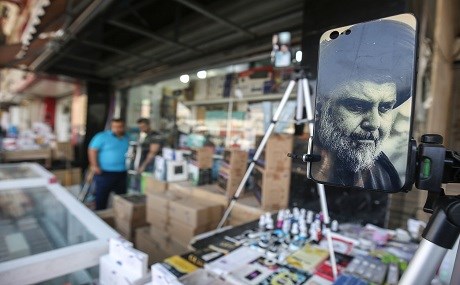
Muqtada al-Sadr, who was the surprise winner of Iraq’s parliamentary election, will be closely watched by the United States and Iran as the next government takes shape.
Shia cleric Sadr is opposed to interference by foreign countries in Iraq. He formed an unlikely alliance with the Communist Party and ran on a non-sectarian platform advocating a technocratic government and pledging to tackle corruption.
Second place went to the Fatih alliance led by Hadi al-Amiri, which is tied to the Iranian-backed Shia militias of Hashd al-Shaabi.
They pushed America’s man, Haider al-Abadi, into third place.
As Sadr’s alliance won more seats, he has the upper hand in forming a coalition to control the next government. He will need to come to an agreement with outside powers, especially Iran and the US, which have exerted influence over Iraqi politics since 2003.
Sadr was once a key ally of Iran. In 2004, when Sadr’s Mahdi Army clashed with the Iraqi army and US forces in Najaf, Iran’s Supreme Leader Ali Khamenei wrote to Iraq’s top Shia cleric Ali al-Husseini urging him to protect Sadr.
The cause of this clash shows how close Sadr was to Iran at the time. He was accused of ordering the 2003 assassination of Shia cleric Abdul-Majid Al-Khoei, who was opposed to the Shia government brought in after the 1979 Iranian revolution.
In 2006, Sadr went to Iran to seek shelter and study Sharia law in Qom.
While there, in 2008, his forces clashed with the Iraqi army under the command of then-Iraqi Prime Minister Nouri al-Maliki over control of Basra. Many of Sadr’s armed supporters were killed. Iran’s Qassem Soleimani, the commander of Iran’s Islamic Revolutionary Guard Corp’s (IRGC) extraterritorial Quds Force, mediated a ceasefire between the two sides.
Under pressure from Tehran, Sadr dismantled his Mahdi Army in 2008.
Sadr was the first Shia cleric to denounce the 2003 US invasion and his Mahdi Army attacked coalition forces. In 2006, Sadr was named by Newsweek magazine as “the most dangerous man in Iraq.”
Paul Bremer, the head of the Coalition Provisional Authority (CPA) after 2003, was aware of Sadr’s early attempts to build the Mahdi Army, but was concerned that any direct attack on Sadr could mobilize Shia Iraqis against US troops.
The publication of Sadr’s newspaper was suspended by Bremer on March 28, 2004, after the newspaper praised the 9/11 terrorist attack on the US as a “blessing from God.” By 2006, the US was able to take on Sadr’s army and his anti-American politics by helping other Shia politicians control the government.
Sadr returned to Najaf in 2011 after five years in Iran. He had lost his army and his popularity, leaving him isolated in the political wilderness.
In 2016, Sadr’s popularity began to grow once more as he led anti-corruption protests in Baghdad and pressured for government reforms. Sadr’s relations with Iran, meanwhile, began to go downhill.
On March 25, 2017, Sadr’s supporters protesting in Baghdad shouted slogans against Iran’s hegemony. One slogan was directed against Qassem Soleimani.
In February 2017, Sadr stoked the ire of Shia groups and Iran when he called for Hashd al-Shaabi to be dismantled to promote nationwide peace among all Iraqis. He also traveled to Saudi Arabia, meeting with Crown Prince Mohammed bin Salman in Jeddah in July 2017.
Sadr entered into a coalition with the communists – bonding over the issues of social justice and fighting corruption.
Ali Akbar Velayati, top adviser to Khamenei, reacted to the union during a visit to Baghdad, saying at a funding conference: “We will not allow liberals and communists to govern in Iraq.”
Although Sadr has a history of conflict with both Iran and the US, his ups and downs in Iraqi politics taught him to be pragmatic – a man of circumstance. He may have lost his Mahdi Army, but he has been able to grow a new army of supporters through his campaigning on anti-corruption.
Preparing for the May 12 election, Sadr made some smart moves. He banned the 34 MPs of his bloc from seeking a new term, introducing totally new faces. Sadr’s list broke sectarian lines by introducing candidates with different beliefs and socioeconomic status. His list featured Muntadhar al-Zaidi, famed for hurling his shoes at former US President George W Bush during his visit to Baghdad in 2008. Sadr even went as far to build a diverse list that nominated communist women for the Iraqi parliament. And, based on preliminary results, some of these women won seats. On May 12, Sadr cast his vote at a school in a poor district of Najaf.
Sadr has proved to Iraqis that he has transformed from a firebrand to a wise anti-establishment politician. In a tweet after the announcement of unofficial election results, he shared his vision for forming a technocratic government from different parties across the country, excluding pro-Iranian lists: the PUK in Kurdistan Region, Nuri al-Maliki and Hadi Amiri’s lists.
Both the US and Iran’s powerful men in Iraq, Brett Mcgurk and Qassem Sulaimani, have made efforts to influence the formation of next Iraqi government. The political comeback of Muqtada al-Sadr could spell the beginning of the end to the micro-engineering of Iraqi politics by the US and Iran.
Shia cleric Sadr is opposed to interference by foreign countries in Iraq. He formed an unlikely alliance with the Communist Party and ran on a non-sectarian platform advocating a technocratic government and pledging to tackle corruption.
Second place went to the Fatih alliance led by Hadi al-Amiri, which is tied to the Iranian-backed Shia militias of Hashd al-Shaabi.
They pushed America’s man, Haider al-Abadi, into third place.
As Sadr’s alliance won more seats, he has the upper hand in forming a coalition to control the next government. He will need to come to an agreement with outside powers, especially Iran and the US, which have exerted influence over Iraqi politics since 2003.
Sadr was once a key ally of Iran. In 2004, when Sadr’s Mahdi Army clashed with the Iraqi army and US forces in Najaf, Iran’s Supreme Leader Ali Khamenei wrote to Iraq’s top Shia cleric Ali al-Husseini urging him to protect Sadr.
The cause of this clash shows how close Sadr was to Iran at the time. He was accused of ordering the 2003 assassination of Shia cleric Abdul-Majid Al-Khoei, who was opposed to the Shia government brought in after the 1979 Iranian revolution.
In 2006, Sadr went to Iran to seek shelter and study Sharia law in Qom.
While there, in 2008, his forces clashed with the Iraqi army under the command of then-Iraqi Prime Minister Nouri al-Maliki over control of Basra. Many of Sadr’s armed supporters were killed. Iran’s Qassem Soleimani, the commander of Iran’s Islamic Revolutionary Guard Corp’s (IRGC) extraterritorial Quds Force, mediated a ceasefire between the two sides.
Under pressure from Tehran, Sadr dismantled his Mahdi Army in 2008.
Sadr was the first Shia cleric to denounce the 2003 US invasion and his Mahdi Army attacked coalition forces. In 2006, Sadr was named by Newsweek magazine as “the most dangerous man in Iraq.”
Paul Bremer, the head of the Coalition Provisional Authority (CPA) after 2003, was aware of Sadr’s early attempts to build the Mahdi Army, but was concerned that any direct attack on Sadr could mobilize Shia Iraqis against US troops.
The publication of Sadr’s newspaper was suspended by Bremer on March 28, 2004, after the newspaper praised the 9/11 terrorist attack on the US as a “blessing from God.” By 2006, the US was able to take on Sadr’s army and his anti-American politics by helping other Shia politicians control the government.
Sadr returned to Najaf in 2011 after five years in Iran. He had lost his army and his popularity, leaving him isolated in the political wilderness.
In 2016, Sadr’s popularity began to grow once more as he led anti-corruption protests in Baghdad and pressured for government reforms. Sadr’s relations with Iran, meanwhile, began to go downhill.
On March 25, 2017, Sadr’s supporters protesting in Baghdad shouted slogans against Iran’s hegemony. One slogan was directed against Qassem Soleimani.
In February 2017, Sadr stoked the ire of Shia groups and Iran when he called for Hashd al-Shaabi to be dismantled to promote nationwide peace among all Iraqis. He also traveled to Saudi Arabia, meeting with Crown Prince Mohammed bin Salman in Jeddah in July 2017.
Sadr entered into a coalition with the communists – bonding over the issues of social justice and fighting corruption.
Ali Akbar Velayati, top adviser to Khamenei, reacted to the union during a visit to Baghdad, saying at a funding conference: “We will not allow liberals and communists to govern in Iraq.”
Although Sadr has a history of conflict with both Iran and the US, his ups and downs in Iraqi politics taught him to be pragmatic – a man of circumstance. He may have lost his Mahdi Army, but he has been able to grow a new army of supporters through his campaigning on anti-corruption.
Preparing for the May 12 election, Sadr made some smart moves. He banned the 34 MPs of his bloc from seeking a new term, introducing totally new faces. Sadr’s list broke sectarian lines by introducing candidates with different beliefs and socioeconomic status. His list featured Muntadhar al-Zaidi, famed for hurling his shoes at former US President George W Bush during his visit to Baghdad in 2008. Sadr even went as far to build a diverse list that nominated communist women for the Iraqi parliament. And, based on preliminary results, some of these women won seats. On May 12, Sadr cast his vote at a school in a poor district of Najaf.
Sadr has proved to Iraqis that he has transformed from a firebrand to a wise anti-establishment politician. In a tweet after the announcement of unofficial election results, he shared his vision for forming a technocratic government from different parties across the country, excluding pro-Iranian lists: the PUK in Kurdistan Region, Nuri al-Maliki and Hadi Amiri’s lists.
Both the US and Iran’s powerful men in Iraq, Brett Mcgurk and Qassem Sulaimani, have made efforts to influence the formation of next Iraqi government. The political comeback of Muqtada al-Sadr could spell the beginning of the end to the micro-engineering of Iraqi politics by the US and Iran.
Comments
Rudaw moderates all comments submitted on our website. We welcome comments which are relevant to the article and encourage further discussion about the issues that matter to you. We also welcome constructive criticism about Rudaw.
To be approved for publication, however, your comments must meet our community guidelines.
We will not tolerate the following: profanity, threats, personal attacks, vulgarity, abuse (such as sexism, racism, homophobia or xenophobia), or commercial or personal promotion.
Comments that do not meet our guidelines will be rejected. Comments are not edited – they are either approved or rejected.
Post a comment