



Error occured during this request! Please try again later.
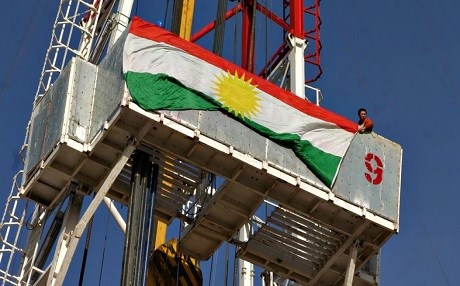
ERBIL, Kurdistan Region--Increased business and trade ties between the Kurdistan Region and Turkey over the course of the past decade has led many to conclude that an interdependent relationship will substantially lessen the prospect that Turkey may strongly oppose the self-determination of Iraq’s Kurds in their drive to achieve independence and statehood.
While the Turkish government vehemently opposed full-fledged autonomy for the Kurdistan Region following the overthrow of the Saddam Hussein regime in 2003, it now maintains a cordial relationship with its southeastern neighbour.
Oil exported from the Kurdish Region is piped through Turkey. Erbil may well, in the near future, become a major source of natural gas for Turkey, which is diversifying the sources from which it buys its much needed gas following the breakdown in ties between it and Russia late last year.
Talks are also underway to export Kurdish oil to Iranian terminals in the Persian Gulf. This is not only important for Kurdistan, since it needs more than one route through which to export its oil and energy resources, but it is also a smart way to establish a broader economic relationship with Iran. Tehran is, after all, arguably the most powerfully staunch opponent of an independent Kurdistan Region, particularly one which includes Kirkuk. Forming a close relationship with Iran will be important if the Kurdistan Region is to survive and endure if its inhabitants do opt for, and pursue, independence.
Whether Tehran agrees to deal with independently exported Kurdish oil in the near future remains unclear given its devotion to the continued governance of the entirety of Iraq by the central government in Baghdad. Iran may change this policy in the near future in recognition of the evolving situation in the region.
In fact, there is an informative historical precedent from Iran itself which is worth contemplating.
During the lengthy reign of the last Shah of Iran, Mohammad Reza Pahlavi, the main threat he perceived to his rule was Soviet-sponsored communism. His regime cracked down hard and ruthlessly on suspected communist movements throughout the country. However, on the foreign affairs front, the Shah knew that solely trying to confront and contain the Soviets was an unrealistic policy for his country to pursue, which is why he normalized ties with the Soviet Union in the early 1960’s and established business and trade relationships with it.
During the period of détente in the 1970’s, Iran was exporting crude oil to Nicolae Ceausecu’s Romania via the Eilat-Ashkelon pipeline in Israel to an extent that Tehran proved to be a major and important source of energy for Bucharest. On a side note, Professor Roham Alvandi’s recent research on this subject is well worth a read since it is based on Romanian documents only recently studied.
Iranian crude was refined in Romania and shipped throughout the Eastern European communist bloc, something which made Iran an important source of energy and built interdependent links which would have made an overly aggressive Soviet policy against Iran more costly to Moscow compared to a cordial relationship built on mutual self-interest. Therefore, this was a pragmatic approach which both sides benefitted from.
On a much smaller scale, the Kurdistan Region has been pursuing a policy that is not overly dissimilar. Ankara has grown to accept the autonomy of the Kurdistan Region and may even tolerate an independent Kurdistan Region emerging on its doorstep given the fact that Erbil has amply demonstrated in recent years that it does not pose a threat to Ankara and that its development could actually prove to be very beneficial to Turkey.
However it would be far too risky for the land-locked Kurdistan Region to rely solely on one neighbor for business and trading. The fact that the Kirkuk to Ceyhan pipeline has been knocked out of action by bombings in Turkey in recent months shows how easily and suddenly Kurdistan can lose hundreds of millions of state income. A second pipeline to export its oil, and eventually its gas also, through Iran would lessen the cost posed by accidents, attacks, and sabotage in the future as the economy gradually diversifies and seeks to reduce its over reliance on oil exports.
If an independent Kurdistan is to emerge, the building of such bridges – in tandem with soft power policies and outreaches – will be of crucial importance to its endurance, survival, and prosperity.
Paul Iddon is a Rudaw reporter based in Erbil, Kurdistan Region.
While the Turkish government vehemently opposed full-fledged autonomy for the Kurdistan Region following the overthrow of the Saddam Hussein regime in 2003, it now maintains a cordial relationship with its southeastern neighbour.
Oil exported from the Kurdish Region is piped through Turkey. Erbil may well, in the near future, become a major source of natural gas for Turkey, which is diversifying the sources from which it buys its much needed gas following the breakdown in ties between it and Russia late last year.
Talks are also underway to export Kurdish oil to Iranian terminals in the Persian Gulf. This is not only important for Kurdistan, since it needs more than one route through which to export its oil and energy resources, but it is also a smart way to establish a broader economic relationship with Iran. Tehran is, after all, arguably the most powerfully staunch opponent of an independent Kurdistan Region, particularly one which includes Kirkuk. Forming a close relationship with Iran will be important if the Kurdistan Region is to survive and endure if its inhabitants do opt for, and pursue, independence.
Whether Tehran agrees to deal with independently exported Kurdish oil in the near future remains unclear given its devotion to the continued governance of the entirety of Iraq by the central government in Baghdad. Iran may change this policy in the near future in recognition of the evolving situation in the region.
In fact, there is an informative historical precedent from Iran itself which is worth contemplating.
During the lengthy reign of the last Shah of Iran, Mohammad Reza Pahlavi, the main threat he perceived to his rule was Soviet-sponsored communism. His regime cracked down hard and ruthlessly on suspected communist movements throughout the country. However, on the foreign affairs front, the Shah knew that solely trying to confront and contain the Soviets was an unrealistic policy for his country to pursue, which is why he normalized ties with the Soviet Union in the early 1960’s and established business and trade relationships with it.
During the period of détente in the 1970’s, Iran was exporting crude oil to Nicolae Ceausecu’s Romania via the Eilat-Ashkelon pipeline in Israel to an extent that Tehran proved to be a major and important source of energy for Bucharest. On a side note, Professor Roham Alvandi’s recent research on this subject is well worth a read since it is based on Romanian documents only recently studied.
Iranian crude was refined in Romania and shipped throughout the Eastern European communist bloc, something which made Iran an important source of energy and built interdependent links which would have made an overly aggressive Soviet policy against Iran more costly to Moscow compared to a cordial relationship built on mutual self-interest. Therefore, this was a pragmatic approach which both sides benefitted from.
On a much smaller scale, the Kurdistan Region has been pursuing a policy that is not overly dissimilar. Ankara has grown to accept the autonomy of the Kurdistan Region and may even tolerate an independent Kurdistan Region emerging on its doorstep given the fact that Erbil has amply demonstrated in recent years that it does not pose a threat to Ankara and that its development could actually prove to be very beneficial to Turkey.
However it would be far too risky for the land-locked Kurdistan Region to rely solely on one neighbor for business and trading. The fact that the Kirkuk to Ceyhan pipeline has been knocked out of action by bombings in Turkey in recent months shows how easily and suddenly Kurdistan can lose hundreds of millions of state income. A second pipeline to export its oil, and eventually its gas also, through Iran would lessen the cost posed by accidents, attacks, and sabotage in the future as the economy gradually diversifies and seeks to reduce its over reliance on oil exports.
If an independent Kurdistan is to emerge, the building of such bridges – in tandem with soft power policies and outreaches – will be of crucial importance to its endurance, survival, and prosperity.
Paul Iddon is a Rudaw reporter based in Erbil, Kurdistan Region.
Comments
Rudaw moderates all comments submitted on our website. We welcome comments which are relevant to the article and encourage further discussion about the issues that matter to you. We also welcome constructive criticism about Rudaw.
To be approved for publication, however, your comments must meet our community guidelines.
We will not tolerate the following: profanity, threats, personal attacks, vulgarity, abuse (such as sexism, racism, homophobia or xenophobia), or commercial or personal promotion.
Comments that do not meet our guidelines will be rejected. Comments are not edited – they are either approved or rejected.
Post a comment