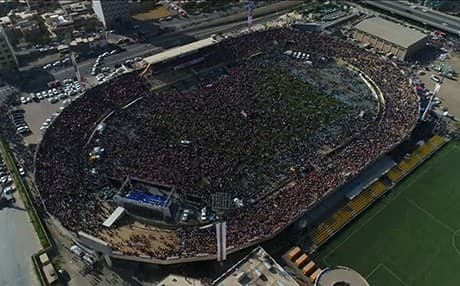
ERBIL, Kurdistan Region – Franso Hariri Stadium, Erbil’s main outdoor arena, is to be sold off to a private investor, with plans to construct a brand new facility at a new site, Rudaw has learned. The fate of the existing stadium is not yet clear.
Shakir Ahmed, a senior stadium official, said the Kurdistan Regional Government (KRG) has green lighted the scheme. Erbil Sports Club (ESC) and the municipal government will now form a committee to oversee the sale.
A buyer has not yet been named and no estimate has been given as to the value of the site. Ahmed said further details about the sale and relocation will soon be made public.
The stadium was built in 1956 and underwent a refurbishment in 1992. The 28,000-capacity arena was first named ‘Erbil Stadium’ but later renamed after Franso Hariri, the former governor of Erbil who was assassinated in 2001.
The stadium has hosted local and international matches. It also hosts festivals, political rallies, and live music.
Shakir Ahmed, a senior stadium official, said the Kurdistan Regional Government (KRG) has green lighted the scheme. Erbil Sports Club (ESC) and the municipal government will now form a committee to oversee the sale.
A buyer has not yet been named and no estimate has been given as to the value of the site. Ahmed said further details about the sale and relocation will soon be made public.
The ESC, which owns Franso Hariri Stadium, is selling off the site in order to address its crippling financial woes. The club will also now benefit from new funding from the KRG following its recent victories in the Iraqi football championships.
The stadium was built in 1956 and underwent a refurbishment in 1992. The 28,000-capacity arena was first named ‘Erbil Stadium’ but later renamed after Franso Hariri, the former governor of Erbil who was assassinated in 2001.
The stadium has hosted local and international matches. It also hosts festivals, political rallies, and live music.
Comments
Rudaw moderates all comments submitted on our website. We welcome comments which are relevant to the article and encourage further discussion about the issues that matter to you. We also welcome constructive criticism about Rudaw.
To be approved for publication, however, your comments must meet our community guidelines.
We will not tolerate the following: profanity, threats, personal attacks, vulgarity, abuse (such as sexism, racism, homophobia or xenophobia), or commercial or personal promotion.
Comments that do not meet our guidelines will be rejected. Comments are not edited – they are either approved or rejected.
Post a comment