


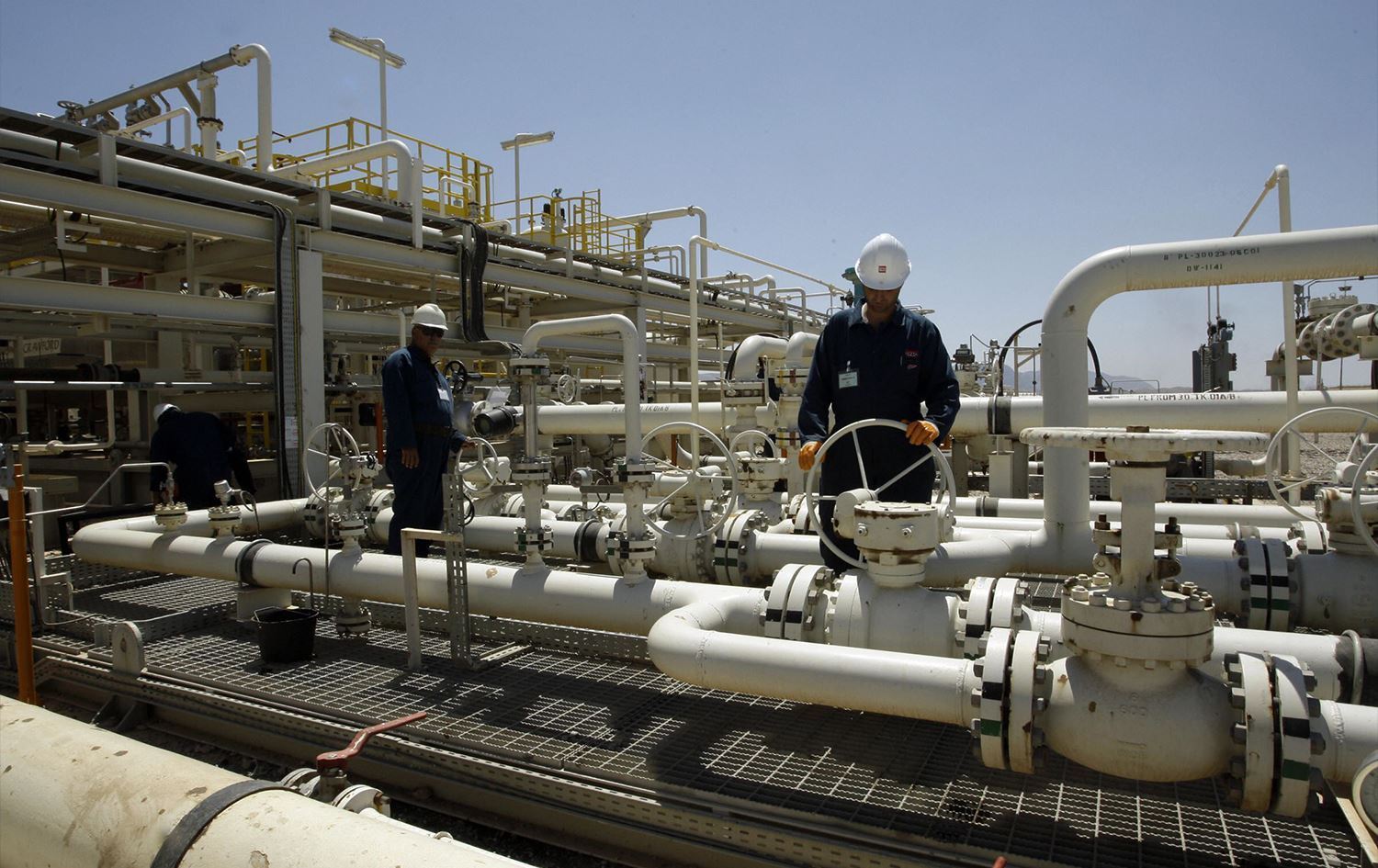
ERBIL, Kurdistan Region - Kurdistan Region Prime Minister Masrour Barzani announced on Saturday that Baghdad has reached an agreement with international oil companies that could pave the way for the resumption of Kurdish oil exports that have been stalled since 2023.
“I have been informed that the oil companies producing oil in the Kurdistan Region and Baghdad have apparently reached an understanding or agreement. This will be a very good start for removing the challenges and hurdles that still exist,” Barzani said during a speech in Duhok province.
“I hope that, in the coming days, this agreement will materialize and make everyone happy. I also hope that the Iraqi government will implement its commitments regarding the rights and entitlements of the people of the Kurdistan Region,” he added.
Rudaw English reached out to Myles Caggins, spokesperson for the Association of the Petroleum Industry of Kurdistan (APIKUR), an umbrella group of oil producers operating in the Kurdistan Region, but he was not immediately available for a comment.
Oil exports from the Kurdistan Region through the Iraq-Turkey pipeline have been suspended since March 2023, when a Paris-based arbitration court ruled in favor of Baghdad that Ankara had violated a 1973 pipeline agreement when it allowed Erbil to begin exporting oil independently in 2014.
The Iraqi federal government and the Kurdistan Regional Government (KRG) have been locked in a long-running dispute over oil revenues and export rights. After months of negotiations, they have agreed that the KRG will deliver its oil to SOMO and keep some for domestic production.
Ali Nizar Faiq, director general of Iraq's State Oil Marketing Organization (SOMO), said on Tuesday that they had completed all preparations with companies purchasing oil produced in the Kurdistan Region.
"Resuming exports will restore Iraq's luster as a primary supplier to the European market, which is thirsty for this type of oil, especially in light of the Russian-European crisis and the absence of Russian supplies, as Iraqi oil is characterized by its similarity in quality to Russian oil,” he said.
Reaching an agreement with the international oil producers was the final step to resuming the exports.
An amendment to the Iraqi budget law in early February set a temporary entitlement of $16 per barrel for production and transportation costs, to be paid to the oil producers until an international consultant determines the real value. However, the amendment made no provision for repayment of past debts.
Reuters, citing unnamed sources, reported on Friday that Baghdad was close to reaching a deal to resume Kurdish oil exports.
The agreement stipulates that the KRG will provide at least 230,000 barrels of oil per day to SOMO, while keeping 50,000 for local use. An independent trader will handle sales from Turkey’s Ceyhan port, using SOMO's official pricing. From each barrel sold, $16 will be placed into an escrow account for producers, and SOMO will receive the rest of the revenue, according to Reuters.
Before the halt, Erbil exported around 400,000 barrels per day through the pipeline, in addition to some 75,000 barrels of Kirkuk’s oil.
Updated at 12:23 pm


Comments
Rudaw moderates all comments submitted on our website. We welcome comments which are relevant to the article and encourage further discussion about the issues that matter to you. We also welcome constructive criticism about Rudaw.
To be approved for publication, however, your comments must meet our community guidelines.
We will not tolerate the following: profanity, threats, personal attacks, vulgarity, abuse (such as sexism, racism, homophobia or xenophobia), or commercial or personal promotion.
Comments that do not meet our guidelines will be rejected. Comments are not edited – they are either approved or rejected.
Post a comment