
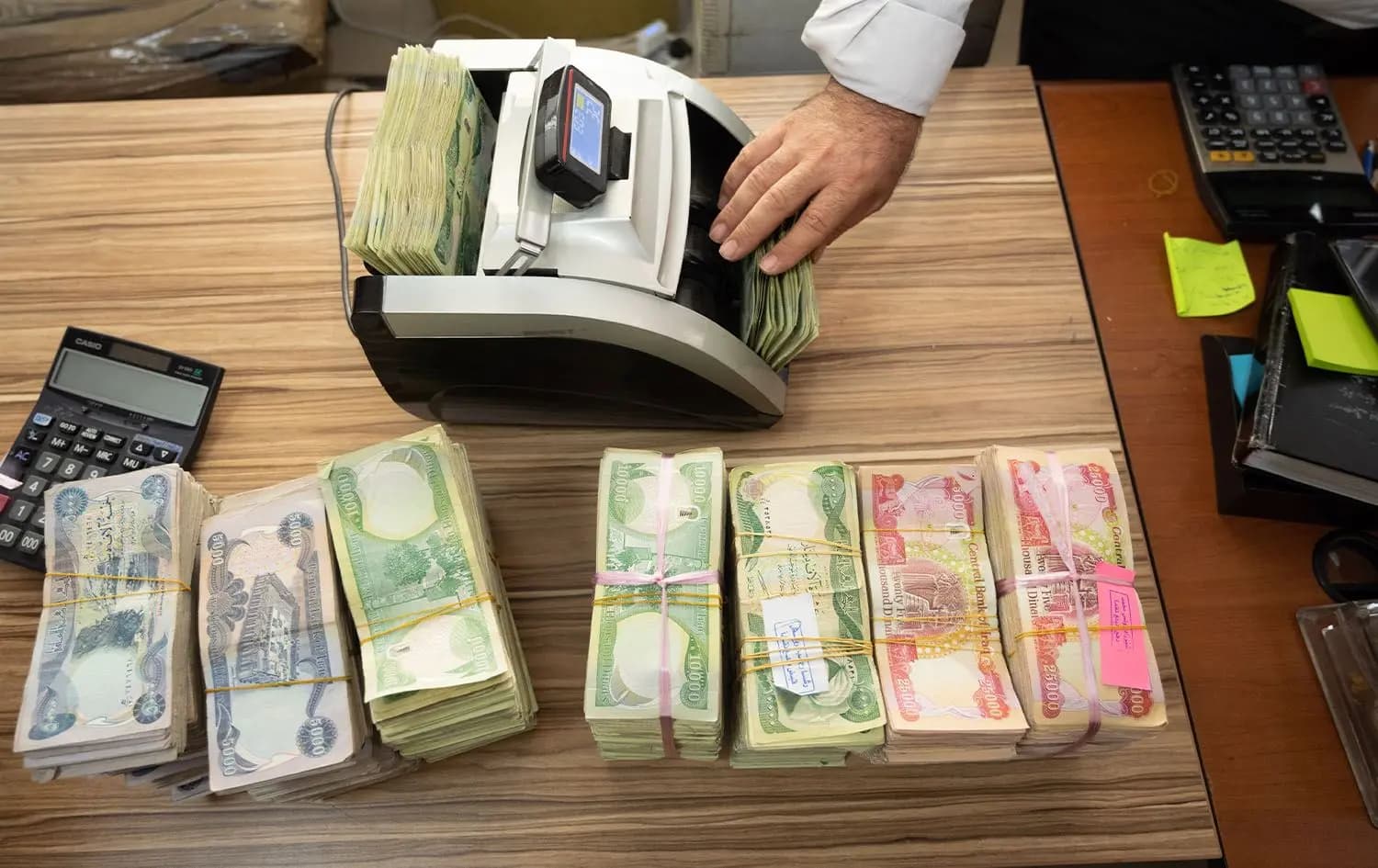
The Kurdistan Region is trapped in a structural financial crisis, facing an unyielding multi-trillion-dinars gap between what it spends and what it actually generates. Even when accounting for federal budget injections from Baghdad, the Region remains stuck in the red, leaving its entire economic stability at the mercy of outside funding.
New data from the Ministry of Finance and Economy reveals that without factoring in Baghdad’s salary allocations, the Kurdistan Region's structural deficit has soared past five trillion dinars annually. But even when the federal cash arrives, the bleeding doesn’t stop: a persistent deficit of nearly half a trillion dinars remains every single year.
This major imbalance between domestic revenues and public expenditures is a clear indicator that the financial structure of the Kurdistan Region is facing continuous pressure, and the gap between revenue and expenditure is widening. If the deficit over a period of seven years hovers around 36 trillion dinars, it demonstrates that without external financial support or assistance from the federal government, the financial system of the Kurdistan Region lacks self-sufficiency and cannot sustain itself.
According to data published by the Ministry of Finance and Economy of the Kurdistan Regional Government (KRG), between 2019 and 2025, the total revenue of the Kurdistan Region was 51 trillion dinars, while total expenditures reached 87 trillion dinars. Even when including the budget allocated by Baghdad, the monthly deficit is approximately 500 billion dinars. What is most notable in this data is the massive imbalance between operational (consumption) expenditures and investment expenditures across different sectors.
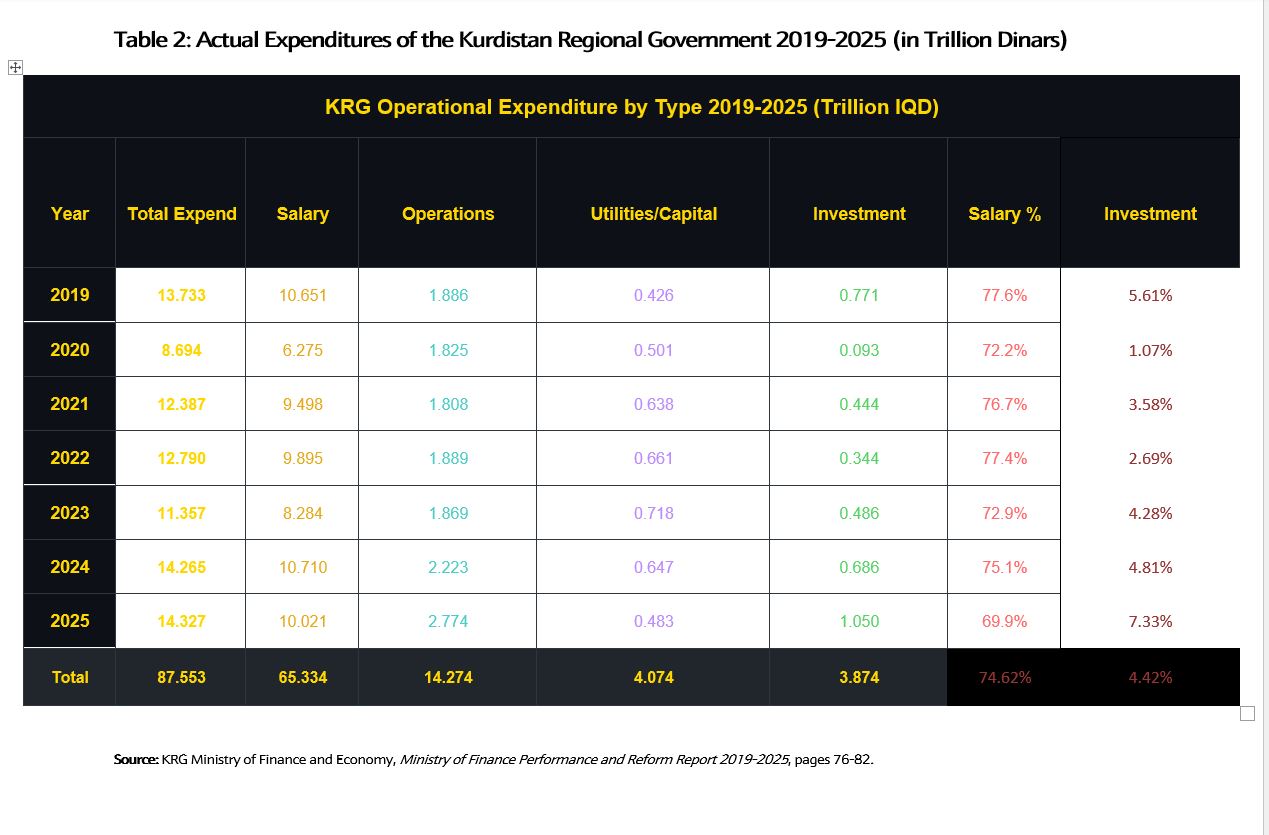
The general distribution of expenditures during these seven years in the Kurdistan Region was as follows: an average of 74 percent for salaries, 16.3 percent for consumption (administrative affairs and institutional operations), 4.65 percent for electricity supply, and 4.42 percent for investment projects.
Over the past seven years, salary expenditures alone have increased by approximately 100 billion dinars. Of the 74 percent allocated for salaries, less than 25 percent went to civil servants. Furthermore, these expenditures—whether for salaries or consumption—show large discrepancies at the level of ministries, institutions, and even provinces.
The civil servant structure in the Kurdistan Region is divided into four main categories:
- Permanent employees: 378,159
- Peshmerga forces: 152,182
- Retirees: 354,758
- Contract employees: 30,258
In terms of revenue collection, the Kurdistan Region has relied on three primary sources: oil revenue (via oil exports to a pipeline with Turkey), customs revenue (from seven official international border crossings), and tax revenue.
In 2019, the proportional breakdown of total revenue was as follows:
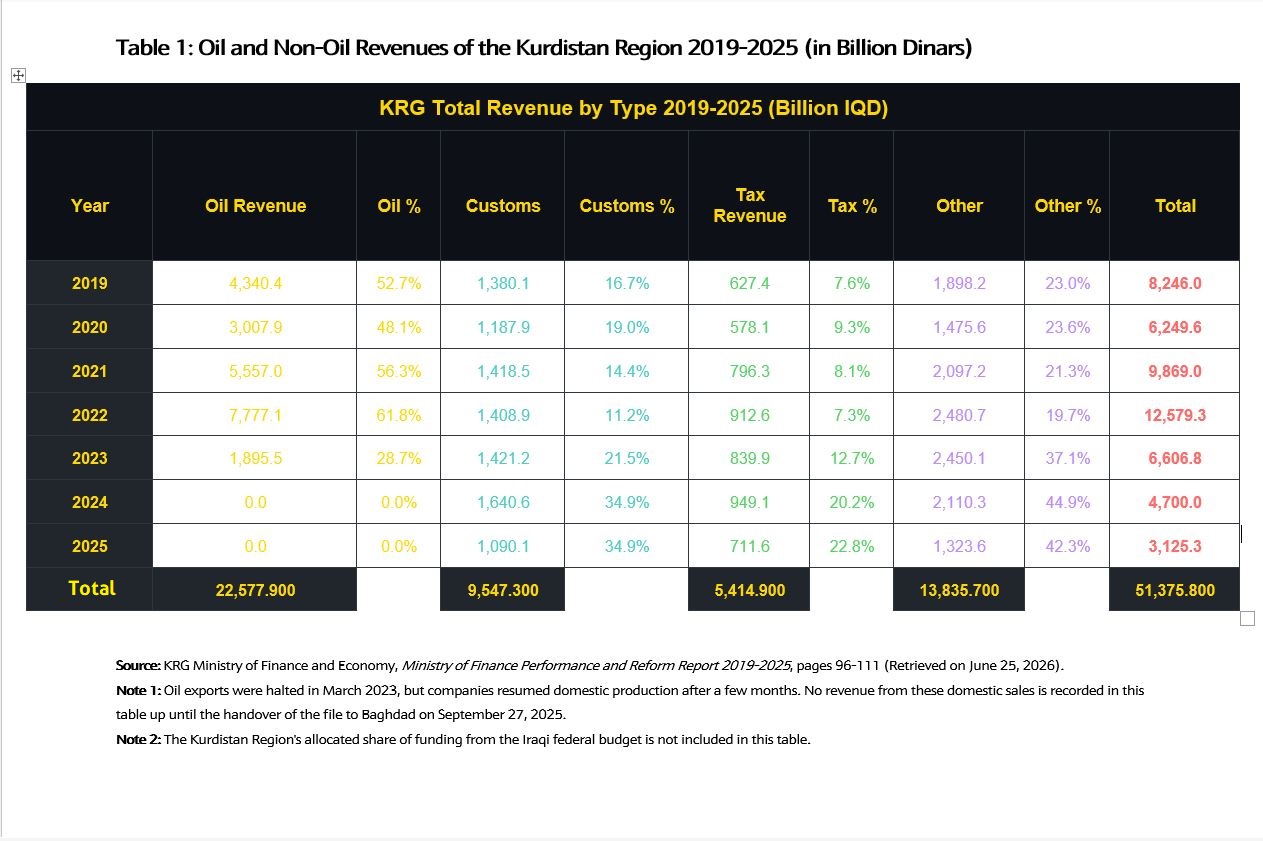
- Oil revenue: 52.7 percent
- Customs: 16.7 percent
- Taxes: 7.6 percent
- Other revenues: 23 percent
Revenues in the Kurdistan Region (2019-2025)
According to the 2019-2025 Performance and Reform Report of the Ministry of Finance and Economy published this month, from the beginning of 2019 until March 2023, the Kurdistan Region possessed an independent revenue stream due to oil exports. However, in 2024 and 2025, following the suspension of oil exports abroad, the government’s oil revenue dropped to zero. This occurred while international companies continued producing oil and selling it on the domestic market at an average price of $25 to $35 per barrel (depending on oil quality).
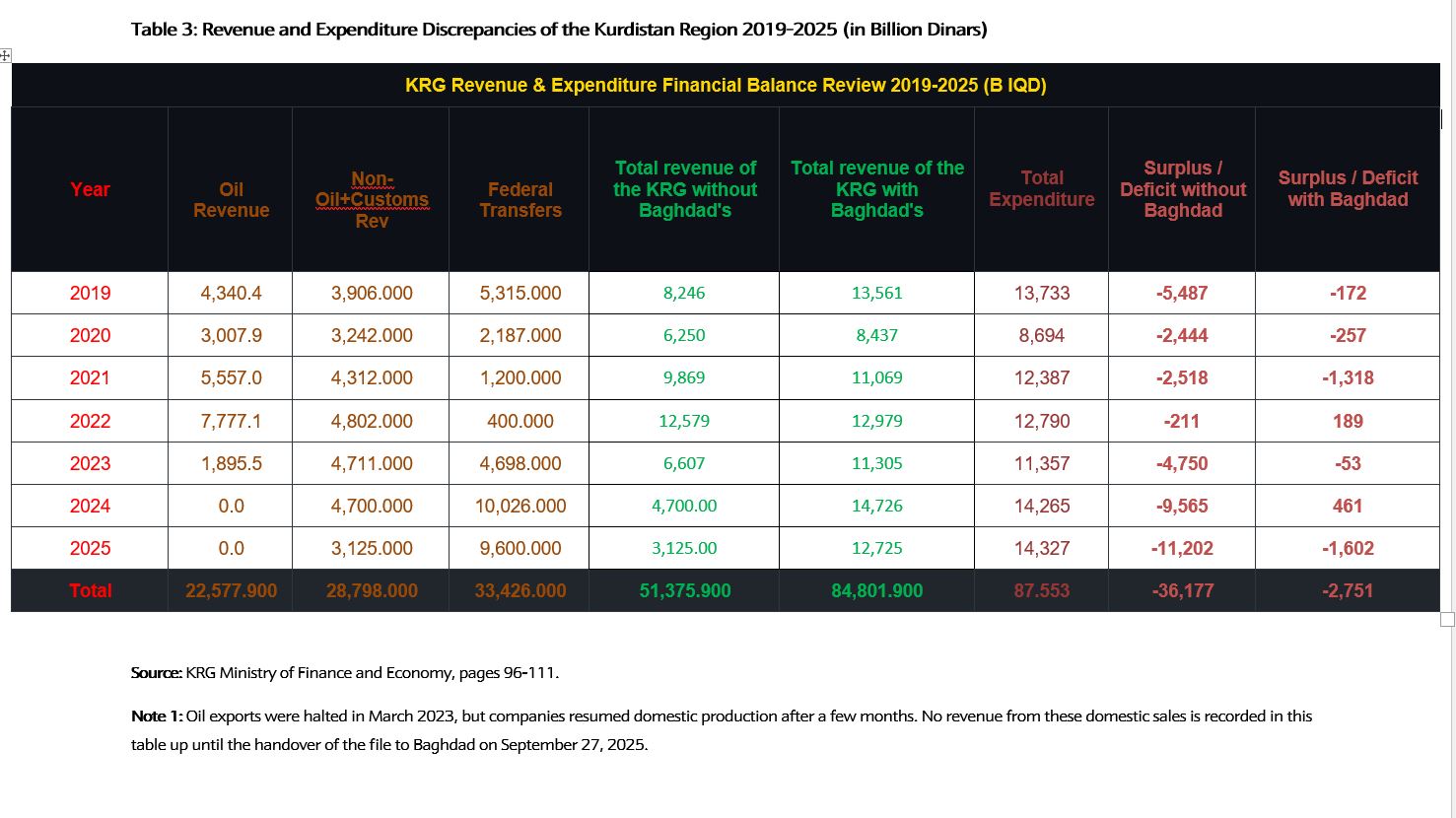
On the other hand, customs revenue from border crossings increased year by year; rising from 1.3 trillion dinars in 2019 to 1.6 trillion dinars in 2024, but it dropped to 1 trillion dinars in 2025. Meanwhile, tax revenue experienced significant fluctuations during these seven years, with annual variations ranging between an increase of 600 billion dinars and a decrease of 800 billion dinars, as explained in the table below.
Furthermore, even if the oil market performs exceptionally well and the price per barrel exceeds $100 (as in 2022), revenue still falls short of expenditures, resulting in a deficit. If conditions mirror those of 2023, revenues can only cover half of the expenditures.
Expenditures in the Kurdistan Region (2019-2025)
The primary expenditure in the Kurdistan Region is the salaries of public employees, which constitute three-quarters (75 percent ) of monthly spending. Currently, following the handover of the oil portfolio to the State Organization for Marketing of Oil (SOMO) on September 27, 2025, the provision of salaries is tied to Baghdad, and the federal government sends it monthly after distributing its own salaries.
After salaries comes operational (consumption) expenditure for institutions, which amounts to approximately 130 to 160 billion dinars monthly and reaches 1.8 to 2 trillion dinars annually.
The third largest expenditure type is electricity production. According to the data, this sector requires 400 to 900 billion dinars annually, consuming a massive share of expenditures without collected electricity revenues being separately distinguished within public revenues.- The fourth type of expenditure has been for investment projects, the amount of which is volatile; for example, in 2020 it was only 90 billion dinars, while in a highly robust investment year like last year, it reached one trillion dinars. Over these seven years, the average annual investment expenditure for all sectors was only 500 billion dinars. This comes at a time when tens of trillions of dinars are allocated for investment in Iraq's general budget, but the share for Kurdistan Region institutions and provinces—including Kirkuk—from that amount has been zero.
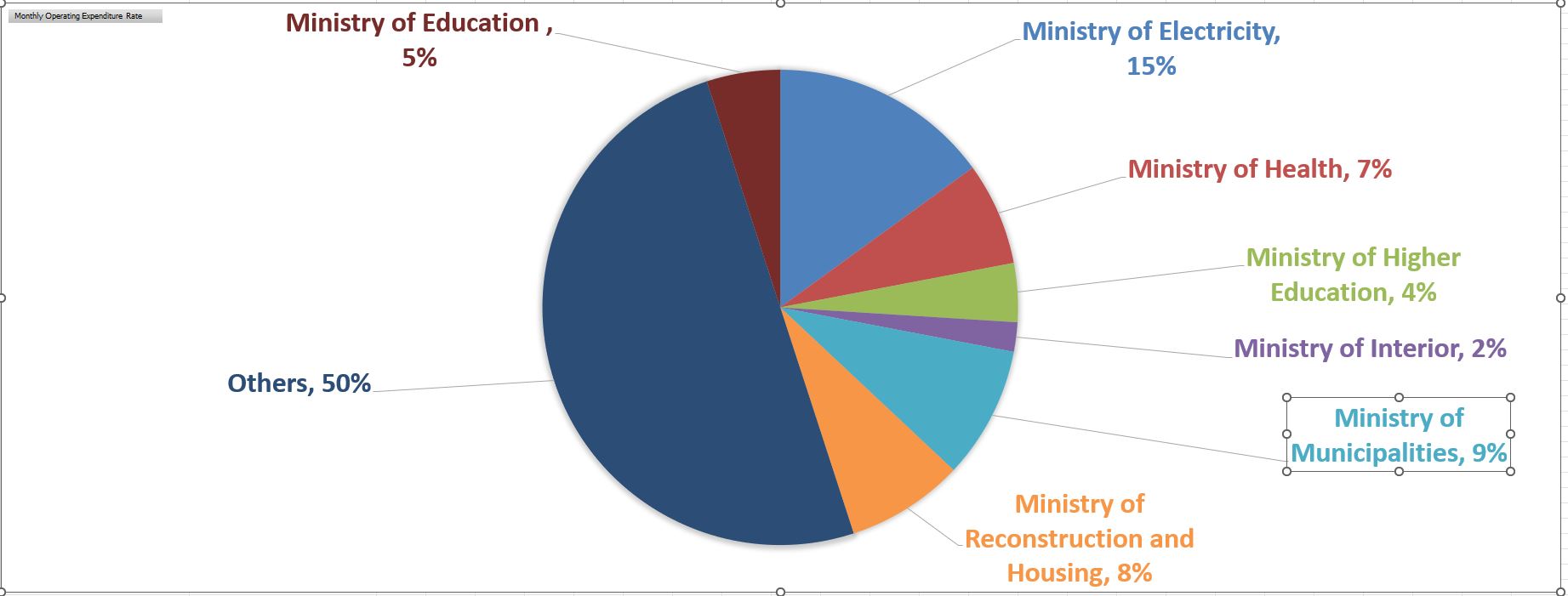
 Total expenditures for salaries, operations, and electricity make up 90 to 92 percent of all expenditures in the Kurdistan Region. Within operational expenditure, nearly half of the money goes to the ministries of electricity, municipalities, and housing and reconstruction (15 percent for electricity, 9 percent for municipalities, and 8 percent for housing and reconstruction).
According to the 2024 census, the population of the Kurdistan Region is 6,519,129 people, and this number includes more than two million students in educational institutions (1,860,000 in public schools and approximately 150,000 in the private sector). Despite this massive scale and the large number of permanent and contract teachers, expenditures for the education sector make up only five percent of total operational expenditures, as shown in the ranking graphic of ministry expenditures.
The financial balance of the Kurdistan Region: Absence of surplus, continued deficit (2019-2025)
The Kurdistan Region suffers from a severe financial imbalance; its total expenditures are nearly double its domestic revenues. Only during the time when oil prices were exceptionally high (such as 2022, when oil revenue reached 7.7 trillion dinars) was the Kurdistan Region able to cover its expenditures to some extent and reduce the deficit.
According to figures from the ministry of finance, the amount of money sent from Baghdad is not the Kurdistan Region's true proportional share, which is set at 12.62 percent in the budget, while the Kurdistan Region's population accounts for 14.1 percent of Iraq. Notably, even with Baghdad's funding, over the past seven years, the Kurdistan Region has faced an annual deficit of approximately 550 billion dinars. In 2025, when Baghdad did not send salaries for two months, the deficit rose to 1.6 trillion dinars, and as a result, the salaries of employees, Peshmerga, and retirees for those two months were not distributed.
Conclusion
The data proves an undeniable reality: the economy of the Kurdistan Region is entirely dependent on the outside. Even with Baghdad's money, the deficit continues. The reduction in investment and operational expenditures has been solely to cover basic necessities; for example, the expenditure of the ministry of electricity alone constitutes one-sixth of total operational expenditures and ranks ahead of investment expenditures for all other sectors combined.
Expenditures outside of salaries and electricity are remarkably low, with the least going to vital sectors such as education, higher education, and health, which together account for only 16 percent of operational spending. On the other hand, non-oil revenues like customs and taxes—even in their best year like 2019, when they combined for 2 trillion dinars—can only fund 25 percent of the Kurdistan Region's expenditures.
Because 70-77 percent of annual expenditures goes for the salaries of 1,190,000 civil servants, disruptions in the transfer of funds from the federal government directly paralyze the lives of citizens. If we exclude the under-18 age group (which is over 38 percent and roughly 2.5 million) from the population, one out of every four adults in the Kurdistan Region is waiting for a monthly salary, reflecting a direct impact on the market and economic activity.
Ultimately, these numbers are an alarm bell for the ministries of planning and finance to change their strategy. Facilities must be provided to diversify non-oil revenue collection, and expenditures must be shifted from consumption toward productive investment to narrow the revenue-expenditure gap and rely less on the mercy of the federal government.

