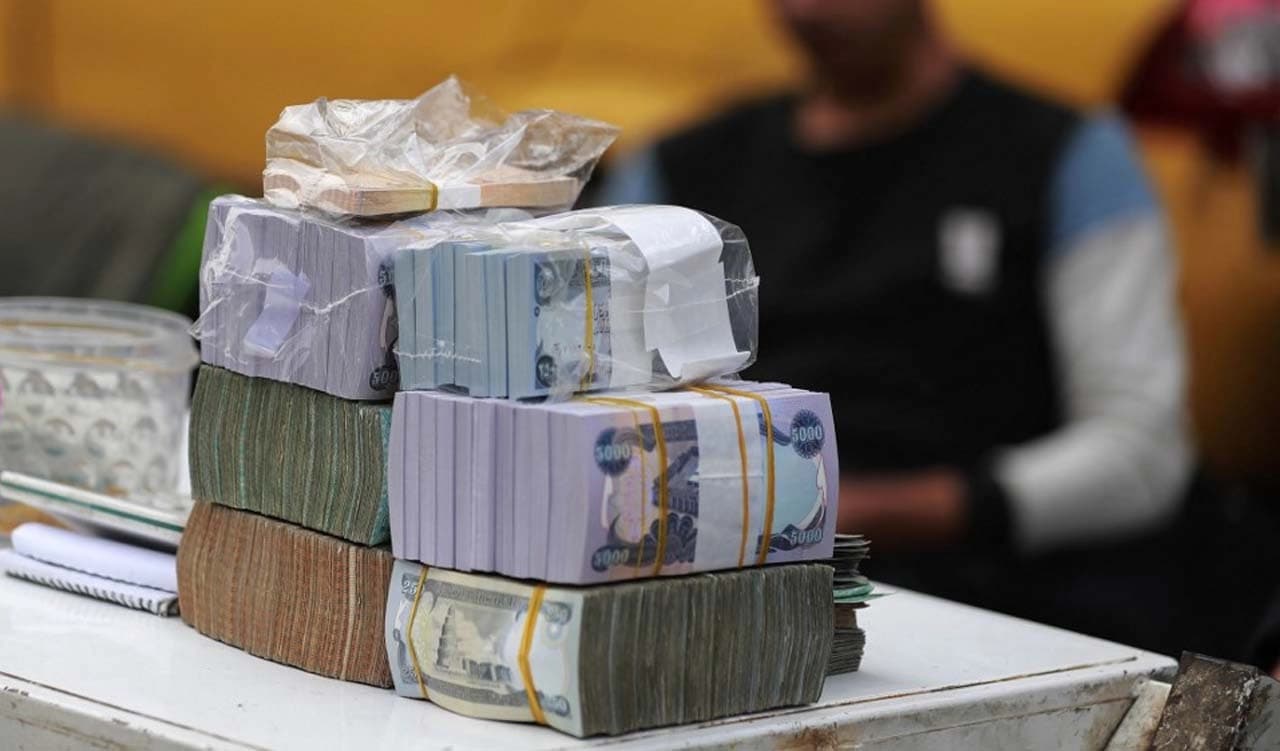

ERBIL, Kurdistan Region - Iraq’s Central Bank (CBI) said Saturday that it has sufficient foreign reserves to meet demand for dollars, as the Iraqi dinar continued to lose value in local markets and the dollar approached 1,600 dinars.
The CBI said it had enough foreign currency to meet requests related to financing foreign trade, settling bank-card transactions and travelers’ demand for cash dollars at the officially approved exchange rate.
The bank attributed the rise in the dollar’s value in local markets to “market speculation, expectations, and the exploitation of geopolitical conditions in the region” by parties seeking to disrupt economic and financial conditions for their own benefit, without identifying those parties.
In the Kurdistan Region, the dollar has risen from around 1,563 dinars at the start of the week to around 1,590 dinars on Saturday. In Sulaimani, $100 was exchanged for 158,500 dinars on Friday and 159,000 dinars on Saturday, according to rates tracked and observed by Rudaw English. Rudaw’s Kurdish service also reported that $100 had reached 159,000 dinars in Sulaimani on Friday.
At the start of the US-Iran war in late February, one dollar traded for around 1,450 dinars in the Kurdistan Region.
The CBI’s official exchange rate is 1,300 dinars per dollar, while the maximum selling price for dollars by banks and other financial institutions is 1,320 dinars per dollar.
In June, the CBI denied a circulating document claiming that it intended to change the official exchange rate of the dinar to 1,600 per dollar.
The CBI’s statement came as its foreign reserves fell to $80.633 billion at the end of July, down from $97.432 billion at the end of 2025, a decline of about 17.2 percent in the first seven months of the year.
In July, the CBI reduced the monthly cash-dollar allowance for adult travelers from $3,000 to $2,000, while maintaining the official channel for supplying dollars. The bank said the measure was aimed at improving the allocation and management of foreign currency.
Economist Nabil al-Marsoumi, in a Friday Facebook post, attributed the recent volatility partly to “rumors and news” and said the gap between the official and market rates had widened significantly.
Kawa Sheikh Yahya, a currency exchange shop owner in Sulaimani, said some market participants fear Iraq could face US sanctions and increased tensions between the government and armed groups as September 30 approaches.
September 30 is the scheduled end of the US-led coalition’s military mission in Iraq. However, Iraqi Security Adviser Qasim al-Araji said Friday that there is now “no deadline” for completing the separate process of bringing weapons under state control, with talks with armed groups continuing.
The dollar’s rise has coincided with growing concerns in Iraqi markets over the armed groups’ weapons, the upcoming US-led coalition withdrawal and possible economic repercussions.
The CBI said it would continue financing foreign trade through approved channels and called on citizens to rely on official information rather than unverified reports circulating through other sources.