
ERBIL, Kurdistan Region - Iraq’s proposed 2027 federal budget would be the largest in the country’s history at 217.2 trillion dinars (roughly $144.8 billion), but it also projects a staggering deficit of $28.7 billion amid ongoing oil export difficulties. Previous budgets have often served more as general spending frameworks than rigid fiscal plans, with actual expenditures falling well short of projections. Should revenues fail to meet expectations, investment spending and the Kurdistan Region’s budget allocations could once again bear the brunt of the shortfall.
Over the past decade, Iraq has operated for six of them with a parliament-approved budget bill and without one for the other four years, particularly 2020, 2022, 2025 (when the budget tables were not approved), and 2026. In those four years, the government executed its expenditures in accordance with the so-called "one-twelfth" rule under Article 13 of the Federal Financial Management Law.
The federal government’s draft 2027 federal budget law comprises 31 articles and projects 217.2 trillion dinars ($144.8 billion) in expenditures and 174.2 trillion dinars ($116.1 billion) in revenues. The bill also projects a sizable deficit of 43.0 trillion dinars (approximately $28.7 billion). This represents the largest budget an Iraqi cabinet has proposed to date.
A closer examination of the 2027 draft, the 2023 budget law, and the Ministry of Finance year-end final reports for 2023 through 2025, this report attempts to answer three core questions: Was the 2027 draft prepared in accordance with Federal Financial Management Law No. 6 of 2019, and does it adhere to its regulations? How closely do the figures in the budget law align with actual revenues and expenditures recorded by the Ministry of Finance? Compared to the 2023 budget law, what has changed in the provisions pertaining to the Kurdistan Region in the 2027 draft, and what are the risks?
The 2027 Budget Draft and the Financial Management Law
The 2027 draft at first appears to be a new type of budget, but in substance, it closely mirrors the previous years. Of the so-called "program-performance budget," which totals 41.9 trillion dinars (approximately $27.9 billion), ninety percent (37.7 trillion dinars (approximately $25.1 billion)) is allocated to the Ministry of Electricity.
In practice, this constitutes electricity expenditures in all but name. Furthermore, the remaining five entities included in the program-performance budget, namely the ministry of higher education, Salahaddin and al-Diwaniyah governorates, a college, and an independent commission have to share the remaining 4.2 trillion dinars (approximately $2.8 billion).
Investment expenditure is pegged at 34.4 trillion dinars ($22.93 billion), the majority of which covers prior commitments. Moreover, 10.0 trillion dinars ($6.67 billion) are set aside for licensing rounds (payments to oil companies), 4.2 trillion dinars ($2.8 billion) as payment for the China agreement, 3.2 trillion dinars ($2.13 billion) dedicated for regional development, 2.7 trillion dinars ($1.80 billion) to service external debt, and 1.5 trillion dinars ($1 billion) of petrodollar payments to oil-producing provinces.
Article 1 of the draft outlines revenues, estimating total revenues at 174.2 trillion dinars ($116.1 billion). This includes 127 trillion dinars ($84.7 billion) from crude oil exports via the State Oil Marketing Organization (SOMO), 17 trillion dinars ($11.3 billion) from oil sold to domestic refineries, and 30.2 trillion dinars ($20.1 billion) from non-oil and mineral revenues.
Thus, oil accounts for 82.7% of revenues, while non-oil revenue accounts for 17.3%. This revenue structure is predicated on SOMO exporting 4.2 million barrels per day (including 400,000 barrels from the Kurdistan Region) at $58 per barrel. Whether this export volume is feasible and whether crude oil will maintain that price level pose serious questions.
Article 2 sets total expenditures at 217.2 trillion dinars ($144.8 billion), comprising 140.9 trillion dinars ($93.9 billion) for line-item allocations—including 64.7 trillion dinars ($43.1 billion) for public sector salaries, 17 trillion dinars ($11.3 billion) for debt servicing, alongside 34.4 trillion dinars ($22.9 billion) for investment expenditure, and 41.9 trillion dinars ($27.9 billion) for program-performance expenditures.
Even though the bill is nominally framed within the parameters of Law No. 6 of 2019, it deviates from and bypasses several key rules. For example, Article 6, Paragraph 4 mandates that the fiscal deficit not exceed three percent of Gross Domestic Product (GDP). Yet, Article 30 of the draft exempts the government from this rule. As a result, the projected deficit for the coming year exceeds the statutory limit by six times.
Another deviation involves Article 8, Paragraph 2, which governs the use of emergency reserves up to a ceiling of 5% of expenditures. Although Article 9 of the draft outlines the procedural mechanism, it omits the specific financial ceiling for the reserve, thereby granting the executive branch open-ended discretion over emergency and unforeseen expenditures.
Article 25, Paragraph 1 restricts the Minister of Finance’s fund-transfer authorities to the level of "chapters." However, the draft expands these transfer authorities across chapters and programs. Under Law No. 9, the minister is authorized to reallocate program-performance funds between two ministries rather than transfer money from line-item budgets to the program-performance budget.
According to statutory timelines, the budget draft should have been submitted to parliament by mid-October. However, the Ministry of Finance is yet to submit its final draft to the Council of Ministers for approval amid lingering disputes between Erbil and Baghdad regarding several provisions of the bill.
Budget bills: financial discipline versus accounting estimates
In Iraq, the federal budget law often functions more as an accounting estimate for expenditures and revenues rather than a rigid, pre-determined plan. For operational allocations (salaries, pensions, and social protection), funds are disbursed annually regardless of whether a budget law is in force. The primary variable is investment expenditure, which serves as the immediate buffer for cuts during funding shortfalls. This is exemplified by the fiscal outcome of 2025: although that year's budget schedules were not approved, actual expenditures reached 141.2 trillion dinars ($94.13 billion)—nearly matching the 142.4 trillion dinars ($94.93 billion) spent in 2023.
A prominent case is Federal Budget Law No. 13 of 2023, which projected total expenditures at 198.9 trillion dinars ($132.60 billion), revenues at 134.6 trillion dinars ($89.73 billion), and a deficit of 64.4 trillion dinars ($42.93 billion). However, the Ministry of Finance year-end final report indicates that actual expenditures reached 142.4 trillion dinars ($94.93 billion) (71.6% of the planned target), while the actual deficit stood at just 6.8 trillion dinars ($4.53 billion) (4.7% of expenditures). Actual investment expenditure totaled 24.2 trillion dinars ($16.13 billion) against a planned 49.4 trillion dinars ($32.93 billion), representing a 49% shortfall.
These discrepancies reflect structural volatility in both government-controlled expenditures and external revenue streams.
Evaluating the 2027 draft against historical actual expenditures reveals that proposed spending of 217.2 trillion dinars ($144.80 billion) is 44% higher than the peak actual expenditure year (2024) and 54% higher than 2025 actuals, while projected non-oil revenues of 30.2 trillion dinars ($20.13 billion) are nearly double those of 2025.
Public sector wages and personnel compensations continue their upward trajectory in Iraq, climbing from 47.2 trillion dinars ($31.47 billion) in 2023 to 60.4 trillion dinars ($40.27 billion) in 2025 (a 28% increase). The 2027 draft accelerates this trend further with a record allocation of 64.7 trillion dinars ($43.13 billion).
The 2027 draft introduces a massive surge in funding for the Ministry of Electricity with its 37.7 trillion dinars ($25.13 billion) allocation under the program-performance budget. This is in addition to approximately $7.6 billion in project loan financing earmarked for electricity under Article 6, while Article 2 bars the launch of any new capital projects outside the electricity sector.
Compared to the previous three years, this represents a major policy shift. Over that period, the ministry's annual allocation averaged roughly 9.9 trillion dinars, with capital investment shares ranging between 0.6 and 1.2 trillion dinars.
Therefore, nearly one-fifth of Iraq's proposed expenditure for next year is dedicated to electricity. However, it remains unclear whether the program-performance budget consolidates all electricity costs (fuel, imported gas, power purchases, and projects) into a single ledger or is dedicated solely to constructing new electricity generation plants. The figure could largely be aspirational and not be fully disbursed as was in past years.
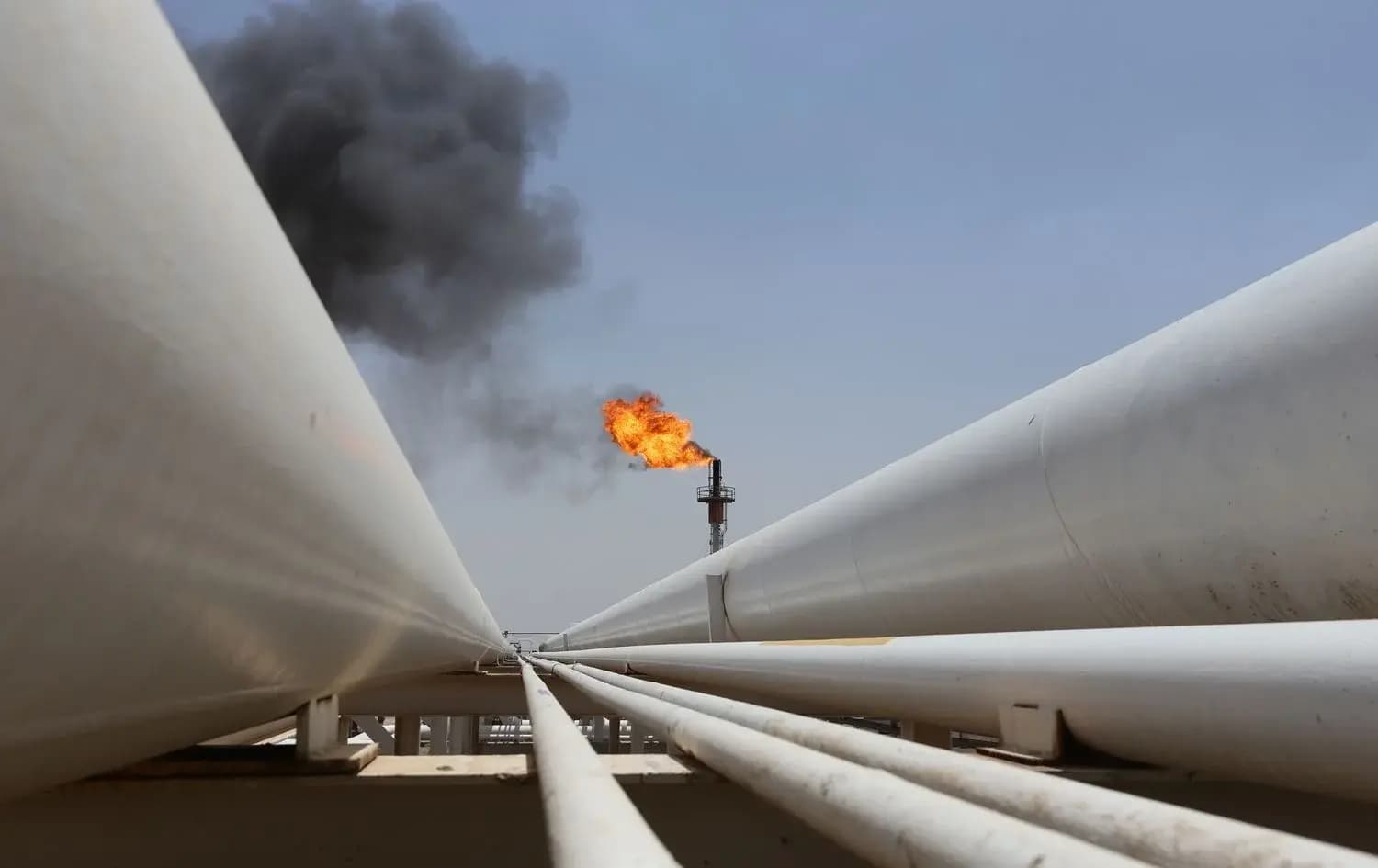
Similarly, the Ministry of Oil has consistently captured a major share of capital investment outlays. Over the 2023–2025 period, it averaged roughly 13 trillion dinars (roughly $8.7 billion) in annual expenditures. Notably, the 2027 draft contains no distinct provisions or funds allocations to eliminate associated gas flaring or expand crude production capacity.
In financial terms, the oil sector's outlays in 2027 will follow the established pattern of prior years: paying oil companies rather than executing a proactive strategy for gas capture and production growth.
The Kurdistan Region’s Share: 2023 vs. 2027
Since 2015, the Kurdistan Region's share has remained fixed at a nominal rate of 12.67%. However, two core mechanisms determine the actual disbursement: first, the percentage is calculated only after deducting sovereign expenditures; second, it is drawn from "actual expenditures" rather than statutory budget appropriations.
According to a Kurdistan Regional Government (KRG) report, the Region's share under Schedule B of the 2023 budget law amounted to approximately 16.5 trillion dinars ($11 billion), whereas federal Ministry of Finance reports indicate that actual disbursements totaled 10.8 trillion dinars ($7.2 billion) in 2024 and 10.4 trillion dinars ($6.93 billion) in 2025. These disbursements consisted entirely of public sector salaries and social protection funds, with zero allocations for capital investment. In practice, the Region's budget share has been reduced to a payroll financing mechanism.
The most significant changes in the 2027 draft concerning the Kurdistan Region lie not in headline numbers, but in two new legal provisions:
Article 10 (Third/H): Obligates the KRG to transfer any natural gas produced in excess of local domestic requirements to the federal government. Failure to do so results in a direct financial deduction from the Region's budgetary share, calculated based on monthly data from the KRG Ministry of Natural Resources and approved by the Federal Ministry of Oil and the Federal Board of Supreme Audit.
Article 10 (Third/W): Prohibits the KRG from signing new oil and gas contracts outside the direct purview of the Federal Ministry of Oil.
Neither of these provisions existed in the 2023 budget law. For the first time, natural gas is incorporated into the federal budget framework as an enforcement mechanism for funding cuts, further placing a budget that already covers little beyond public payrolls in jeopardy. This introduces substantial risk for the KRG: any discrepancy in defining "excess gas" or reconciling monthly data will have direct implications for the Region’s financial transfers.
According to the Federal Ministry of Finance, federal disbursements to the KRG totaled 9.21 trillion dinars ($6.14 billion) for salaries and 1.58 trillion dinars ($1.05 billion) for social protection in 2024, followed by 7.79 trillion dinars ($5.19 billion) for salaries and 2.62 trillion dinars ($1.75 billion) for social protection in 2025. Combined, these transfers accounted for 7.2% of Iraq's total federal government spending in 2024 and 7.4% in 2025, even though the KRG transferred 0.92 trillion dinars ($613.3 million) in non-oil revenues to the federal treasury in 2025.
Comparing the statutory provisions of Articles 11 through 14 of the 2023 budget law with Articles 10 and 11 of the 2027 draft reveals the following:
-The statutory revenue share remains largely unchanged (nominally 12.7%), and the "actual expenditure" baseline is preserved, though the list of sovereign expenditures has been moved from the body of the article to an attached schedule.
-Outstanding financial liabilities from 2004 to 2026, classified as debt owed by the KRG amounting to 12.7 trillion dinars, are to be repaid over a three-year period.
-The repayment window for Trade Bank of Iraq (TBI) loans extended to the KRG has been shortened from seven years to three years, increasing the magnitude of monthly deductions from the Region's share.
-A freeze on new public sector hiring applies equally to the Kurdistan Region. Currently, based on the 2024 census, the KRG asserts a demographic share of 14.14%. However, the Iraqi Ministry of Planning adjusted the Kurdistan Region’s population from 14.14% down to 12.68% in April 2026. In recent media appearances, the Deputy Prime Minister of Iraq has noted that the Region's share is maintained at 12.7%, recalling that the KRG historically requested the exclusion of citizens originating from other Iraqi governorates residing within the Kurdistan Region (such as approximately 300,000 residents from Nineveh Governorate currently living in Duhok and Erbil) from local head-count calculations.
The 2027 draft retains the same actual-expenditure disbursement mechanism for the KRG as previous years. This effectively limits budget discussions regarding the Region to roughly 13 trillion dinars, despite statutory entitlements exceeding 30 trillion dinars.
Disputes over numerical data and oil production volumes between Erbil and Baghdad have resurfaced during the discussions. Since late September 2025, SOMO has managed the export of Kurdistan Region's crude oil and disbursed production fees to international operators. “Since that date, no volume of the Kurdistan Region's oil has been produced or exported illicitly," he said in an interview.
Yet, during negotiations over the 2027 draft budget, claims emerged that production capacity across KRG fields stands at 450,000 barrels per day rather than 250,000 barrels per day, citing a Wood Mackenzie report. While the KRG Ministry of Natural Resources maintains that production is capped at 250,000 barrels per day per Wood Mackenzie data, federal Deputy Prime Minister Muhammad Tamim asserted, following the ministry's clarification, that "there is intelligence indicating KRG oil production reaches 450,000 barrels, and illicit tankers have been observed along border areas" in an interview with state-owned Iraqi News Agency.
In reality, operational production figures across KRG fields are well-documented through company disclosures:
DNO (Tawke and Peshkabir blocks): ~73,000 barrels per day.
Gulf Keystone (Shaikan field): ~45,000 barrels per day.
Atrush and Sarsang blocks: ~55,000 barrels per day.
Khor Mor condensate: ~21,000 barrels per day.
Khurmala Oil Field: ~40–50,000 barrels per day.
Other small fields (Sarqala, Erbil, Ain Sifni, Taq Taq): ~17,500 barrels per day combined.
Accounting for these metrics, total crude and condensate production in the Kurdistan Region averages approximately 250,000 to 260,000 barrels per day. SOMO data submitted to parliament this month, alongside reports from S&P Global, indicate that roughly 200,000 barrels are exported daily while about 50,000 barrels are consumed locally. The origin of figures citing 450,000 or 650,000 barrels per day remains unverified, particularly given their prominence amid the 2027 budget debates.
Recent production declines at the Tawke and Sarsang fields resulted from shelling by Iraqi armed factions, severely constraining operational capacity at Sarsang in particular, where output dropped from over 30,000 barrels per day to under 10,000 barrels per day.
Ultimately, December 2027 will reveal whether Iraq successfully executed 217 trillion dinars in expenditures and determined which components were prioritized. However, empirical experience from 2023 to 2025 demonstrates that while public payrolls and security outlays remain protected, capital investment and the Kurdistan Region's fiscal allocation serve as the primary adjustment buffers subject to immediate cuts.