
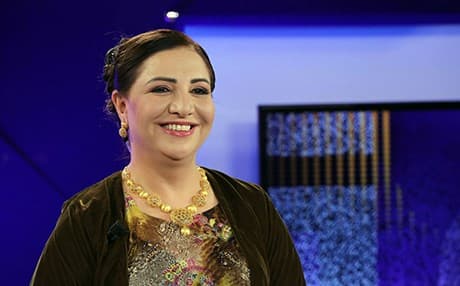

Specifically, Perwer speaks of the lack of opportunity for Kurds to receive education in their mother tongue and the difficulties of moving to a larger town where opportunities to attend school require students to know and understand the Turkish language.
Rudaw: What is the name of the village where you were born?
Gulistan Perwer: Its Kurdish name is Vankoka, which previously belonged to Diyarbakir. But the Republic later annexed it to the city of Urfa in a bid to break down the Kurds. My father owns the village where people are all relatives. There are still no outsiders living in the village.
Tell us about your parents.
My mother is a Sayd [people who are believed to have descended from Prophet Mohammed’s family]. She is from the Nabia Sheikh
 my date of birth was backdated by two years
What was the perception of villagers toward your mother as someone who had come from an urban area?
She had no such problems. My father’s family was proud of her and also proud to suit a lady from a famous family. Rural life was very difficult for my mother. She said that her biggest problem was taking a shower. She often asks that her life be turned into a book or film, and I respond by telling her that life for all Kurdish women living in village was the same.
When were you born?
I was born in 1962. But my date of birth was backdated by two years because the custom at the time was that dates of birth for girls were backdated by two years so they could get married earlier, and those of boys predated so they were called to duty in military at a later time.
Are you the oldest in your family?
No. Nuri is the oldest. He is my elder brother. I also had two other older sisters who died after I was born.
What did your mother tell you about living in the countryside?
She often recounted the 15 years she had spent living at a village, describing the experience as torturous. There were no trees, nor
She wanted us to go to school to make up for her not
What was it like for you in the village?
My mother wanted us to leave the village at the earliest possible moment. She wanted us to go to school to make up for her not doing so. I was four-and-a-half or five years old when we went to Viransehir. I remember they brought a camion vehicle and put the luggage there and then we moved to city.
What do you remember about leaving the village?
I remember very well when my mother was telling my father that we were going to city. But my grandmother was against this choice, saying that she didn’t want us to take her son away from her. My mother said she couldn’t bear living there anymore and that she didn’t want to have her children ending up illiterate. She said that she was moving to town and buying a car there.
What did you initially do when you moved to city?
My grandmother didn’t allow my father to accompany us to city. So he didn’t come. My mother therefore left the village in a bad
I had never heard of Turkish language, let alone speak it
How was city life?
Yes, it was very difficult in the beginning because my grandmother brought us up. My mother wasn’t in favor of rural life — one is
I didn’t know what school looked like.
Not knowing the Turkish language, how was your first day of school?
It was even worse during my days because I had come from the village. That is why I didn’t like to be in the city. I wanted to go back to my grandmother in the village. I had never heard of Turkish language, let alone speak it, because there was no electricity, television or radio in the village.
I remember before my father held my hand and took me to school, my mother took me to the market. Men and women’s shops were
The kids were laughing at me. I was baffled as though I was dumb.
One day, they dressed me in those clothes. My father held my hand and took me to school, asking me to enter a class. I opened the door, and saw that the class was full of children sitting on chairs. There was a man with blue eyes and blonde hair standing in front of them. Teachers were all Turkish with blue eyes and blonde hair back then. They all looked like Ataturk. The teacher said ‘gel’, meaning ‘come’ when I opened the door. But I didn’t understand what ‘gel’ meant. I started to cry and the kids laughed. My trauma started then. The teacher then said ‘otur’, but I didn’t get it. The kids were laughing at me. I was baffled as though I was dumb. I remember the bell rang, and the kids started to run. I ran too.
Our home was near the school. I screamed after I opened the door. “I am not going to school,” I said. My mother later recounted that I had laid down on the ground and put soil on my head, screaming that I wasn’t going to school: “Take me back to the village.” So, they didn’t send me to school that year.

.png&w=3840&q=75)