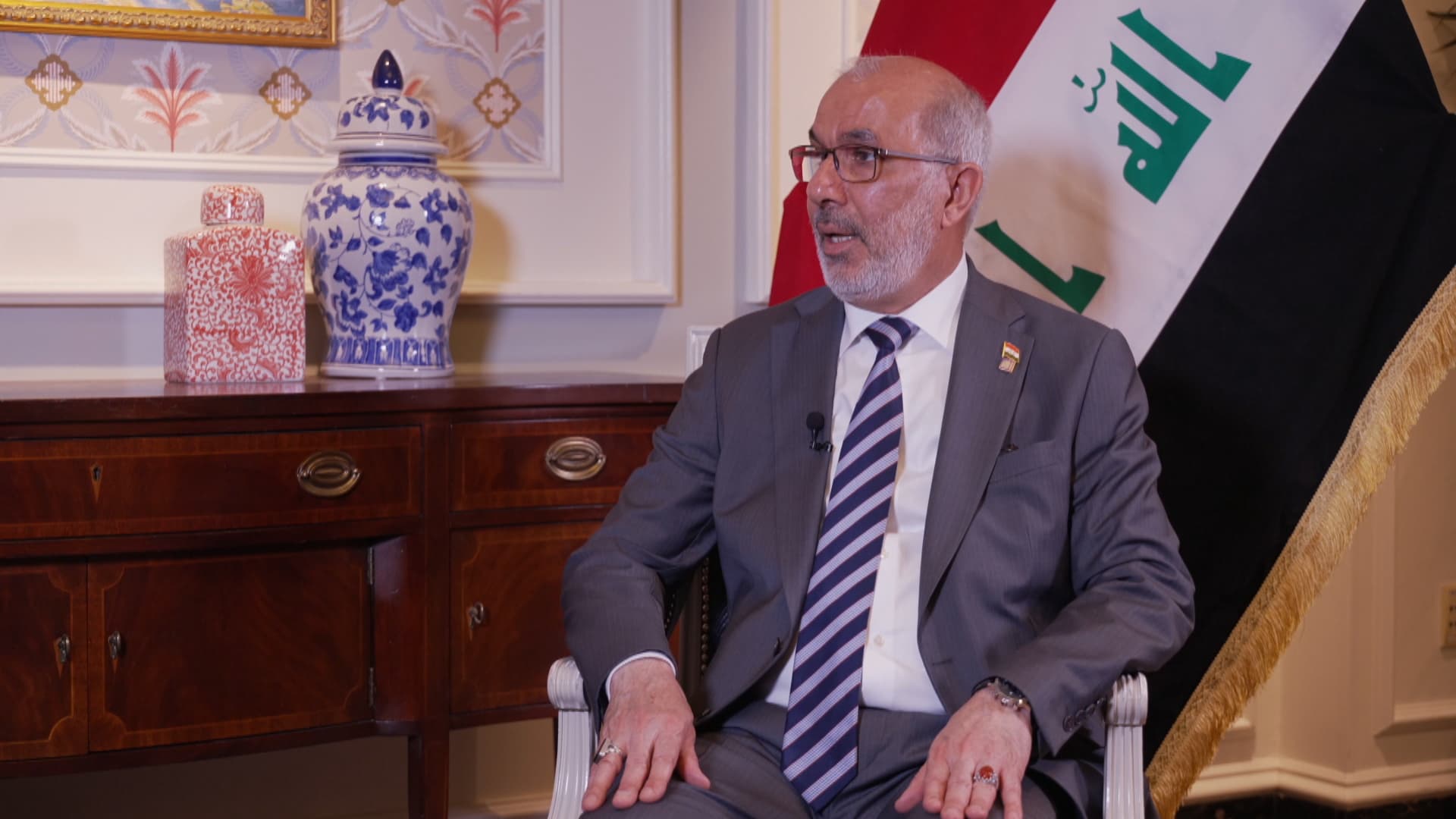
ERBIL, Kurdistan Region - Former US Assistant Secretary of State for Near Eastern Affairs Barbara Leaf on Friday welcomed recent steps by Iraq's new government to bring armed groups under state authority, but stressed that success will depend on sustained political will and the full integration of militias into state institutions.
In an interview with Rudaw’s Warshin Salih, Leaf said Prime Minister Ali al-Zaidi had taken "important first steps" toward addressing the issue, describing the process as politically difficult but necessary for Iraq's future stability.
“Bringing these groups under full state control, at full state authority, is critical to the security of Iraq and its citizens across the country,” she said. “It's critical to the future of Iraq and its ability to enjoy full, positive relations with its neighbors and countries across the region.”
Her remarks come amid a renewed push by Baghdad to place all weapons under state control.
Last week, influential Shiite cleric Muqtada al-Sadr announced a “total and absolute separation” of his armed faction, Saraya al-Salam, from his National Shiite Movement and called for its full integration into state institutions. Prime Minister Zaidi welcomed the move and urged other armed groups to follow the same path.
Leaf described Sadr's decision as one of the most significant recent developments.
“One of the most important things that has occurred recently is that Muqtada al-Sadr himself took the initiative to announce that he would disarm his militia and insist that it will fully fold into the Iraqi state,” she said, arguing that the move had increased pressure on other factions.
The powerful Iran-aligned Asa’ib Ahl al-Haq (AAH) on Tuesday said it will follow suit and form a committee to oversee procedures aimed at placing its personnel and weapons under state authority. Meanwhile, other pro-Iran armed groups such as Saraya Awliya al-Dam (Guardians of the Blood Brigades) - who played an active role in backing the Iranian front during the six-week war - rejected handing over their arms to the Iraqi state.
“You have groups like Kata’ib Hezbollah and others who insist on remaining loyal to a foreign government, not to the Iraqi state,” Barbara said.
“I hope that they will be successful, but it will take constant, constant work,” Leaf said of the government's efforts. “It will take political will. It will take the willingness to take risks in order to bring these groups under full authority of the state.”
The following is the full interview transcript:
How do you view the determination and efforts of Iraq’s new Prime Minister, Ali Al-Zaidi, to bring all weapons held by armed groups under the authority and command of the Iraqi state?
Thank you for inviting me on the program today. Look, I think the Prime Minister has made some important first steps. These are politically very difficult steps to take, and I would congratulate him on doing so, but now it will be important to see through the execution of these announcements.
Would integrating those groups, while maintaining their existing structures, under the authority of the Iraqi state guarantee full stability?
Bringing these groups under full state control, at full state authority, is critical to the security of Iraq and its citizens across the country. It's critical to the future of Iraq and its ability to enjoy full, positive relations with its neighbors and countries across the region. Right now, these groups, some of them operate wholly independently of the state. They conduct their own attacks on friendly neighbors, and they do so with the connivance and the authority of a foreign government, the Iranian government.
Do you believe this process can succeed and that all armed groups can be brought under state and government control during times of conflict?
So I think these are just important first steps. I have to say, one of the most important things that has occurred recently is that Muqtada al-Sadr himself took the initiative to announce that he would disarm his militia and insist that it will fully fold into the Iraqi state. That put pressure on other major groups, which have also come forward. But you have groups like Kataib Hezbollah and others who insist on remaining loyal to a foreign government, not to the Iraqi state.
The Popular Mobilization Forces (PMF) were originally established to bring together all armed groups, yet they were unable to do so. How, then, can this new process succeed?
Well, if you remember, in 2014, it was a time of national crisis because of the rise of [Islamic State] ISIS and the ability of that group and its terrorist fighters to sweep across all of northern Iraq and to capture almost a third of the country in one large operation.
So the PMF, the Hashd al-Shaabi, arose out of those emergencies, but they have long since, these militias have long since shown that they do not respond to the authority of the state. So I think it's quite important that they be compelled to fall under the state fully with no other authority, not political, not political parties, and certainly not foreign governments. We've seen during the Iran war that they have relentlessly attacked Iraq's own citizens, most especially Iraqi Kurds.
Former Prime Minister Mohammed Shia’ al-Sudani repeatedly stated that no Shiite armed group should launch attacks from Iraqi territory, yet such attacks continued. Can Ali al-Zaidi and the new Iraqi government prevent this from happening?
I hope that they will be successful, but it will take constant, constant work. It will take political will. It will take the willingness to take risks in order to bring these groups under full authority of the state. It will not be easy, and some of these groups are going to fight, possibly fight militarily the state, but the state must be willing to use force if necessary.
Groups such as Iraq’s Hezbollah, Sayyid al-Shuhada Brigades, and others say they will not hand over control of their weapons to the government. Do you believe an armed confrontation could occur between the Iraqi government and these groups?
It is certainly possible, but I think there are many other political pressures that can be brought to bear on these groups, including by other political parties and by the Shia Coordinating Framework leadership itself.
What role can Tom Barrack play in this process?
So I think Ambassador Barak is going to be a key figure going forward. He has the president's trust, and he has an effort underway to bring pressure on these groups from Washington and also to align US policy in a way that is consistent across Iraq, Syria, and Lebanon.
Is the collection of weapons from these groups part of stabilizing Iraq, or is it part of efforts to eliminate Iran’s armed influence in Iraq?
Well, you know, those two goals work together because Iran established these groups 20 years ago on Iraqi soil in order to keep the Iraqi state weakened, and it has consistently worked to that objective. So to the degree that the Iraqi state recovers full sovereignty over its territory, over the activities of those on the territory, and over the activities of these groups from the territory, that will be a great addition to Iraqi security and stability and protection for the Iraqi people themselves.
The Kurdistan Region has suffered from the actions of some of these groups. Can it assist the Iraqi federal government in this process?
Yes, that's an excellent question. In fact, the more that Erbil and Baghdad work together on these issues, the greater benefit for both and for the country at large. You are absolutely correct that no part of Iraq has suffered more than Iraqi Kurdistan, and it's been outrageous the way Iraqi groups have targeted their own fellow citizens. So yes, I think the ability of the political leadership in both places to work together will make a seamless security environment.
If these groups were to engage in conflict with the Iraqi federal government, do you believe the United States would provide military support to the Iraqi government?
It's hard to say what the shape of US support will take, but I think to the degree that Washington sees that the Iraqi government and Baghdad and Erbil are working towards this objective, which is in Iraq's interest, I think the US administration will be very willing to lend all sorts of support. But ultimately, this is a fight that Iraq must take on.
You mentioned political pressure. Could you explain what forms of pressure the government could use in practice?
Well, these political pressures can be from outside, from Washington, from other neighborly governments who have found it outrageous that they are being attacked from Iraqi soil by these groups, whether it's Kuwait or Saudi Arabia, or the UAE. So pressure can come from them, but pressure can also come from the Iraqi public, and this is where leadership from the Iraqi political actors, from the Coordination Framework, but from other political leaders, can help mobilize the public to support disarmament of these groups.