ERBIL, Kurdistan Region - International oil companies operating in the Kurdistan Region are "finally" being respected by the Iraqi federal government, an expert says, as Baghdad works on providing security guarantees to help the firms resume production at full capacity.
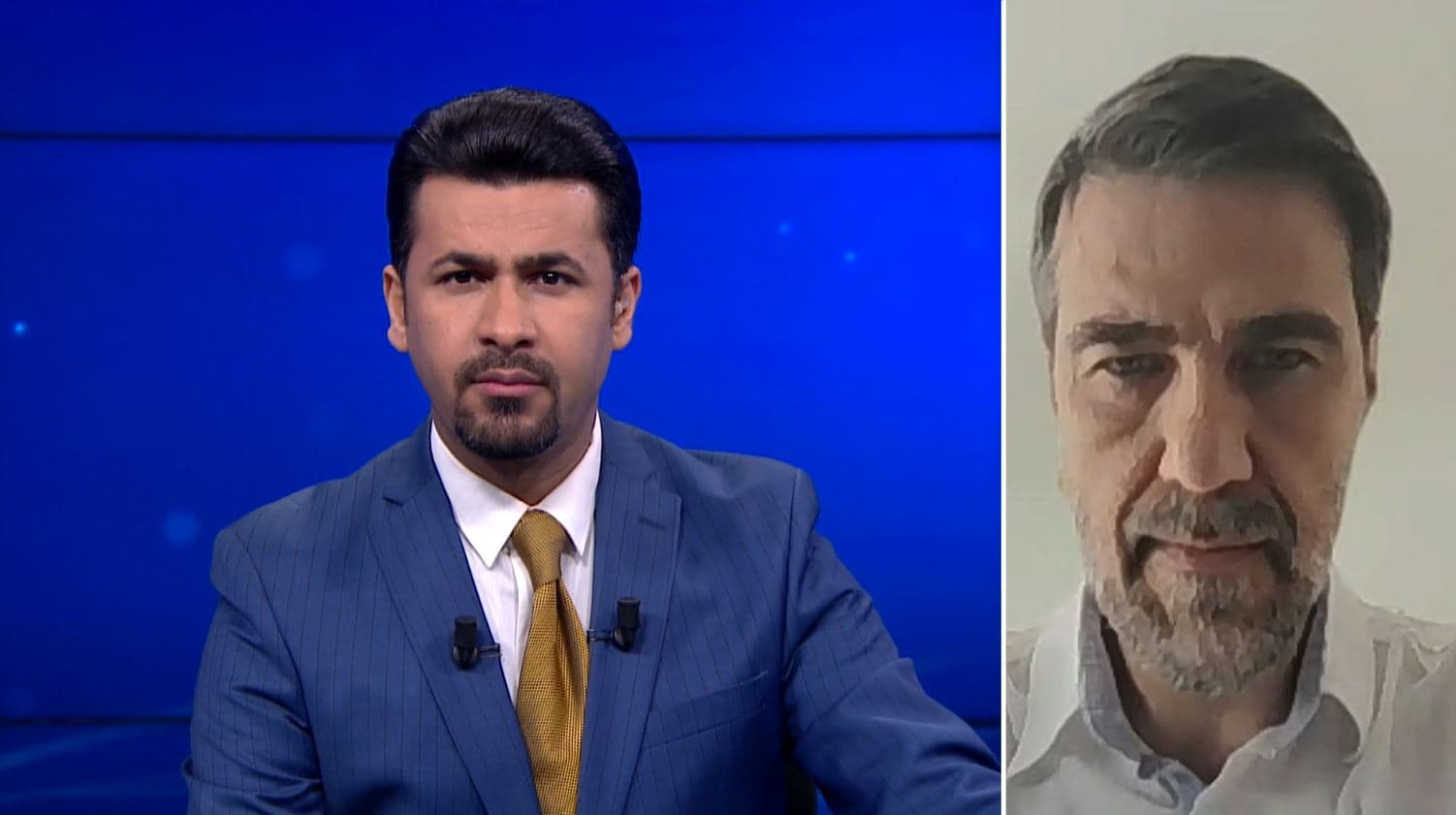
"We now see that the oil companies operating in Kurdistan Region of Iraq are finally getting the respect from Baghdad," Myles Caggins, CEO of Words Warriors, a global public relations and geopolitical consulting firm he founded in 2021, told Rudaw’s Warshin Salih on Thursday.
Caggins also serves as spokesperson for the Association of the Petroleum Industry of Kurdistan (APIKUR), an umbrella group of oil producers operating in the Kurdistan Region, but he spoke in his capacity as CEO of his own company.
"Since 2005, the international oil companies have invested more than $10 billion to produce oil in Kurdistan Region and exporting it through the Iraq-Turkey pipeline," he added.
Following the US-Israeli military campaign against Iran in late February, the Kurdistan Region came under a wave of attacks by Iran and Iran-aligned Iraqi armed groups, including strikes on oil fields that disrupted production and prompted some foreign companies to suspend operations.
Iraq’s new Prime Minister Ali al-Zaidi has promised to provide the fields with air defense systems to ensure their safety — a long-standing request from firms whose operations have repeatedly been disrupted by attacks from Iran-backed militia groups based in Iraq.
Caggins said that once the security guarantees are in place, the companies will increase production, which has dropped from more than 400,000 barrels per day to around 80,000 since the Iran war.
The following is the full text of the interview with Caggins:
What have you and the oil companies discussed regarding the Kurdistan Region’s oil?
Well, we now see that the oil companies operating in Kurdistan Region of Iraq are finally getting the respect from Baghdad. Since 2005, the international oil companies have invested more than $10 billion to produce oil in Kurdistan Region and exporting it through the Iraq-Turkey pipeline.
During the war, and the time of the closure of the Strait of Hormuz, the leaders in Baghdad decided that it is important for Iraq to export oil through the northern route, through the Iraq-Turkey Pipeline. But it is the leadership of the Kurdistan Regional Government with the support of international oil companies that has made it possible for all of Iraq to be a stronger player in the global oil markets,
and also to have more security and export routes.
How many companies have resumed oil production in the Kurdistan Region?
The oil producers in Kurdistan Region are all actively resuming their operations. This is a good sign. Some of these companies were directly hit by drones from outlaw militias, and they had damages to their fields. And some of the other companies just paused their operations because of security. We know that the Kurdistan Region has been hit by more than 650 drones and rockets.
And it was simply unsafe and not a wise decision to have so many workers, most of the workers are Iraqi, Iraqi Kurds, out at the fields to produce oil. Now the security situation has changed and Baghdad is making promises to protect the oil fields. This is a good sign and the companies are now producing again and exports will increase in the weeks ahead.
Will the oil companies be able to increase production after receiving the security guarantees?
Companies are definitely interested in increasing production. In fact, remember the two and a half years where the pipeline was closed? Companies paused investments during that time. There was more than $400 million of investments that were paused. Now that production is resumed, the companies can get back to focusing on their investments. This includes drilling new wells, bringing new technology to increase the production levels. We know that Baghdad supports this. The new Prime Minister Ali [al-]Zaidi has said he wants OPEC to examine
The production quotas for Iraq and Iraq should have a greater quota to be authorized to produce more oil for exporting from Kurdistan Region and also the south of Iraq.
Iraq is facilitating the work of American companies. On Tuesday, an energy deal was signed in this regard. What benefits will this bring to Iraq?
I was in Washington recently, and I must let you know that the Trump administration believes in a strong and sovereign, stable Iraq. And, of course, oil and gas is 80 percent of this country's economy. And now we see Baghdad authorizing large American companies, including HKN and Halliburton, to sign new deals for oil operations and production in federal Iraq.
There's no surprise this approval is coming weeks before Prime Minister Ali [al-]Zaidi is expected to visit the White House. This is important, and it shows the new Prime Minister wants to have a strong partnership with the United States, and he wants to pull away from Iran and Iran's tentacles that have been so deeply involved in Baghdad's government.
You have previously worked in the energy and security sectors. How do you see the Iraqi government’s anti-corruption campaign?
The prime minister has made a bold decision to arrest some of the top leaders, members of parliament, ministers of finance, deputy ministers who were corrupting and stealing from the people of Iraq. It is embarrassing. It is shocking the amount of money that was stolen. You have seen the piles of dollars, the dinars, some of the exotic, the jewelry. Now we see that Baghdad wants to stop the corruption. But we must also have prosecutions. These people should have a fair trial, and if they are guilty, they should go to jail.
I want to talk about something, an initiative that's happened here in Kurdistan Region this week. There's a bank here, RTB, Regional Trade Bank, and it has made a great step to show, to demonstrate that they are not going to have corruption in the finance sector. So this bank now has a board of directors, including former high-ranking officials from the US Department of Treasury and the White House, as well as European representatives from Turkey and Latvia. And RTB is the first bank inside of Iraq that is going to have the leadership to come into the international system and another sign that Kurdistan Region is against corruption and also following the trend of Prime Minister of Iraq who is against corruption.
How corrupt is the oil sector in Iraq?
Well, unfortunately, on the world corruption rankings, Iraq is always very low-ranked, somewhere always close to 10 from the bottom. That trend needs to change, and Iraq needs to be known as a place without corruption and a place where money from the treasury, the government's money, is delivering services for the people. It is very hot. The weather is very hot. It's summertime, and we know that there is not enough electricity. People in the south of Iraq are very angry because every year they have the same problem. Imagine if this money was not stolen from the Iraqi people and invested instead into infrastructure. There would be benefits for all Iraqi people.
You plan to visit Rojava. What is the purpose of the visit?
Well, I've been very fortunate to visit Rojava eight times since 2024, after my military career. I went there in September 2024, when Assad regime was still in charge. And now we have been able to develop good relations with the leaders in Hasaka government. We have seen now HKN Energy beginning its transition to leadership of the Rumelan fields, working very closely with the Kurds and Jazira oil company. And I think that Rojava and North and East Syria will be a prominent energy sector leader for not only Syria, but the world.
Let me give you one fun fact. Your viewers should know that 1 percent of all of the global oil production is in Kurdish lands. Kurdish lands in Bashur [Kurdistan Region and other Kurdish areas in Iraq] and in Rojava. That is amazing. So Kurdish people, Kurdish lands are producing energy that benefits the world.
Will you also meet with the Syrian government officials?
Absolutely. After I travel through North and East Syria and have some meetings in Rumelan, Qamishlo, I will travel down to Damascus for a US-Syria business conference. We are expecting more than 200 business leaders from the United States and other regional business leaders to meet with Syrian government officials and learn about investment opportunities. I will also make a visit to the coastal area at Banyaz and Tartus to meet with some of the Syrian petroleum company officials.
There are investors in the United States as well as investors in Iraq who have their eye on Syria. They see Syria as the new frontier, a new place where they can invest and get good returns and help lift the economy of Syrian people.
Do you think the Syrian oil infrastructure will be renovated with the support of the US in the near future?
Absolutely. We already see activity from HKN. They have people on the ground in North and East Syria. But we have companies coming in, too. Additionally, we'll have Hunt Oil that has signed a Memorandum of Understanding. Chevron will be working on the coast in what is called Block 3. And other American oil and gas companies will make investments for pipelines and refineries and oil production.
How much oil is produced in Rojava and Syria now?
Well, the estimates right now are there are about 60,000 barrels per day produced in northeastern Syria. But the Syrian Petroleum Company, and I think that by two years we will probably see more than 200,000 barrels produced in northeastern Syria as well as Deir ez-Zor. And the goal of the Syrian Petroleum Company is to have more than 500,000 barrels produced every day. That is a big amount. That is even more oil that's produced in Kurdistan Region of Iraq right now. So we should have our eyes on Syria.
My last question. What is your stance on the development of the banking system in the Kurdistan Region?
As I mentioned before, the banking system has previously been a challenge. Look, most of the time the payments here are done with cash or dinars, bills. And the banks, it's very difficult to transfer money in and out.
But now that we're having a bold, strong leadership from Regional Trade Bank, where they're putting in a good board of advisors, the bank will come into the international system for payments, and this will make more confidence for investors. When investors know that their money is safe, they will bring more money into Kurdistan Region, and RTB will be able to give better services to its customers.
Imagine that they have family, Kurds in Iraq have family in Europe or the United States, they will be able to make easy electronic wire transfers into RTB, but it is because they have a good solid board of advisors who will help the bank have a stronger relationship with international banks like Chase Bank or Citibank or some of those other large financial services outfits.