
ERBIL, Kurdistan Region - Despite Baghdad’s recent moves in Jurf al-Sakhr, it remains “too early” to assess Iraq’s efforts to disarm Iran-backed factions, with any progress likely to take years rather than “weeks or months,” according to an analyst.
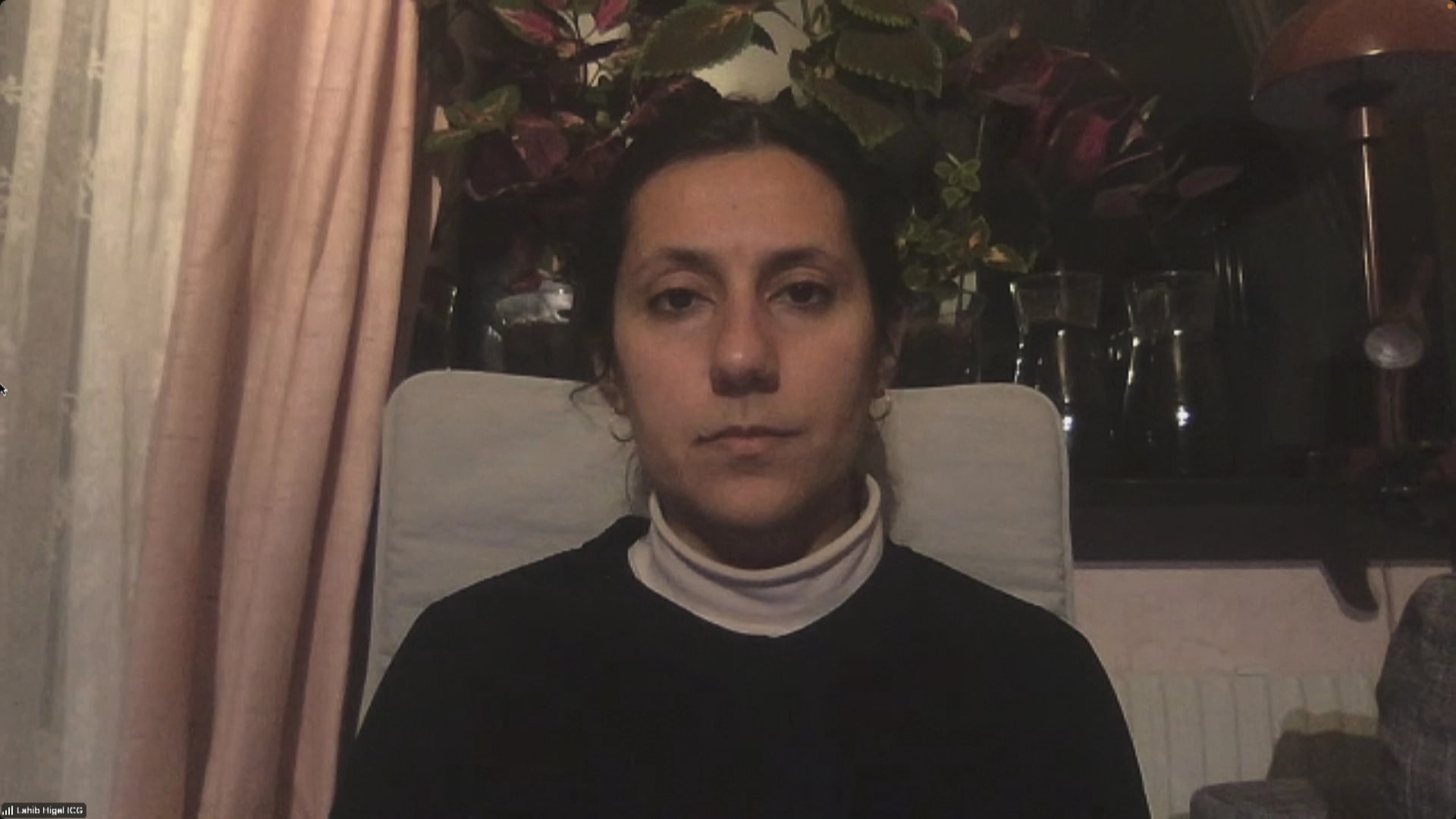
Lahib Higel, deputy program director for the Middle East and North Africa at the International Crisis Group, spoke to Rudaw’s Nwenar Fatih on Thursday about recent developments in Jurf al-Sakhr in Babil province and their implications for Baghdad’s disarmament efforts.
“This is the time for Iraq to get a hold on weapons, on oil smuggling because Iraq itself is on the brink for so many reasons, financially not the least,” Higel said, adding that the process “had only just started.”
Higel explained that the situation in Jurf al-Sakhr had “not quite been settled,” noting that Kata’ib Hezbollah had only partially withdrawn and maintained a presence in the subdistrict.
She said allegations of oil smuggling provided Baghdad with the justification and an “entry point” to challenge Kata’ib Hezbollah’s de facto control over the area, noting that illicit oil trade is widespread across Iraq.
According to Higel, Baghdad’s actions in Jurf al-Sakhr represent only the first step in a lengthy process that will extend beyond Iraqi Prime Minister Ali al-Zaidi’s term in office. Nevertheless, the move has set in motion a process that could eventually lead to the disarmament of Iran-backed factions.
Higel described Zaidi as “bolder” than his predecessors, having emerged politically at a time when perceptions of armed groups as “legitimate” resistance fighters had begun to fade.
In contrast, she said, Zaidi’s colleagues in the Shiite Coordination Framework are more reluctant to act due to their ties to these factions.
However, the Popular Mobilization Forces (PMF) continue to wield “significant power” over Iraq’s stability, meaning that efforts toward disarmament and integration into federal institutions must proceed in “small steps.”
Higel said Baghdad’s approach of starting with smaller groups has “logic,” citing the example of Saraya al-Salam, which became the first faction to disarm in June.
The challenge, she said, lies in “diffusing the influence” of larger groups among their “rank and file,” while integrating smaller factions into federal institutions and increasingly isolating those resisting disarmament.
Higel also warned that renewed hostilities between the United States and Israel on one side and Iran on the other could undermine Baghdad’s disarmament efforts. Should fighting resume, there would be “no way that the Iraqi political establishment can pressure these groups to remain on the sidelines.”
She added that factions such as Kata’ib Hezbollah and al-Nujaba, which have strongly opposed disarmament, would come to Tehran’s aid if fighting resumed.
Higel stressed that calm was necessary for Baghdad to provide armed groups with sufficient incentives to enter negotiations or, at the very least, to “allow the space for others to negotiate with the government.”