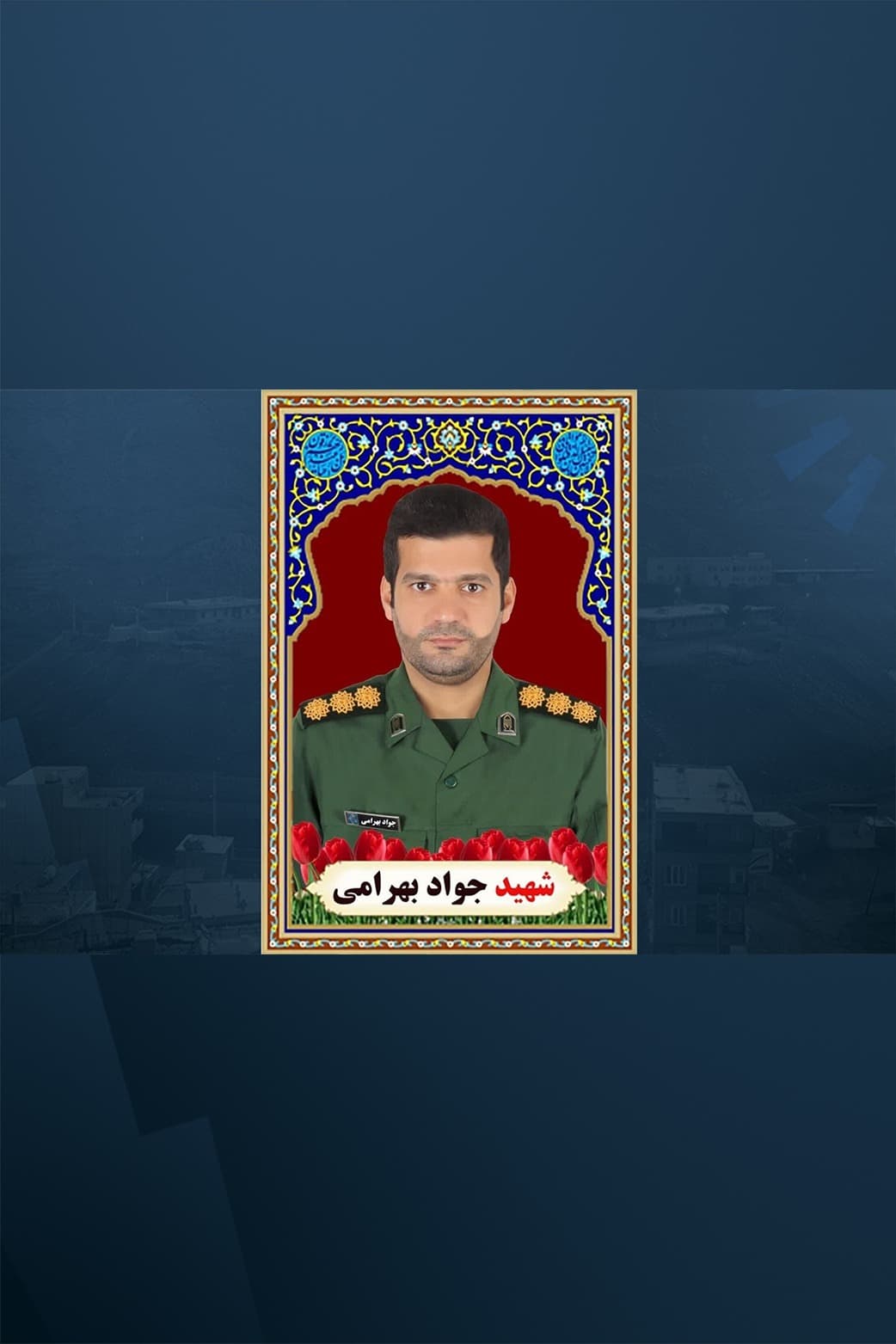
Erbil, Kurdistan Region - A senior officer in Iran’s Islamic Revolutionary Guard Corps (IRGC) has died from wounds he sustained during the US–Israeli bombing campaign in Paveh, Kermanshah province, earlier this year, local reports say.
Colonel Javad Bahrami, a Sunni Kurd, slipped into a coma after being seriously injured when an IRGC base outside Paveh was struck in early March. He succumbed to his injuries after months of treatment.
Paveh and nearby towns endured at least ten strikes during the six‑week bombing campaign that began on 28 February and ended with a cease‑fire on 8 April. Western Iranian provinces with large Kurdish populations saw some of the heaviest bombardment, with attacks focused on IRGC facilities.
The IRGC has long recruited tens of thousands of Sunni Kurds from western Iran, a region that has suffered from minimal economic investment by the central government. Many senior commanders started their careers fighting Kurdish Peshmerga groups in the 1980s and later created Kurdish units within the Guards to divide the local population.
Residents of Paveh reported that only one civilian was killed during the bombings, a man hit by flying debris. Throughout the conflict, the IRGC reinforced its bases and deployed additional troops to Kurdish areas, fearing opposition fighters might cross from Iraq under the cover of US and Israeli air power.
The Guards also mobilized thousands of retired Kurdish members to defend the region and launched hundreds of missiles and drones at Kurdish opposition bases in the Kurdistan Region of Iraq, killing several Peshmerga fighters and civilians.
The first major confrontation between Iran’s central government and Kurdish peshmerga fighters erupted in Paveh in 1979, where dozens of Revolutionary Guards were killed. Confronted with stiff resistance, the revolution’s founder Ayatollah Ruhollah Khomeini issued a fatwa ordering all security forces to rush to Paveh and recapture it from Kurdish forces.
The town has since taken on symbolic significance for the Islamic Republic. Iran even named a long‑range cruise missile “Paveh”; the missile, unveiled in 2023, has a reported range of about 1,650 kilometres and Iranian officials say it can reach targets as far as Israel.