ERBIL, Kurdistan - Iranian intelligence forces ambushed and killed a 35-year-old Kurdish man in northwestern Iran, a human rights group reported Monday, while Tehran claimed he was an armed opposition operative.
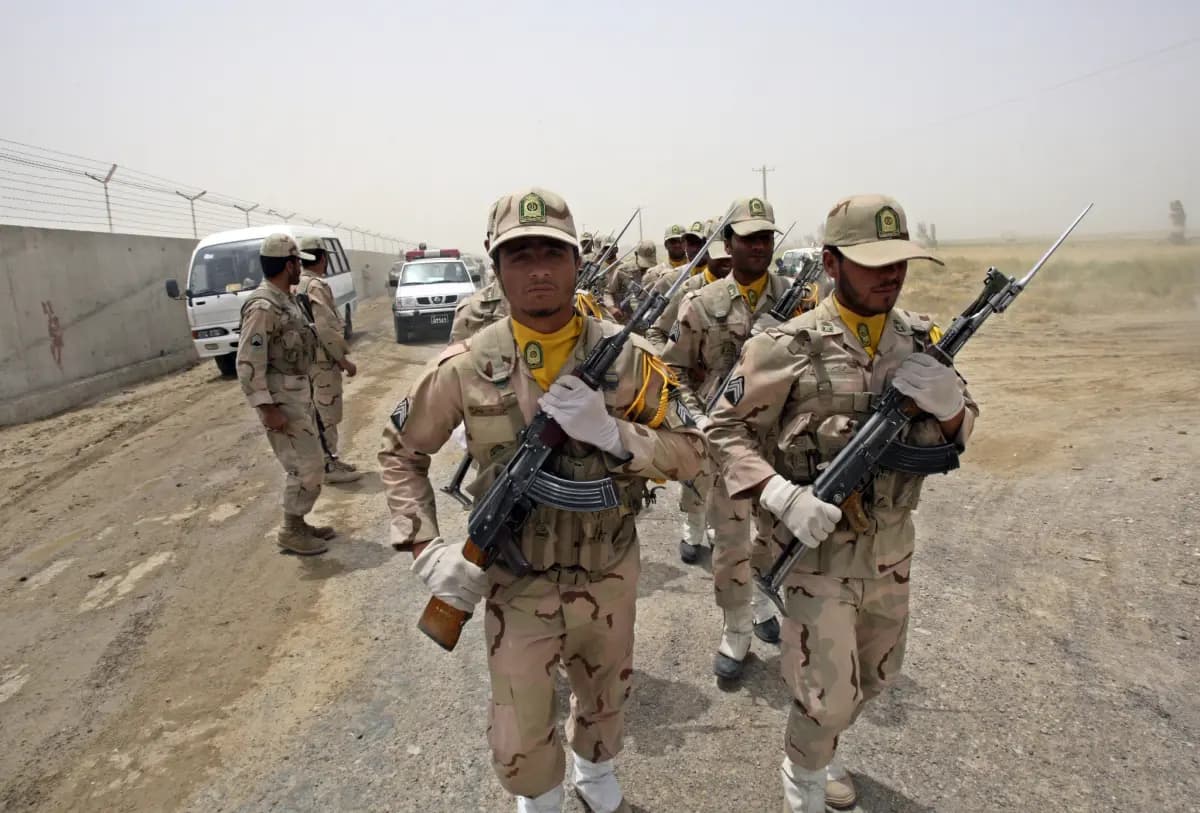
The shooting near West Azerbaijan province’s Piranshahr is the latest event of escalating tensions and heightened security operations across Iran’s Kurdish-majority northwestern provinces.
According to the France-based Kurdistan Human Rights Network (KHRN), “dozens” of intelligence officers “ambushed” Ali Oslub on Thursday evening as he rode a motorcycle near Jaldian village and “opened fire on him with weapons including DShK heavy machine guns and Kalashnikov rifles.”
He was hit by several bullets and died at the scene, before officers seized his body, the rights monitor said, adding that the Piranshahr prosecutor confirmed his death and told the family that his body was in the custody of security agencies and would not be handed over.
On 20 September, three days after the killing, the Ministry of Intelligence issued a statement describing Oslub as an “operational member” of a Kurdish opposition party, without identifying him by name. Rights groups did not disclose information regarding his affiliation nor did opposition groups claim him as a member as of this publication. Rudaw was unable to independently verify his affiliation.
The killing comes amid a broader surge in targeted assassinations and armed clashes across Iran's border provinces, where Kurdish and Baluch groups increasingly targeted figures affiliated with the Islamic Revolutionary Guard Corps (IRGC).
In mid-September in the northwestern town of Piranshahr, Kurdish armed group Khori Hiwa (Sun of Hope) claimed responsibility for the killing of Islam Kak Darvishi, a veteran IRGC operative accused by insurgents of heading local intelligence operations.
Simultaneously, state-linked figures in Iran's southeastern Sistan and Baluchestan province, which borders Pakistan and Afghanistan, have faced a wave of deadly attacks since September. In the provincial capital of Zahedan, unknown gunmen shot dead Yousef Gorgij, a prominent Sunni cleric with close ties to the IRGC and government institutions, underscoring the expanding security challenge confronting Tehran along its peripheral frontiers.
Iran’s Ministry of Intelligence acknowledged the operation in a statement on Sunday, claiming security forces “caught in an ambush” and eliminated an operative who “intended to assassinate” a local commander and “was killed in a confrontation with security forces,” according to the state-affiliated Iranian Students' News Agency (ISNA).
The ministry did not name Oslub directly, though Iranian state media published photographs of his body alongside statements declaring three “insurgent cells dismantled.”
In addition to extrajudicial killings, Kurdish areas in Iran, concentrated in northwestern and western provinces including Kurdistan, Kermanshah, West Azerbaijan and Ilam, have been the site of heavy security presence and several incidents targeting opposition groups and those believed to be affiliates.
Iranian intelligence forces on Monday arrested Kurdish opposition party member Sirwan Habibi and transferred him to an unknown location, reported the Kurdistan Free Life Party (PJAK), a Kurdish opposition group in Iran, as a local source told Rudaw that dozens of vehicles carrying plainclothes intelligence officers surrounded the area before the operation in what the party framed as “a premeditated conspiracy and an ambush,” maintaining that Habibi was unarmed during the time of his arrest.
Rights groups have raised alarm over Iranian authorities’ escalation of crackdowns including lack of transparency or due process and extrajudicial killings used to communicate a message of deterrence.
Iran executed at least 89 prisoners and arrested 117 people in August 2026, according to Oslo-based Hengaw Organization for Human Rights, with Kurds comprising 14 and 64 percent, respectively, highlighting Tehran’s uptick in crackdowns against protestors and dissidents since July. The rights group recorded 45 cases from individuals from Urmia (West Azerbaijan) province, 20 cases from the Kurdish-majority city of Sanandaj, and eight cases from Ilam province, all of whom were Kurds.