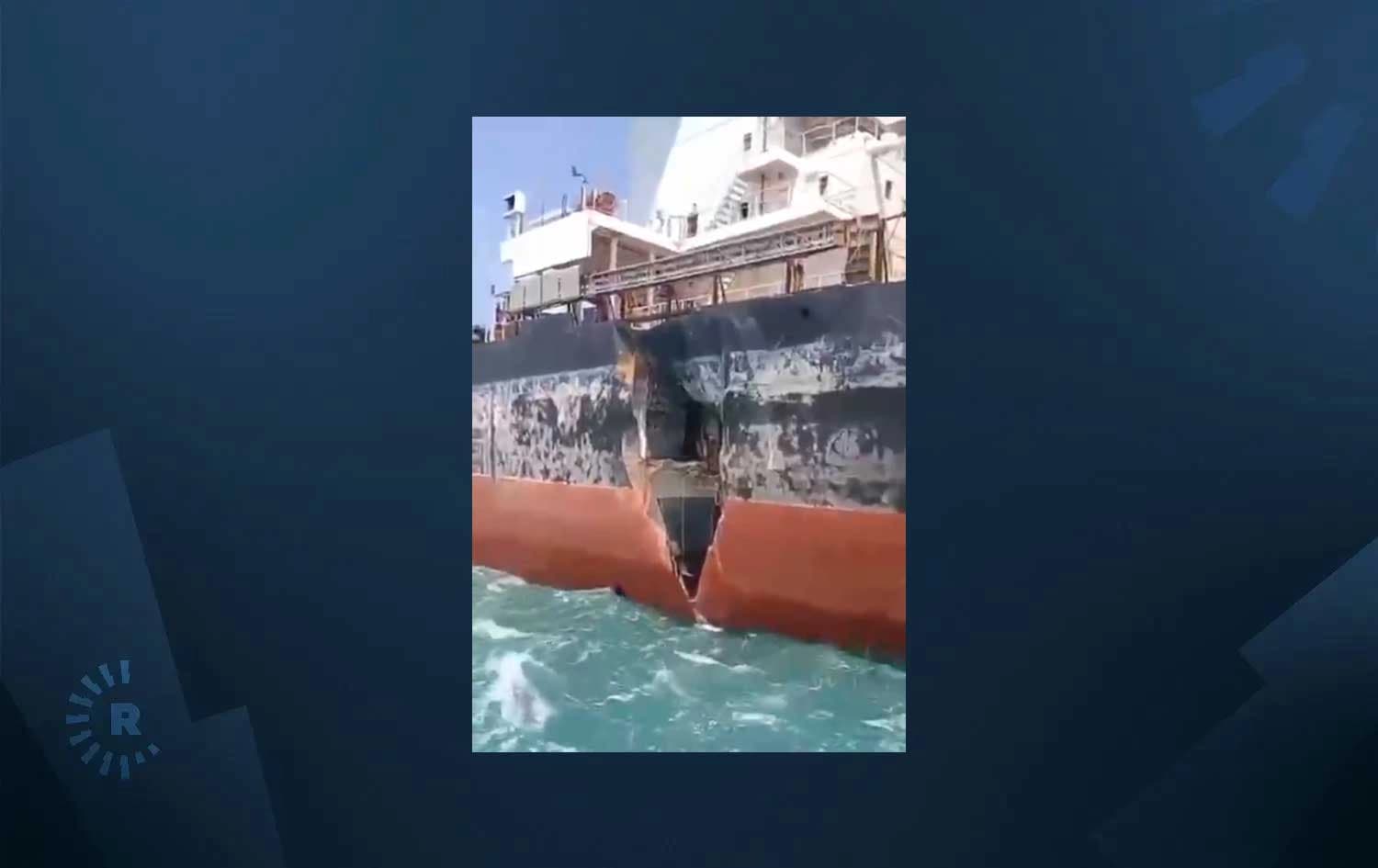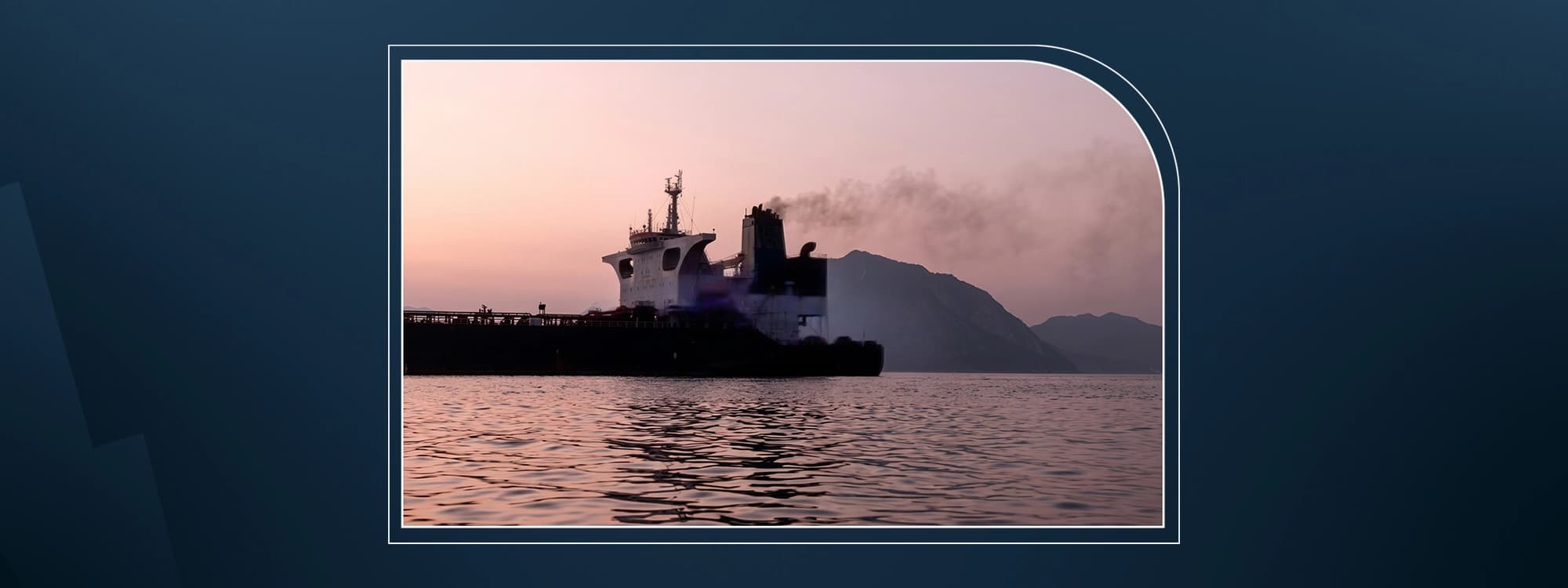

ERBIL, Kurdistan Region - Iran’s Islamic Revolutionary Guard Corps (IRGC) said Friday that two supertankers carrying more than 4.5 million barrels of crude oil had struck naval mines near the Strait of Hormuz, leaving both vessels disabled, as US President Donald Trump accused Tehran of fabricating maritime attacks to drive up oil prices ahead of the November US midterm elections.
The IRGC Navy said the tankers were attempting to cross the strategic waterway through what it described as an "unauthorized" southern route when they struck mines, triggering explosions and severe fires that disabled their engine rooms, according to a statement carried by Iran's semi-official Tasnim news agency.
Both vessels were left stranded near the southern coast of the strait after their crews abandoned them, the Guards said.
The statement did not identify the tankers, their owners or flags, or provide details about casualties, rescue operations or possible oil spills. The claims could not be independently verified.
The announcement came a day after Trump accused Iran of staging or fabricating attacks on shipping to push up global oil prices ahead of the November 3 US midterm elections.
"Iran is doing everything they can to drive up the price of Oil prior to the U.S. Midterm Election," Trump wrote Thursday on his Truth Social platform.
He accused Tehran of "making up fake hits, mines, and everything else," claiming that more oil was passing through the Strait of Hormuz than before the conflict.
The Iranian claims about attacks on ships have raised fresh concerns about maritime security in one of the world's most important energy corridors, where shipping has faced repeated disruptions since the outbreak of the US-Israeli war with Iran earlier this year.
Despite the tensions, Middle Eastern crude oil and condensate exports had recovered by Wednesday to levels above those recorded before the conflict, according to data shared by US Treasury Secretary Scott Bessent on X early Saturday.
The figures include shipments through the Strait of Hormuz, as well as alternative export routes through Oman, the United Arab Emirates' Fujairah port and the Red Sea.
The United States reinstated its blockade of Iranian ports in late July after Iranian authorities suspended transit through the Strait of Hormuz, further escalating a confrontation that has disrupted regional shipping and energy markets.
The strait, which connects the Persian Gulf to the Gulf of Oman, is a vital route for oil exports from Iraq, Saudi Arabia, Kuwait, the United Arab Emirates and other regional producers.
Around 20 million barrels of oil passed through the waterway daily in 2024, accounting for roughly one-fifth of global petroleum liquids consumption, according to the US Energy Information Administration.
Although some producers have pipelines and alternative export terminals that bypass the strait, much of the region's oil supply remains dependent on the narrow waterway, making any disruption a potential threat to global energy markets.