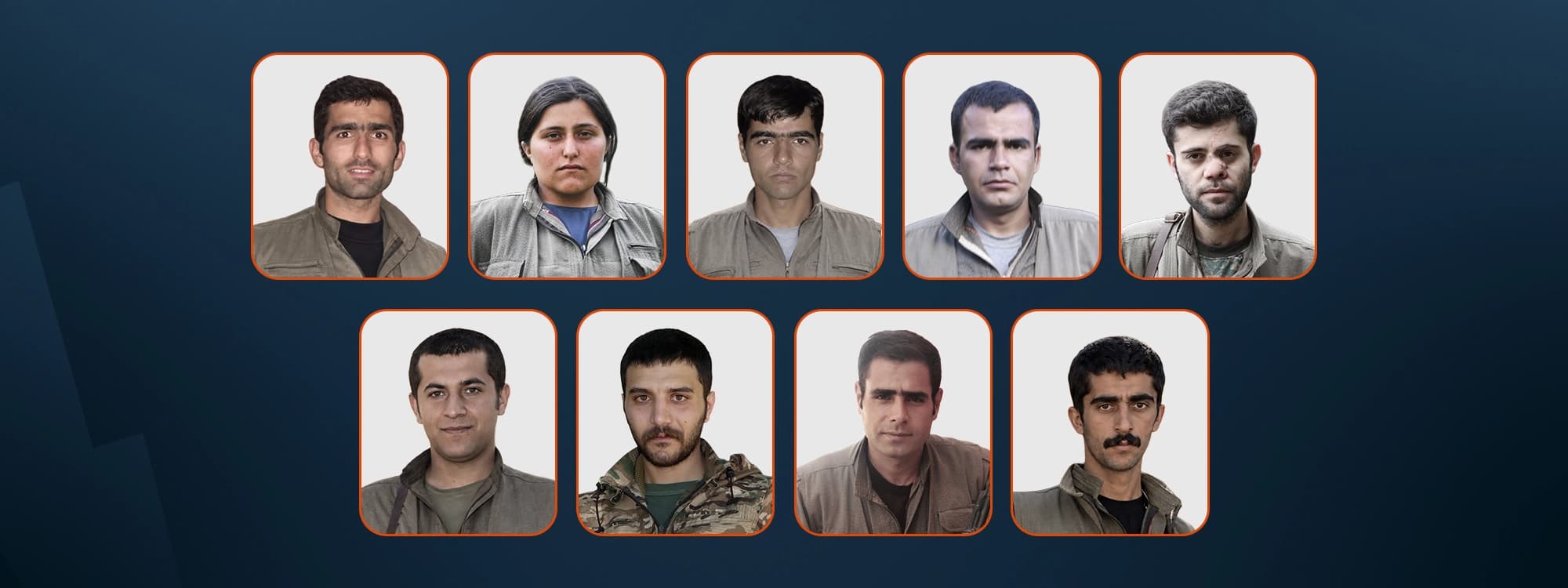

ERBIL, Kurdistan Region – The Kurdistan Workers’ Party (PKK) on Thursday announced the deaths of nine fighters from the Kurdish areas of western Iran who were killed between 2006 and 2022, as the group continues to release the identities of members who died over the past decades amid an ongoing peace process with Turkey.
The People's Defense Forces (HPG) – the PKK's armed wing – identified the nine fighters in a statement, saying they had been killed in different areas of the Kurdistan Region of Iraq and northeastern Syria (Rojava).
The announcement is the latest in a series of disclosures by the PKK in recent days and weeks, identifying fighters whose deaths had not previously been made public.
On September 7, the HPG released the identities of another 99 members killed in years prior, including several senior figures who had joined the organization in the 1990s.
The PKK has historically delayed announcing the deaths of its fighters, sometimes for years.
The nine fighters identified on Thursday were from several Kurdish cities in western Iran, including Sine (Sanandaj), Bokan, Salmas and Kamyaran.
They included a man from Bokan named Mohammed Fawzi, operating under the alias Artes Cicek, who was killed in Rojava in August 2014, as well as Sela Destan, born Zahra Esmaili in Salmas, who died in Avashin in December 2017.
Saman Mansouri, working under the alias Zana Adar, was from Sine and died in September 2006, while Rebwar Amed, born Khabat Yousifi in Kamyaran, was killed in May 2017.
The other five were from Sine: Welat Beritan, whose real name was Arash Mohammadi, killed in April 2018; Fidakar Ronahi, born Sarkawt Qaderi, killed in July 2022; Bekes Berivan, born Armin Saeed Rad, killed in February 2022; Bahoz Nishtman, born Adib Peshraw Shirini, killed in March 2020; and Nebez Evindar, whose real name was Mashallah Rajabi, killed in April 2019.
According to the HPG, the fighters died in different areas, including Qandil, Zap, Metina, Avashin and Gare mountains in the Kurdistan Region, as well as in Rojava.
Iranian Kurds within the PKK
The presence of Iranian Kurds within the PKK dates back several decades, particularly to the 1990s, when many young Kurds from western Iran joined the organization.
Recruitment accelerated following the capture of PKK founder Abdullah Ocalan in Kenya in February 1999 and his subsequent imprisonment in Turkey. Hundreds of Kurds from Iran joined the group that year.
The PKK's ideology and emphasis on Kurdish identity and political rights attracted recruits from across the Kurdish areas of Iran, where Kurdish political movements have long faced restrictions imposed by Tehran.
In April 2003, around 250 Iranian Kurdish members of the PKK gathered in the Qandil mountains in the Kurdistan Region bordering Iran and established the Free Life Party of Kurdistan (PJAK), according to a founding member who spoke to Rudaw English for a 2020 investigation.
PJAK subsequently developed its own armed struggle against Iranian security forces, particularly the Islamic Revolutionary Guard Corps (IRGC), while maintaining ideological links with the PKK.
However, not all Iranian Kurdish members joined PJAK. Some remained within the PKK's military and political structures, taking part in operations in Turkey, the Kurdistan Region and Syria.
At least 300 Kurds from Iran who participated in the fight against the Islamic State for several years in Rojava returned to the Qandil mountains earlier this year, informed sources told Rudaw English.
The latest announcement highlights the longstanding presence of Iranian Kurds within the PKK's ranks, despite the emergence of PJAK as a separate organization focused on Iran.
Deaths announced amid peace process
The disclosures come as the PKK's decades-long armed conflict with Turkey remains on hold, pending the outcome of an ongoing peace process involving imprisoned PKK leader Abdullah Ocalan, Turkish President Recep Tayyip Erdogan, and Nationalist Movement Party (MHP) leader Devlet Bahceli.
Ocalan, imprisoned on Turkey's Imrali island since 1999, called on the PKK in February 2025 to lay down its weapons and dissolve itself, paving the way for a renewed effort to end the conflict.
The PKK subsequently announced its dissolution and an end to its armed struggle in May 2025.
In October 2026, the group announced that it had withdrawn its remaining fighters from Turkish territory and abandoned several tunnels near the border, describing the move as part of its commitment to the peace process.
The process has been driven in part by Bahceli, whose unexpected political overtures towards Ocalan helped open the way for renewed dialogue, while Erdogan's government remains central to determining the legal and political steps needed to bring the conflict to a lasting end.
Syrian Kurdish fighters also identified
The disclosures of past casualties have also included Kurdish fighters from northeastern Syria.
Earlier this week, the PKK announced the identities of 30 Syrian Kurdish members killed in previous years, including Jiwan Ibrahim, a founding figure and former commander of the Internal Security Forces (Asayish) in Rojava.
Ibrahim, originally from the Kurdish city of Sare Kani in the country’s northeast, joined the PKK in 2001 and later played a prominent role in establishing Asayish following the outbreak of the Syrian conflict.
According to the PKK, he was killed in a Turkish military attack in the Gare Mountains in 2019, although his death was only publicly confirmed this week.
The latest announcements come as the PKK moves away from its decades-long armed campaign against Turkey, while the future of its fighters and affiliated Kurdish movements across the region remains uncertain.