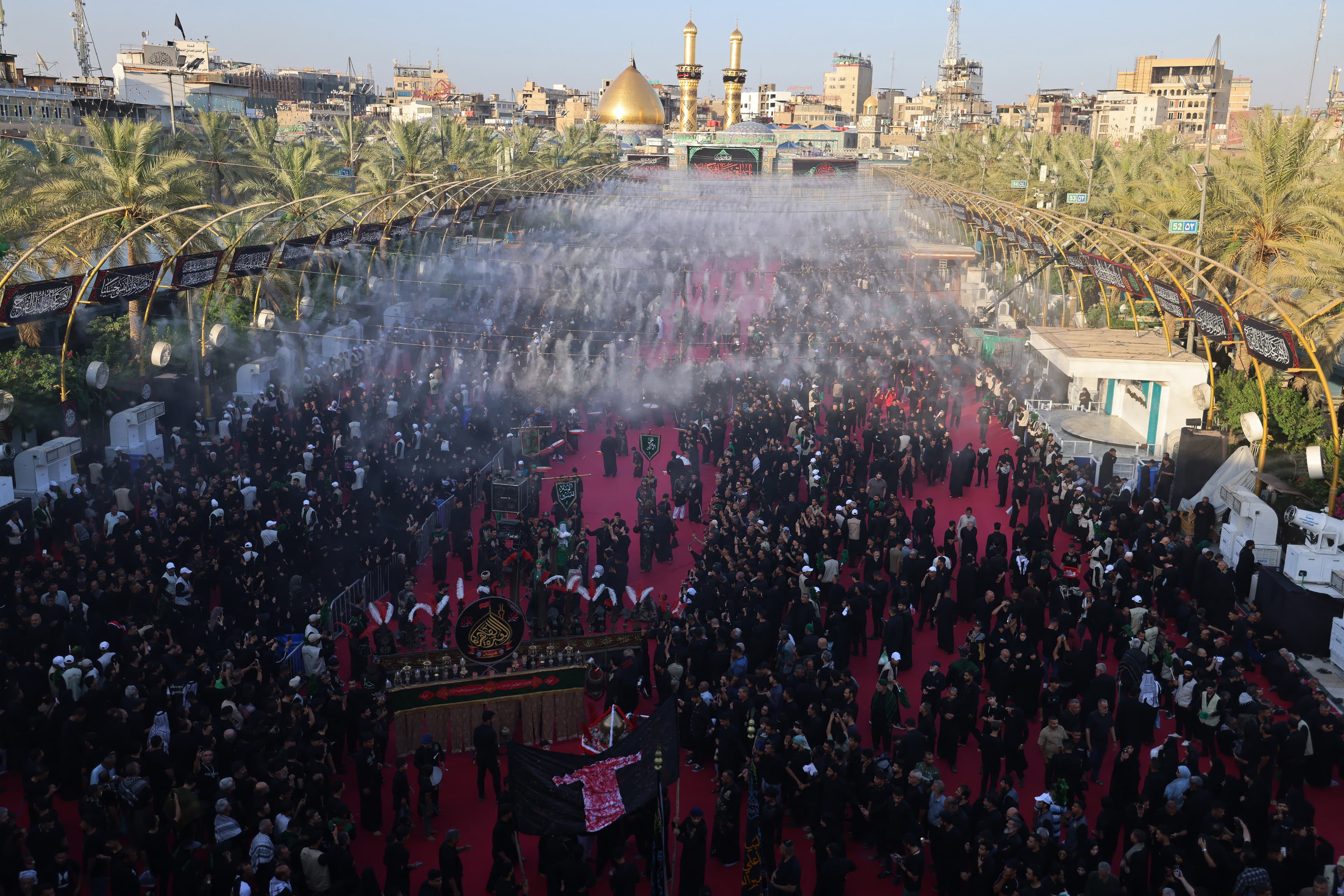
ERBIL, Kurdistan Region - Millions of Shiite pilgrims have gathered in the holy city of Karbala to commemorate Ashura, with authorities estimating that the city's population has swelled to nearly five million as worshippers from Iraq and abroad take part in the annual rituals.
More than three million pilgrims from Iran alone are participating in this year's commemoration, filling the city's streets, hotels, and public spaces as they mourn the martyrdom of Imam Hussein, the grandson of the Prophet Mohammed.
Many pilgrims have traveled long distances to reach Karbala, with some walking for days from the holy city of Najaf.
Ashura falls on the tenth day of Muharram in the Islamic calendar and marks the anniversary of Imam Hussein's death in the battle against the forces of Yazid of the Umayyad dynasty. Across the Shiite world, millions commemorate the occasion through mourning rituals, with some participants engaging in self-flagellation as an expression of grief.
Ali Mohammed, an Iranian pilgrim from Tehran visiting Karbala for the ninth time, told Rudaw's Ziyad Ismael on Thursday: "I have come six times on foot for the Arbaeen of Imam Hussein and three times for pilgrimage; this time, I brought my wife and son with me."
The annual pilgrimage to Karbala also precedes Arbaeen, which marks the end of the 40-day mourning period for Imam Hussein. Every year, millions of pilgrims from Iraq, Iran, Lebanon, Turkey, Kuwait, and other countries travel to the shrine in Karbala, many making the symbolic journey on foot from Najaf.
Pilgrims described their devotion to Imam Hussein as the driving force behind their journeys.
"Imam Hussein is extraordinary and beyond dispute; he is unique in the world and can fulfill any wish you have," Iranian pilgrim Siavash Ali told Rudaw.
For some, the journey has become an annual tradition. Shahsanam Amiri, who is attending the Ashura commemoration for the first time, told Rudaw: "I come every year for Arbaeen and we stay for eight days. This year, my husband, children, and I walked from Najaf to Karbala over the course of three days."
For Shiite Muslims, the mourning rituals - including weeping and chest-beating - symbolize devotion and remembrance of Imam Hussein, who was killed in the Battle of Karbala in 680 AD. Shiite Muslims believe the annual commemoration reflects an enduring spiritual connection to his sacrifice.