
ERBIL, Kurdistan Region - There will be "no room" for weapons outside state control by the end of September, a senior Iraqi security official told Rudaw on Monday, saying the deadline coincides with the end of the US-led Global Coalition's mission in the country, adding that the Iraqi premier's upcoming visit to Washington would lay the groundwork for a new partnership.
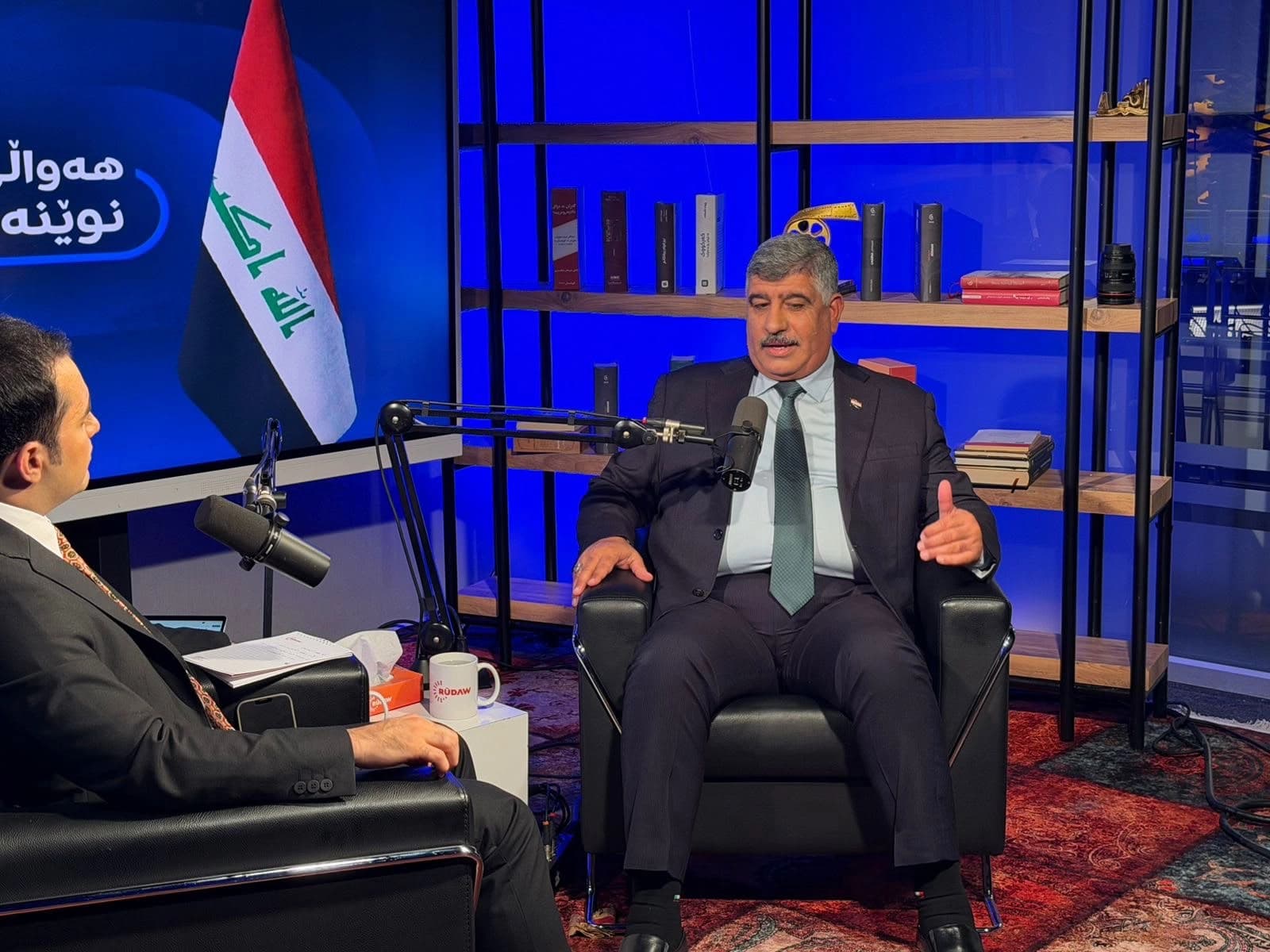
Iraqi Prime Minister Ali al-Zaidi has “affirmed that restricting weapons to the hands of the state is a sovereign decision,” government Spokesperson Sabah al-Numan told Rudaw’s Nwenar Fatih, adding that “decision-making on security affairs must lay solely in the hands of the Iraqi state.”
In early June, Zaidi ordered the formation of a committee to oversee the disengagement of political parties and armed factions from the Popular Mobilization Forces (PMF), amid a wider effort by the newly appointed premier to bring paramilitary groups and their arms under state control.
The PMF was established in 2014 during the Islamic State (ISIS) emergence in Syria and Iraq in which large parts of Iraq's north and west were seized.
Created in response to a fatwa, a decree, by Iraq's highest Shiite authority, Grand Ayatollah Ali al-Sistani, the PMF was initially an umbrella organization of roughly 70 predominantly Shiite armed groups with 250,000 members.
Functioning as a state-funded institution, the PMF includes armed factions widely believed to cooperate with the Iran-led ‘Axis of Resistance’ - with the core overlap including Asa'ib Ahl al-Haq, Kata'ib Hezbollah, Harakat Hezbollah al-Nujaba, and Kata'ib Sayyid al-Shuhada.
Several of these groups "have already begun integrating and by September 30 with the end of the Global Coalition's mission in Iraq, I believe there will be no room for weapons outside the state's framework," Numan said.
The US-led Global Coalition to Defeat ISIS was formed in 2014 under President Barack Obama to debilitate and ultimately defeat the group. Its military operations in Iraq began in October 2014 with airstrikes, later expanding to include advising and training Iraqi security forces.
The coalition comprises more than 89 countries and international organizations that have backed Baghdad in the war through military personnel, equipment, training, and financial support. As of mid-2025, the US maintained around 2,500 troops in Iraq.
However the bloc's presence in Iraq became a contentious issue after a US strike killed Iran's Quds Force commander Qasem Soleimani and PMF deputy chief Abu Mahdi al-Muhandis near Baghdad International Airport in January 2020. Days later, 168 of Iraq's 329 lawmakers voted to expel foreign forces from the country.
More recently, Tehran-aligned Iraqi armed groups have cited the presence of foreign troops as reasoning to not hand in arms.
However, Numan noted that the US-led Coalition would conclude its mandate scheduled for its deadline September, adding that the relationship between Iraq and the US would transition from the Global Coalition to "a bilateral partnership," where the "economic and military provisions" of the 2011 Strategic Framework Agreement between Baghdad and Washington would be activated.
Prime Minister Zaidi is set to visit the US in the coming days to "lay the foundation for this new phase,” the senior Iraqi official further noted.