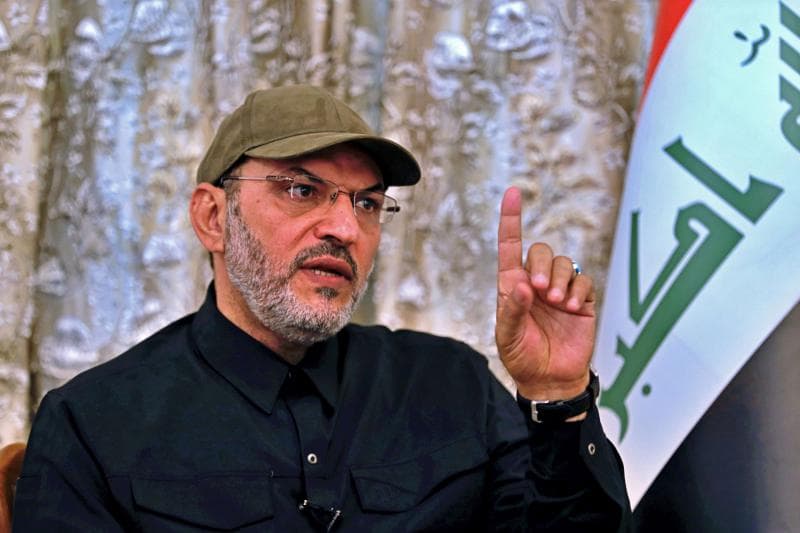
ERBIL, Kurdistan Region - Iraqi Prime Minister Ali al- Zaidi on Saturday announced plans to reconstitute and revitalize the Supreme Council for Women under a new vision, aiming to advance women's rights in the country.
During the 18th Islamic Day to Combat Violence Against Women Conference in Baghdad, Zaidi said women have been a priority in the government's program, stressing that the government is working to create "a safe environment that prevents violence against women and the diminishing of their status through deterrent measures and legislation."
The Supreme Council for Women is a governmental body chaired by the prime minister that addresses legislation and societal issues affecting women, enhancing their role in comprehensive development, and protecting them from violence.
“The most important element in safeguarding women’s rights is to develop their scientific and intellectual capacities and enable them to assume leadership positions," Zaidi said, adding that the government is proud of the presence of women in the institutions of the state.
The holding of the conference comes as Iraq faces mounting scrutiny over domestic violence and legal protections for women.
The Iraqi Observatory for Human Rights (IOHR) said in February that authorities recorded 36,289 domestic violence cases in 2025, up from 14,000 the previous year, while warning the real number is likely far higher because many survivors do not report abuse due to stigma, financial dependence, and limited legal protection.
The rights group also urged parliament to pass a federal anti-domestic violence law and repeal Article 41 of Iraq's Penal Code, which it said continues to be used to justify violence under the "right to discipline."
The issue has also drawn international attention. During Iraq's review before the UN Committee on the Elimination of Discrimination against Women (CEDAW) in February, committee experts welcomed Iraq's National Strategy for Iraqi Women but questioned the lack of a federal domestic violence law, legal provisions allowing mitigating circumstances in so-called "honor" crimes, and protections for survivors of gender-based violence.
Saturday’s conference brought together senior government officials, judicial leaders, and political figures to discuss legal and institutional efforts to combat violence against women.
Addressing the conference, Supreme Judicial Council (SJC) President Faiq Zaidan said violence against women in all its forms "represents a violation of human dignity and the rule of law." He said the judiciary has established specialized domestic violence courts, instructed judges to expedite such cases, and coordinated with relevant authorities to protect survivors.
Zaidi also highlighted the role Iraqi women played during the fight against the Islamic State (ISIS), saying the atrocities committed by the group underscored the need to strengthen women's rights and expand their role in state institutions.