

ERBIL, Kurdistan Region - Upstream water flows to Iraq have increased significantly as a nearly two-year water agreement between Baghdad and Ankara entered the implementation phase, an advisor to the Iraqi prime minister said on Friday, highlighting the enforcement of an oil-for-water mechanism to fund water projects across Iraq.
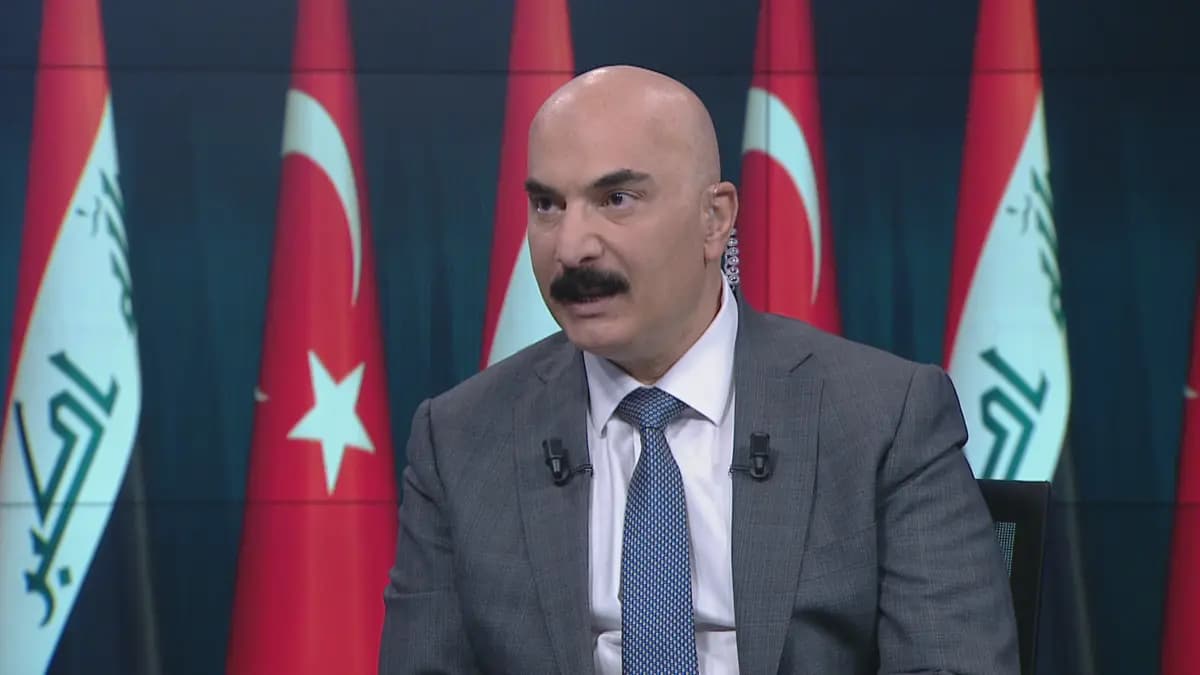
“Currently, the total volume of water in the Tigris and Euphrates is 800 to 900 cubic meters per second, which is double that of last year,” Turhan al-Mufti, Iraqi Prime Minister Ali al-Zaidi’s advisor for water affairs, told Rudaw’s Sangar Abdulrahman in an interview.
Iraq relies heavily on the Tigris and Euphrates rivers, both of which originate in Turkey. However, large-scale Turkish dam projects, including the Southeastern Anatolia Project (GAP), have significantly reduced downstream water flow, exacerbating drought, desertification, and environmental degradation.
In November 2025, Iraq and Turkey signed the implementation mechanism of the Framework Water Cooperation Agreement, following an initial agreement reached in 2023. Mufti said Zaidi has “reminded the Turkish side” in his Tuesday visit to Ankara that the understanding regarding the financing mechanism for projects within the framework agreement on water between the two countries is entering the implementation stage.
"According to this understanding with Turkey, the continuity of water releases will be guaranteed as a first step,” Mufti explained, adding that Baghdad “will establish a formula to determine monthly and seasonal requirements, and the Turkish side will release water based on that formula."
Mufti added that "Iraq's share will vary according to changing needs based on the existing formula. Recently, it has been the rainy season, and all dams along the Tigris are full, including Dukan, Darbandikhan, and Mosul."
He also pointed to the establishment of a joint Iraqi-Turkish fund which is set to initially receive the revenues of 30,000 barrels of oil daily. “Through this fund, Turkish companies, in cooperation with Iraqi companies, will execute projects under both the federal government and the Kurdistan Regional Government provinces,” the Iraqi premier’s advisor said.
A portion of Baghdad’s oil export revenues generated through Turkey is deposited directly into a joint escrow account rather than transferred through standard budget channels. The funds are then used to compensate Turkish engineering and construction firms working in partnership with Iraqi companies.
Downstream water flow from Turkey to Iraq has dramatically decreased in recent years, with the lowest recorded rate at 180 cubic meters per second in 2022, gradually increasing to rates alternating between 200 to 400 cubic meters per second.
Mufti hailed the agreement with Turkey, claiming it was unprecedented.
He said, “The only existing agreement with Turkey was signed 80 years ago, which primarily addresses flood management - even though 60 percent of our water comes from Turkey. The understanding signed with Turkey marks the first time an agreement addresses the continuous release of water and Iraq's share."
Experts say Iraq’s water crisis stems from a combination of climate change, declining rainfall, poor resource management, and upstream dam construction in Turkey and Iran. The absence of comprehensive water-sharing agreements with neighboring countries has further exposed Iraq to unilateral upstream management policies that could impact its water security.
Iraq and the Kurdistan Region witnessed torrential rainfall in the 2026’s rainy season. According to Erbil's metrological authority, 23 out of 25 dams as well as all the Region’s total 178 artificial ponds experienced overflow by May.


