ERBIL, Kurdistan Region - A dispute over the registration of around 1,800 residential plots in the Christian-majority town of Tel Kaif in Iraq's northern Nineveh province has reached Baghdad, with Christian lawmakers in the federal parliament demanding a halt to the process, arguing the land is being distributed to Arab citizens in violation of the constitution.
The case centers on a Ba'ath-era decision that allocated the 1,800 plots - covering some 400 dunams, equivalent to 1,000,000 square meters based on Iraq's definition of a dunam as 2,500 square meters - to employees of the former Jaber bin Hayyan military industrial establishment, a state-owned military defense complex in Iraq which then operated during the Saddam Hussein-led regime.
While the allocation was approved, ownership registration was never completed because of legal disputes.
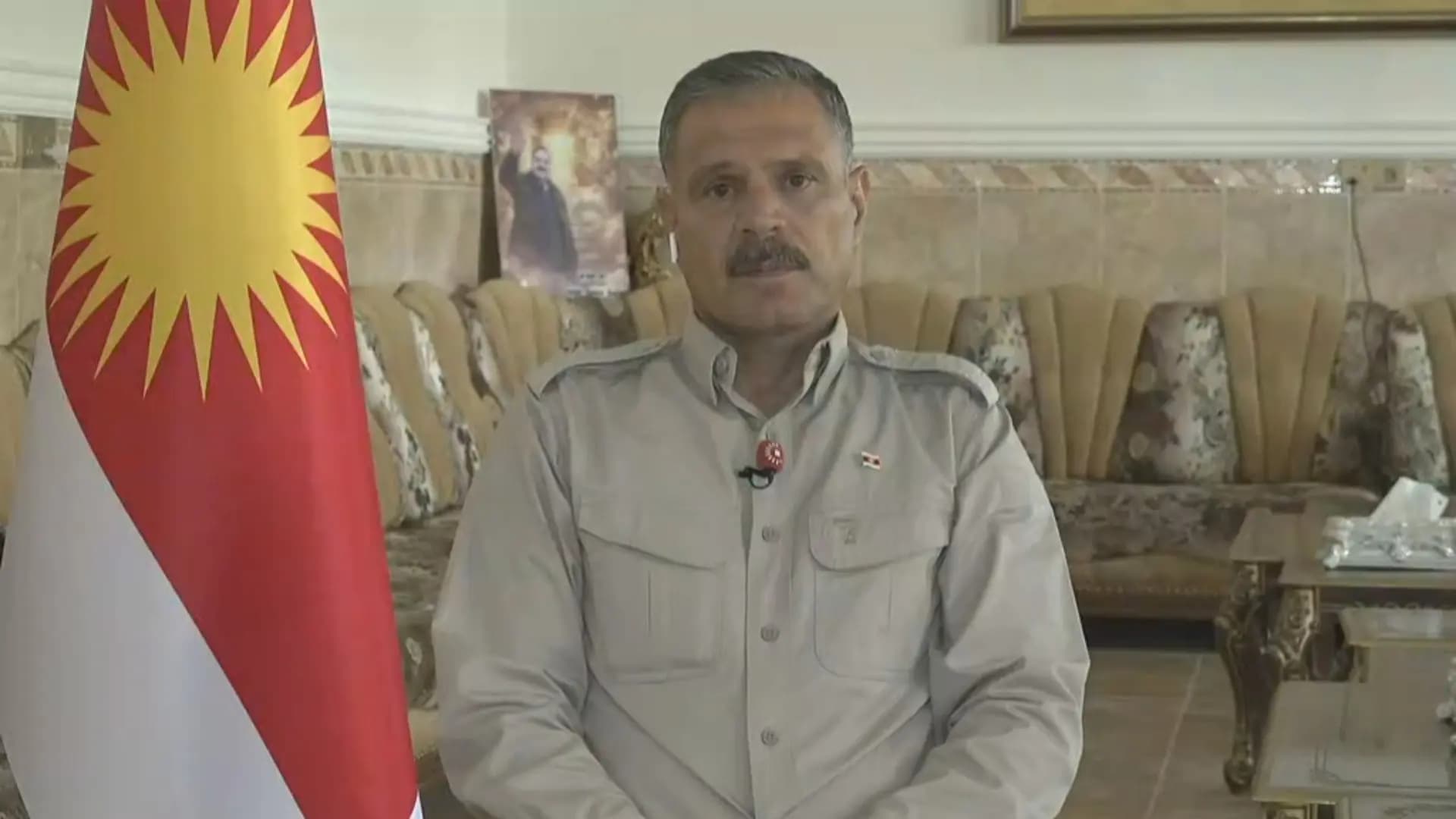
Mohammed Kakayee, a Nineveh Provincial Council member, told Rudaw's Hastyar Qadir on Sunday, "The people who have been allocated the plots in reference are Arab citizens," adding that the Council had "revived the procedures for registering the land, and the process is continuing and has not been suspended."
The dispute is specifically significant since Tel Kaif is among the territories covered by Article 140 of the Iraqi constitution, which sets out a process for resolving the status of disputed areas affected by the former Ba'ath regime's Arabization policies.
Christian political parties launched the Tel Kaif Initiative in late July, seeking to block the distribution of residential plots they say were confiscated from Chaldean and Assyrian families during the Ba'ath era, arguing that registering the plots before resolving the region's legal status could alter the demographic makeup of the historically Christian town.
Earlier that month, the Christian Suyana bloc in the Iraqi parliament sent letters to Prime Minister Ali al-Zaidi and Hadi al-Ameri - a senior member of Iraq's ruling Shiite Coordination Framework who heads the Higher Committee for the Implementation of Article 140 - warning that Tel Kaif municipality had begun ownership registration procedures despite the region's disputed status, and calling for the process to be halted.
A delegation from the Christian coalition met with Ameri on Saturday to discuss the issue. Kildo Ramzi, head of the Suyana bloc - which comprises the Assyrian Democratic Movement, the Abnaa al-Nahrain (Sons of Mesopotamia) and the Bet-Nahrain Democratic Party (BNDP) - told Rudaw that "Ameri promised to support us and told us he will visit Nineveh soon to discuss the matter."
The Nineveh Provincial Council was informed in 2025 by the Higher Committee for the Implementation of Article 140 that Tel Kaif is among the areas covered by the key article.
Accordingly, Christian political parties say that any administrative measures affecting land ownership in disputed territories should be suspended until the constitutional process is completed.
They also cite a 2013 interpretation by Iraq's Federal Supreme Court of another constitutional provision, Article 23, which ruled that administrative measures must not be used to alter the demographic composition of areas inhabited by a specific community.
For his part, Acting Tel Kaif District Commissioner Yasser Sheikh Assaf told Rudaw that no construction has taken place on the disputed plots thus far. "No buildings have been constructed on those lands, as there are people who have filed legal complaints against the procedures," he explained.
The land dispute comes as successive Iraqi governments have encouraged Iraqi Christians, the vast majority of which comprises Assyrians, Chaldeans, and Syriacs, who represent one of the oldest and most significant Christian communities in region, to return to the country in light of the sharp fall in the population - namely due to post-2003 sectarian violence and the Islamic State's (ISIS) 2014 persecution - from an estimated 1.5 million pre-2003 to fewer than 150,000 today, according to a 2022 US State Department report on international religious freedom.