
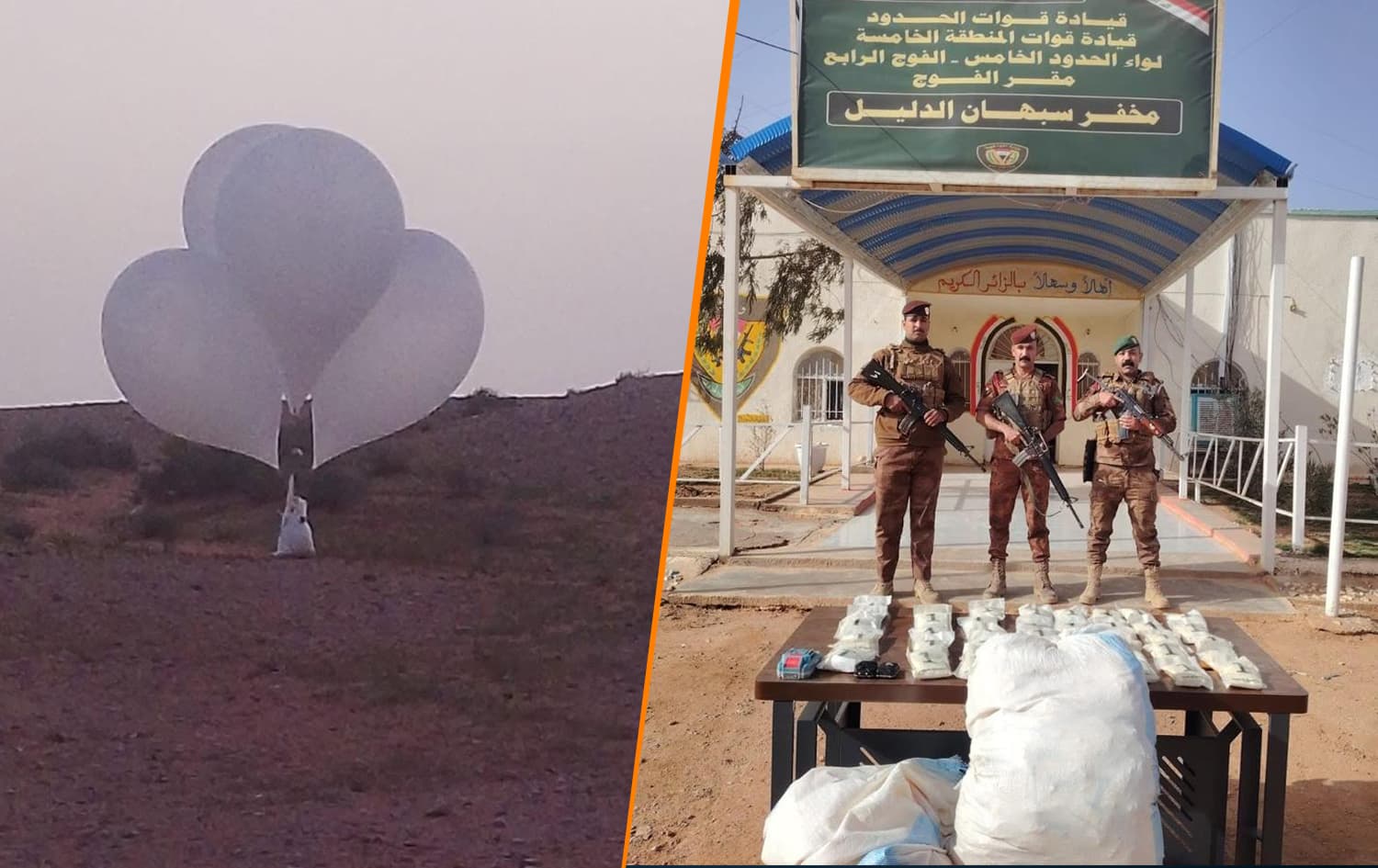

ERBIL, Kurdistan Region - Iraqi border forces have seized 4.5 million Captagon pills during the first six months of the year after foiling attempts to smuggle the narcotics into the country using balloons launched from Syria, according to data provided to Rudaw by the Iraqi Border Guard Command.
The figures show the pills were intended to be flown into the deserts of Anbar and Najaf provinces using GPS-equipped balloons, marking what officials say is a growing smuggling tactic adopted after the fall of the former Syrian regime in December 2024 and tighter security measures along the Iraqi-Syrian border.
"Most of the Captagon shipments transported by balloons and intercepted by border guards are launched from the Syrian border toward Iraq. In July alone, more than 4,000 Captagon pills were seized after traffickers attempted to smuggle them by balloon into the Rutba desert in Anbar province," Saad Ghazi, head of the security committee at the Anbar Provincial Council, told Rudaw's Hastyar Qadir on Tuesday.
The seizures highlight the evolving methods used by regional drug trafficking networks as Iraq continues to serve as both a destination and a transit route for Captagon, a highly addictive amphetamine-type stimulant. Iraqi authorities have intensified anti-narcotics operations in recent years, expanding cross-border cooperation with neighboring countries to disrupt trafficking networks.
A senior Iraqi border official, speaking to Rudaw on condition of anonymity, said, "The balloons carrying Captagon are usually released during the day and fly at a height of approximately 200 meters. They are equipped with GPS devices so drug traffickers can later locate and retrieve them after they land," the official said.
"Our border guard units immediately bring the balloons down whenever they detect them, preventing the shipments from reaching their intended destinations," the source added.
According to the official, part of the Captagon seized inside Iraq is intended for the domestic market, while traffickers attempt to move the rest onward to other countries, including Gulf states.
This year, Iraq has stepped up efforts to combat Captagon trafficking.
In June, Iraqi and Syrian anti-narcotics authorities dismantled an international trafficking network in joint operations inside Syria, seizing around 200 kilograms of narcotics destined for Iraq. Syrian authorities said the operation also led to the confiscation of 800,000 Captagon pills. At the time, officials said joint Iraqi-Syrian operations had seized more than five million Captagon pills since the start of 2026.
Authorities in Iraq have also carried out a series of domestic operations in recent months. In July, Iraqi security forces seized 51 kilograms of Captagon pills and arrested two suspected traffickers in separate raids. Days earlier, military intelligence arrested a suspected drug dealer in Baghdad who was allegedly carrying 14,000 Captagon pills.
Captagon was produced on an industrial scale in Syria under the rule of former president Bashar al-Assad, with regional and international officials long accusing figures linked to the former Syrian government of facilitating the trade. Although Assad's government has fallen, Iraqi officials say clandestine production and smuggling networks remain active across the border, forcing traffickers to adopt new methods to evade tighter security.
.png&w=3840&q=75)