
ERBIL, Kurdistan Region - The Iraqi government is pressing ahead with its push to restrict weapons to the state, and "there is no turning back" on the matter, a senior security official in Baghdad said Friday, a day after state media highlighted anti-terrorism legislation that imposes strict penalties on any armed group refusing to comply with the disarmament drive.
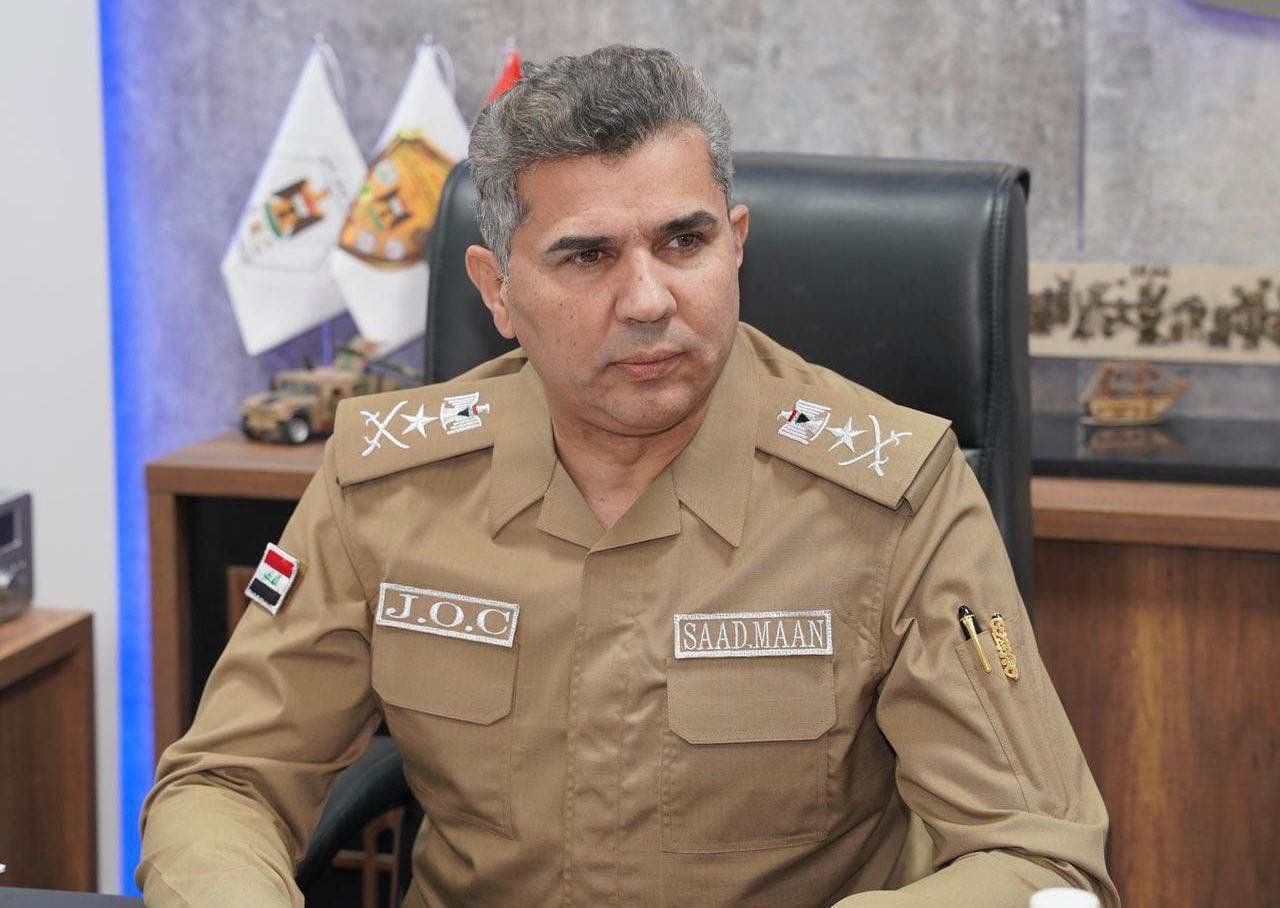
The Iraqi government, led by Prime Minister Ali al-Zaidi, "is moving forward with confining arms to the state, and there is no turning back on this issue," said Major General Saad Maan, head of the Security Media Cell - the media arm of Iraq's Joint Operations Command (JOC), which reports directly to the prime minister.
"This initiative is geared toward bolstering societal security, enhancing trust in institutions, supporting the economy and investment, consolidating the prestige of the state, and providing a more stable environment for future generations," Maan said in remarks carried by the state-run Iraqi News Agency (INA).
In his inaugural address before the Iraqi parliament in mid-May, Prime Minister Zaidi vowed security reform, including "confining weapons under state control," adding that he would enhance the capabilities of security forces and consolidate citizens' "confidence in democracy."
The premier in early June ordered the formation of a committee to oversee the disengagement of political parties and armed factions from the Popular Mobilization Forces (PMF).
The PMF was established in 2014 amid the emergence of the Islamic State (ISIS) in Syria and Iraq, which saw large parts of the country's north and west seized by the group.
Created in response to a fatwa issued by Iraq's highest Shiite authority, Grand Ayatollah Ali al-Sistani, the PMF was initially an umbrella organization of roughly 70 predominantly Shiite armed groups with 250,000 members.
Though a state-funded institution, the PMF comprises factions aligned with the Iran-led ‘Axis of Resistance’ with the core overlap including Asa'ib Ahl al-Haq, Kataib Hezbollah, Harakat Hezbollah al-Nujaba, and Kataib Sayyid al-Shuhada armed groups.
While some factions have expressed willingness to comply with Zaidi's push, others have cited the continued presence of foreign forces - namely those of the US-led Global Coalition to Defeat ISIS - as justification for refusing to comply.
Despite this, Zaidi's spokesperson, Sabah al-Numan, told Rudaw in mid-July that a September 30 deadline set by the premier to bring Iraqi armed groups' weapons under state control is "fixed and irreversible."
For its part, Iraq's state media on Thursday republished the anti-terrorism law, emphasizing strict penalties for armed groups operating in the country that refuse to disarm by the end of September. The move coincided with Iraqi security forces boosting their combat readiness as the deadline draws near.
RELATED: Iraqi state media republishes anti-terrorism law as security forces enter state of ‘high readiness’