
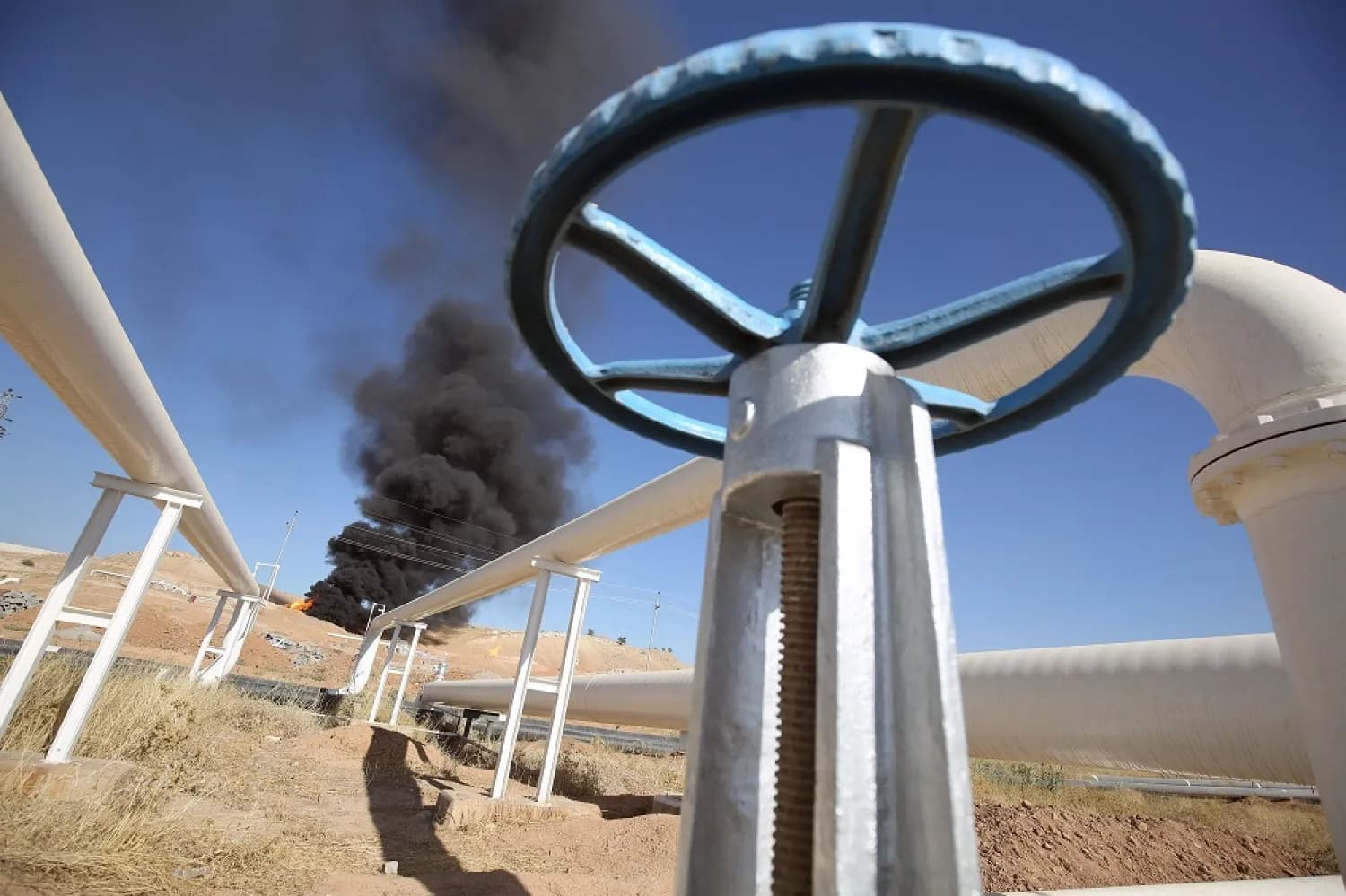

ERBIL, Kurdistan Region - Rehabilitation and inspection works have been completed on the pipeline transporting oil from southern fields in Basra to the Peshkhabur pipeline in the Kurdistan Region, Iraq’s oil minister said on Sunday, as the country seeks to diversify its export routes following disruptions in the Strait of Hormuz. The pipeline forms part of a network connecting Iraq to Turkey’s Ceyhan port.
Basim Mohammed Khudair confirmed to state-owned Al-Sabah newspaper the “upcoming restart of the Strategic Pipeline extending from Basra in the south to Haditha [in Anbar province]” and the Kurdistan Region.
“This is alongside bringing the Kurdistan Region pipeline into service as part of an integrated package of measures aimed at diversifying northern export outlets and boosting their export capacity,” he added.
Both pipeline networks feed into the major Iraq-Turkey Pipeline (ITP).
Baghdad and Ankara signed an interim agreement earlier this month to renew their 1973 oil export treaty, which expired in late July. Khudair at the time pointed to “an ambitious plan” to route part of Basra’s oil through the pipeline, with the aim of achieving export volumes exceeding 700,000 barrels per day (bpd).
Khudair noted on Sunday that the ITP agreement brings together Turkish state-owned company BOTAS and the Iraqi oil ministry’s subsidiary Oil Projects Company “to conduct technical inspection and rehabilitation of the northern export system,” paving the way for pumping between 500,000 and 750,000 bpd to the ITP’s end destination - Ceyhan port.
He also highlighted contracts with Erbil-based KAR Group to transport 200,000 barrels of oil per day - “and another contract for 100,000 barrels “ - as “rapid solutions to boost pumping toward Ceyhan” via trucks.
However, the Iraqi oil minister said export capacity depends on “the availability of required quantities, particularly in light of declining oil production in the Kurdistan Region due to regional developments” as well as “stability of navigation in the Strait of Hormuz.”
Caught in the crossfire of the regional conflict that erupted in late February amid renewed and fluctuating hostilities between Iran and the US, the Region has been repeatedly targeted by Iran and its aligned armed groups in Iraq.
Kurdistan Region Prime Minister Masrour Barzani told Al Jazeera on Saturday that the Region has been attacked 1,000 times. The attacks have killed 32 people and injuring around 150 others, according to Rudaw’s data.
The strikes have also targeted international oil firms, forcing them to reduce or suspend production.
The Iraqi oil minister said a return to national production levels of around 4 million barrels per day is contingent on stable navigation in the Strait of Hormuz and the availability of sufficient storage capacity.
The strategic waterway has been at the center of tensions between the US and Iran, with Washington imposing a naval blockade targeting Iranian ports and Tehran threatening passing ships, imposing unofficial fees and firing projectiles. The tit-for-tat restrictions have effectively disrupted commercial shipping through the waterway.
The regional war and the disruption in the Strait of Hormuz have dealt a major blow to the Iraqi oil sector and broader economy, with crude production falling from approximately 4.14 million bpd before the crisis to 1.49 million bpd at the height of the blockade.
.png&w=3840&q=75)