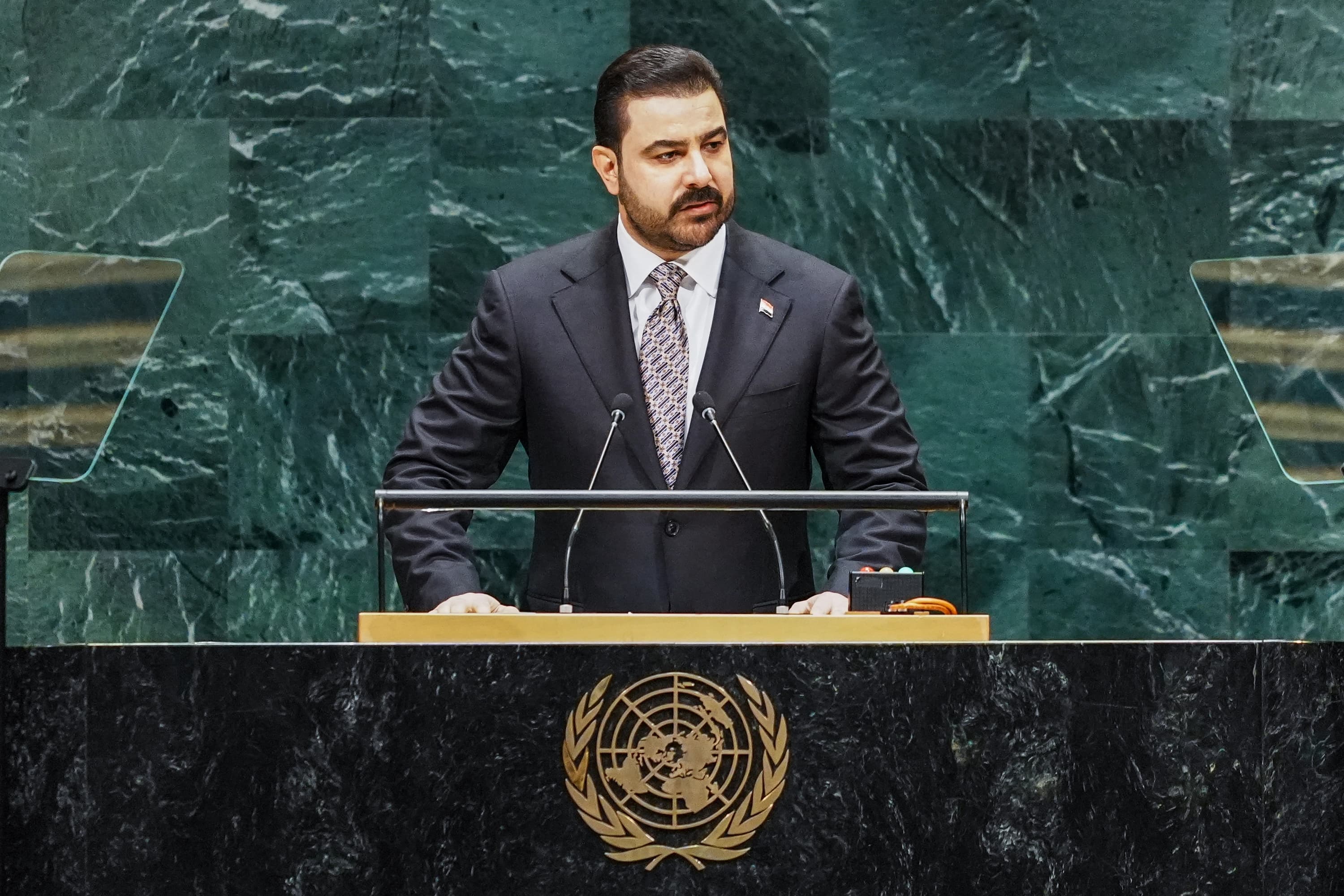
ERBIL, Kurdistan Region - Iraqi Prime Minister Zaidi reaffirmed his commitment to combating corruption, strengthening state security and diversifying the national economy during an address to world leaders at the 81st United Nations General Assembly on Friday. "Our government is waging a battle to combat corruption and protect public funds," Zaidi said. Zaidi has made strengthening state institutions and the rule of law key priorities of his administration, launching Operation Dawn in late June as a large-scale anti-corruption campaign aimed at rooting out embezzlement. More than 200 officials, lawmakers, government employees and business figures were detained during the first six weeks of the operation. Iraqi authorities have recovered more than $1 billion in assets and real estate during the crackdown, government spokesperson Haider al-Aboudi said in late August. Aboudi said at the time that the integrity commission had received more than 26,000 corruption reports since Operation Dawn began. Coalition withdrawal, security transition Security reforms and the imminent departure of foreign forces formed a major part of the prime minister's address. "We are determined that the state remains the sole decision-maker in peace and war," Zaidi stated, adding that weapons and instruments of power must remain exclusively within constitutional institutions. He emphasized that these executive measures ensure "the law is the ultimate arbiter, and the national interest serves as the compass." Zaidi addressed Iraq's changing international military partnerships ahead of a September 30 deadline for the scheduled end of the United States-led coalition's military mission in the country. "With the conclusion of the Global Coalition's mission in Iraq, we are transitioning our relationship with our strategic partners to a new phase—from military cooperation to economic and developmental cooperation, serving our mutual interests," he said. This transition, he said, would double efforts to complete the development of Iraq's security and military capabilities to protect the country's sovereignty. The premier previously vowed sweeping security reforms during his inaugural address to the Iraqi parliament in mid-May, aiming to confine weapons to state control. In early June, Zaidi ordered the formation of a committee to oversee the disengagement of political parties and armed factions from the state-funded Popular Mobilization Forces (PMF). The US subsequently intensified pressure on Baghdad to rein in the Islamic Resistance in Iraq, an umbrella entity of pro-Iran armed groups overlapping with the PMF. Operating under the Islamic Resistance banner, various PMF factions played an active role in backing Tehran during a six-week regional war that began in late February, claiming more than 750 attacks by early April. While many factions aligned with Zaidi's push, Kataib Hezbollah, Harakat al-Nujaba and Kataib Sayyid al-Shuhada have rebuffed calls to disarm despite the impending deadline. Amid these challenges, Zaidi issued a six-point proposal on Tuesday to the Iran-backed factions, suggesting an extension of the disarmament deadline to mid-2027, according to a senior official within the ruling Coordination Framework. Economic diversification, energy corridors Turning to the economy, Zaidi outlined plans to transform Iraq into an active and productive regional partner by reducing its reliance on a rentier economy and reinforcing open-market policies. He stressed the need to provide a safe environment for national and foreign investment across the energy, industry, agriculture and technology sectors. "From the rostrum of the United Nations, we say to the world: Invest with Iraq," Zaidi urged the assembly. In the energy sector, Zaidi said his government is adopting an ambitious program to increase crude oil production, develop gas fields and expand refining capacity. However, he expressed concern over recent threats to maritime navigation and the resulting spike in global energy prices. "To contain the risks and consequences for our peoples, we are working to diversify our oil export outlets and develop energy lines and corridors connecting Iraq with Turkey, Jordan, and Syria," Zaidi explained. The Strait of Hormuz, which handles over 90 percent of Iraq's seaborne crude exports, became a contentious flashpoint between Washington and Tehran during the six-week war that began in late February. The crisis and subsequent closure of the strait dealt a major blow to the Iraqi economy, with crude production plummeting from 4.14 million barrels per day to 1.49 million barrels per day. Concluding his economic vision, Zaidi emphasized that Iraqi citizens remain the ultimate focus of the state's efforts, with priorities including youth empowerment, job diversification and the digital economy.


.png&w=3840&q=75)