

ERBIL, Kurdistan Region - The United States has rejected a proposal by Iran-aligned Iraqi armed groups to freeze their military activities for two years instead of fully disarming, several informed sources told Rudaw.
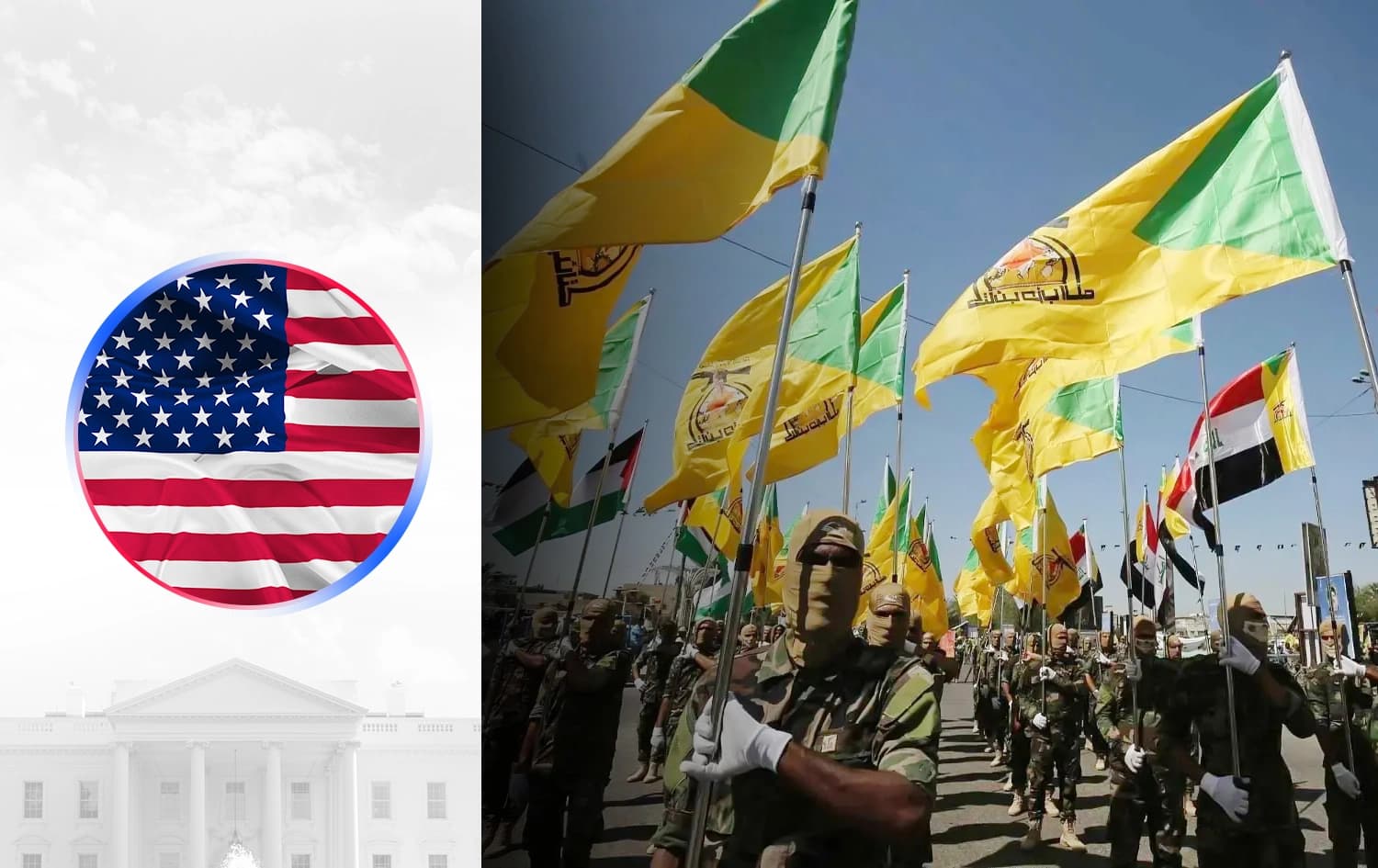
While some armed groups have responded positively to a call by Iraq's new Prime Minister Ali al-Zaidi to lay down their weapons, five factions have refused, including Kata’ib Hezbollah, Sayyid al-Shuhada, and Harakat al-Nujaba.
A well-informed source told Rudaw on Wednesday that the five Tehran-aligned groups proposed to "freeze their arms and fully halt military activities for two years, while remaining intact as distinct groups and military structures."
Two other Iraqi sources confirmed that the proposal had been submitted.
According to the three sources, Falih al-Fayyadh, head of the Popular Mobilization Commission (PMC), and Qasim al-Araji, national security advisor to Zaidi, are acting as mediators between the government and the armed groups.
The PMC serves as the official umbrella organization overseeing Iraq's Popular Mobilization Forces (PMF, or Hashed al-Shaabi).
Sources, including one briefed on the talks, said that after the proposal was delivered to the Iraqi government and relayed to Washington via the US Embassy in Baghdad, the US immediately rejected it, labeling it a "trick."
The US State Department did not immediately respond to a request for comment.
Disarming paramilitary factions and restricting weapons exclusively to state control is a cornerstone of Zaidi's cabinet agenda - an effort backed by US President Donald Trump.
The factions, who sided with Iran in its latest war with the US, have repeatedly linked their disarmament to the presence of foreign troops. The Iraqi government's September 30 deadline for the groups to disarm coincides with the scheduled full withdrawal of foreign troops operating under the US-led global coalition battling the Islamic State group.
The three sources spoke on condition of anonymity because of the sensitivity of the issue and because they were not authorized to brief the media.
One source said the five groups had initially offered to integrate into the PMF on an individual basis, provided parliament passed a stalled bill regulating PMF service and pensions. The legislation seeks to standardize administrative, financial, and legal rights for PMF members to match those of the Iraqi military and federal police.
However, the factions shifted their position to the two-year freeze earlier this month following visits to Iraq by senior Iranian officials, including Islamic Revolutionary Guard Corps commander Esmail Qaani and Iranian parliament speaker Mohammad Bagher Ghalibaf.
"The Iraqi government agreed to integrate the groups' fighters into the PMF following the passage of the PMF law, but the groups' sudden change to the proposal has stalled the process," said a source familiar with the negotiations.
Kurdistan Region has frequently been targeted by drone and rocket strikes launched from disputed areas. The attacks have struck critical energy infrastructure - including the Khor Mor gas field in Sulaimani province - as well as military installations hosting coalition advisors, residential areas in Erbil, and bases belonging to Iranian Kurdish opposition groups.
Kurdish authorities have consistently condemned the strikes as violations of Iraqi sovereignty and acts of economic sabotage, urging Baghdad to rein in rogue factions and secure regional boundaries to prevent the territory from becoming a proxy battleground.
The groups escalated cross-border operations during the recent US-Iran conflict, extending strikes to regional targets, including Saudi Arabia. Riyadh carried out retaliatory strikes on PMF positions across Iraq late July in coordination with Washington.
The PMF, an umbrella organization grouping several Iran-aligned factions, announced Thursday that it plans to hold a week of celebrations leading up to the scheduled withdrawal of coalition forces, an exit the former paramilitary network has demanded for years.
In mid-August, the factions introduced new conditions for laying down their arms, demanding the withdrawal of Turkish troops from northern Iraq and the disbandment of the autonomous Kurdistan Region's Peshmerga forces.
Erbil has repeatedly pushed back, stressing that the Peshmerga is an official, constitutionally recognized security force that does not fall under Zaidi's disarmament campaign.