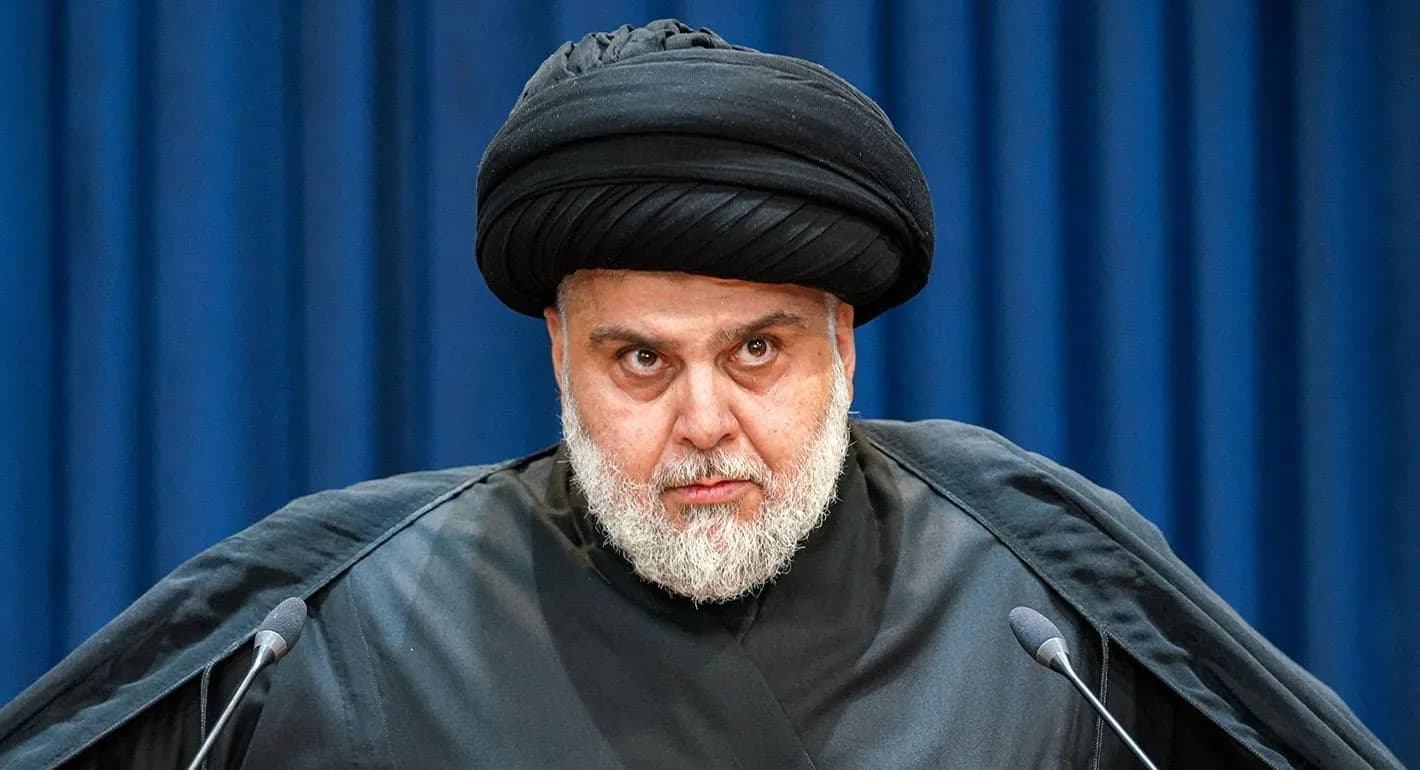

ERBIL, Kurdistan Region - Iraq’s popular Shiite cleric Muqtada al-Sadr on Sunday warned neighboring and other countries against intervening in Iraq’s internal affairs after the US-led Coalition completes its withdrawal by the end of the month, vowing to firmly reject any such intervention.
In a statement published on his Telegram channel, Sadr said he was “looking forward with immense joy and happiness” to the scheduled September 30 withdrawal of the US-led Global Coalition to Defeat the Islamic State (ISIS) forces from Iraq.
The Coalition is slated to complete its withdrawal from Iraq with the end of a security agreement dating back to 2014 that saw the Iraqi government ask for assistance in the face of an ISIS onslaught that saw large portions of the country fall into the hands of the extremist group.
He called on the United States to comply with Iraq’s decision, saying the withdrawal would “benefit Iraq and the entire world.”
“We also hope this withdrawal will not become a gateway for foreign intervention in Iraqi affairs, which would undermine Iraq’s sovereignty, independence, and dignity,” Sadr said.
“I would like to warn all countries, both neighboring and non-neighboring, against the folly of any such intervention, which I will unequivocally and resolutely reject, no matter which country it originates from,” he said.
The coalition’s September 30 withdrawal date was established under a 2024 agreement between Baghdad and Washington.
The deadline has also been associated with the Iraqi government’s efforts to bring weapons held by armed groups under state control. However, the security advisor to the Iraqi prime minister, Qasim al-Araji, told Rudaw on Friday that there is now “no deadline” for completing that separate process, with talks with armed groups continuing.
In May, Prime Minister Ali al-Zaidi pledged in his inaugural address to parliament to pursue security reforms, including “confining weapons under state control.”
Sadr was one of the first individuals to respond to the call. Later that month, Sadr announced the separation of his armed faction, Saraya al-Salam, from the National Shiite Movement and its full integration into the state. Iraqi security officials later confirmed that the process of integrating its members and weapons into state security forces had begun.
Saraya al-Salam, founded in 2014, is widely regarded as the successor to the Mahdi Army, which fought US-led coalition forces after the 2003 overthrow of Saddam Hussein.
Several prominent Iran-aligned armed groups have resisted the government's weapons-control initiative, including Kata’ib Hezbollah, Harakat Hezbollah al-Nujaba and Kata’ib Sayyid al-Shuhada. Some have linked their position to the continued presence of foreign forces in Iraq.
In his Sunday statement, Sadr also said Iraq was capable of protecting itself through its own security forces.
“Iraq is fully capable of safeguarding itself through all branches of its heroic security forces, most notably its border guards and air force, exclusively under the authority of the central government, free from internal sectarian, ethnic, or other conflicts,” he said.
He also said placing security institutions under the control of the commander-in-chief would bring an end to what he described as “all corruption, oppression, dictatorship, occupation, and terrorism.”
On Saturday, spokesperson for Iraq’s commander-in-chief Sabah al-Numan reiterated the government’s position that weapons must come under state control. With the withdrawal of foreign forces and the transfer of security responsibilities to Iraqi forces, he said, “all justifications for acting outside the framework of the state disappear too,” according to the state-run Iraqi News Agency.
Sadr withdrew his 73-member parliamentary bloc from parliament in June 2022 after failing to form a government with Sunni and Kurdish allies. His movement later remained outside formal electoral politics, including by boycotting the 2025 parliamentary election.
.jpg&w=3840&q=75)