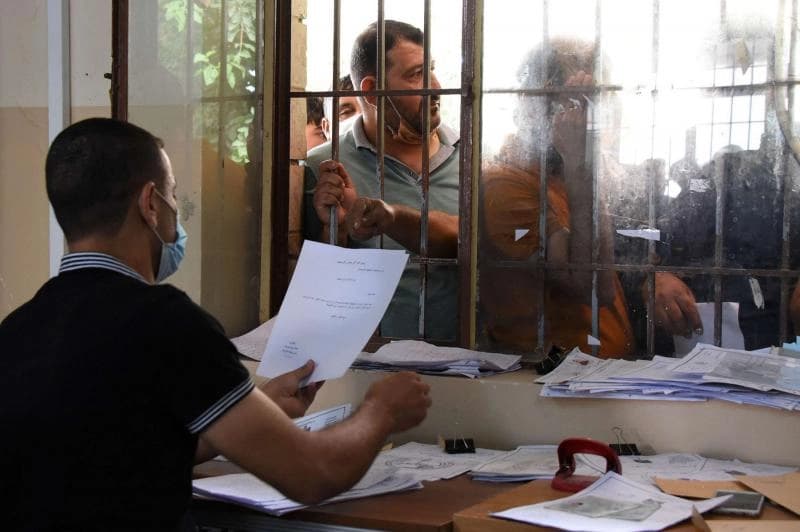
ERBIL, Kurdistan Region - Iraq has established a second central committee to expedite compensation claims from people affected by war, terrorism and military errors, a government official told Rudaw on Sunday, citing funding shortages, security checks, and suspected fraud among reasons for delays. “The General Secretariat of the Council of Ministers has established a second central committee, making it two now,” Haider Majid, spokesperson for the General Secretariat, told Rudaw’s Malik Mohammed on Sunday. Majud said the additional committee was established to reduce the backlog at compensation offices and speed up the processing of claims. The central compensation committee is chaired by a judge from the Supreme Judicial Council (SJC) and includes representatives from the ministry of interior, security agencies, provincial council members and the general secretariat of the council of ministers. Sub-committees also operate in each province as well. Provincial sub-committees have been authorized to issue compensation decisions for claims below 50 million Iraqi dinars without referring them to the central committees. Claims exceeding 50 million dinars must be referred to a central committee in Baghdad, Majid said. Iraq’s war against the Islamic State (ISIS) from 2014 to 2017 caused extensive damage and displacement across the country, creating a large backlog of compensation claims from people whose homes, businesses and other property were damaged or destroyed. Majid said delays have also resulted from insufficient funding allocated for compensation in the state budget, lengthy mandatory security vetting, and incomplete information submitted by claimants. Applications with missing information are returned to provincial authorities for completion, he said. He also said compensation committees had uncovered forged applications and cases involving people who were not eligible for compensation, including individuals identified by the authorities as “terrorists.” “The central committee and sub-committee in the provinces have been able to uncover fraud in some of the paperwork. Some people weren’t entitled to compensation, and there were individuals who were terrorists who had applied for compensation,” alleged Majid. The issue of fraud has also been raised by Iraq’s Martyrs Foundation, which oversees compensation and other benefits for victims and their families. Foundation head Abdul Ilah al-Naeli said last Thursday that the foundation had received only 26 percent of its allocated budget for 2025. He also said the foundation was conducting audits of compensation files and had uncovered forged applications and fictitious names. “The Foundation is waging a firm oversight battle to address past irregularities approved by provincial sub-committees, which operate outside the Foundation’s own staff structures,” Naeli was quoted as saying in a statement by the foundation. Naeli said some applications involved people linked to terrorism and that the foundation would continue its audits despite what he described as political and media pressure. The foundation has said that limited budget allocations have affected its ability to meet the financial entitlements of eligible families. Its official figures show it received 50 percent of its allocated 2023 budget, 45 percent in 2024, and 26 percent in 2025. Naeli has proposed establishing an investment fund to support the families of martyrs and reduce the foundation’s reliance on allocations from the state budget.


.jpg&w=3840&q=75)
