
ERBIL, Kurdistan Region - The first phase of interrogations for thousands of Islamic State (ISIS) detainees transferred from Syria in February is complete, an Iraqi judicial official told Rudaw on Monday, adding that testimonies from Yazidi survivors have been submitted to advance litigations on an individual basis.
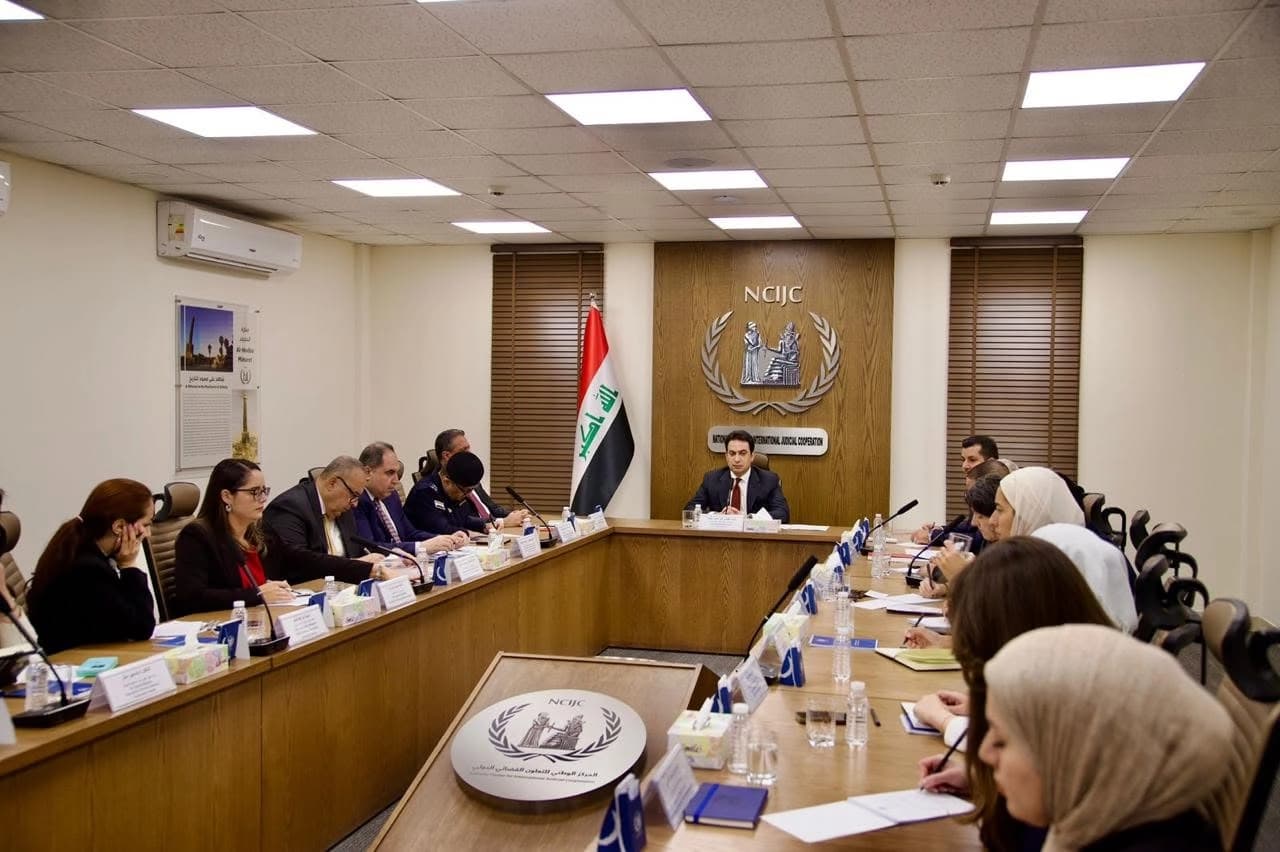
"The interrogation and statement-taking phase for the [ISIS] suspects in this file has been completed,” Ali Hussein Jafat, the head of the National Center for International Judicial Cooperation (NCIJC) - an affiliate of the Iraqi Supreme Judicial Council - told Rudaw’s Malik Mohammed.
Jafat explained that the Baghdad-based First Karkh Investigation Court, which oversees terrorism cases, will subsequently continue “to collect, examine, and analyze evidence, linking it to each suspect's individual file in preparation for referring the completed files, stage by stage, to the competent courts in accordance with legal provisions."
He further said dates for holding trials will be decided later by the court upon “the fulfillment of all legal and investigative requirements for each case.”
The US Central Command reported earlier this year that between January 21 and February 12, more than 5,700 adult male ISIS fighters were relocated from detention facilities in Syria to Iraqi custody.
The NCIJC in mid-August detailed that the transferred detainees include 3,543 Syrians, 467 Iraqis, 710 nationals of other Arab countries, and more than 980 foreigners from Europe, Asia, Australia, and the US.
Before their transfer, the ISIS detainees were under the custody of the now-dissolved Syrian Democratic Forces, which held them in detention centers following the collapse of extremist groups in Syria in 2019.
“Judicial procedures are taken against all suspects regardless of their nationality and in accordance with applicable Iraqi laws,” the NCIJC chief stressed, noting that the charges will be pressed individually based on the available evidence.
Most of the suspects were involved in massacring and enslaving the Yazidi community in Shingal (Sinjar) in August 2014, when the self-proclaimed caliphate entered Iraq through Syria and occupied large swaths of land with Mosul - Iraq’s second-largest city - as its de facto capital.
ISIS massacred at least 5,000 members of the Yazidi community in Shingal and abducted around 6,400 women and children, many of whom were subjected to sexual slavery and other forms of enslavement. Around 200,000 Yazidis remain displaced 12 years, the International Organization for Migration (IOM) chief in Iraq told Rudaw in early August.
The UN, Iraq, as well as nearly dozen countries have recognized the ISIS-perpetrated acts against the Yazidis as genocide.
"Suspects will be held accountable for the crimes committed against members of the Yezidi community,” Jafat explained to Rudaw on Monday, highlighting their prosecution under the Iraqi anti-terror law - which carries death penalty - as well as the 2021 Yazidi Survivor Law that encompass genocide and crimes against humanity.
“Extradition will under no circumstances be carried out based on nationality or en masse; rather, decisions will be made on a case-by-case basis in accordance with the law,” he added.
However, he noted that the defendants will be entitled to the “right to defense, awareness of procedures, clear tracking of sessions, hearing presented material, communicating with counsel, submitting requests and appeals, and cross-examining evidence in accordance with the law remain fully secured for the accused."
Of relevant note, Iraq is not a state member to the Rome Statue, which obliges its members to prosecute suspects under the three core crimes of international law - genocide, war crimes, and crimes against humanity - without conferring death sentence.
In February, Human Rights Watch said that an estimated 8,000 prisoners were on death row in Iraq, including ISIS detainees.