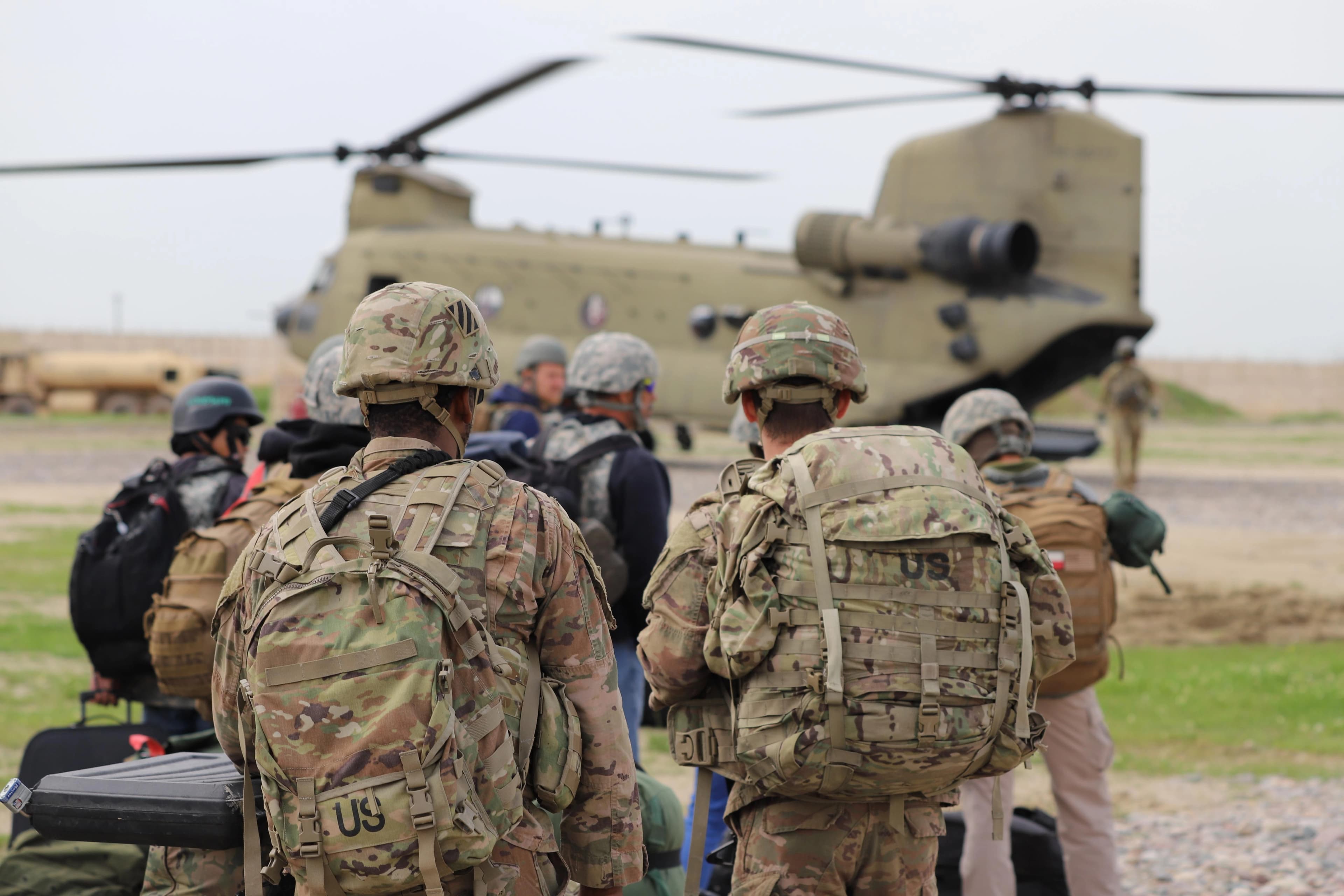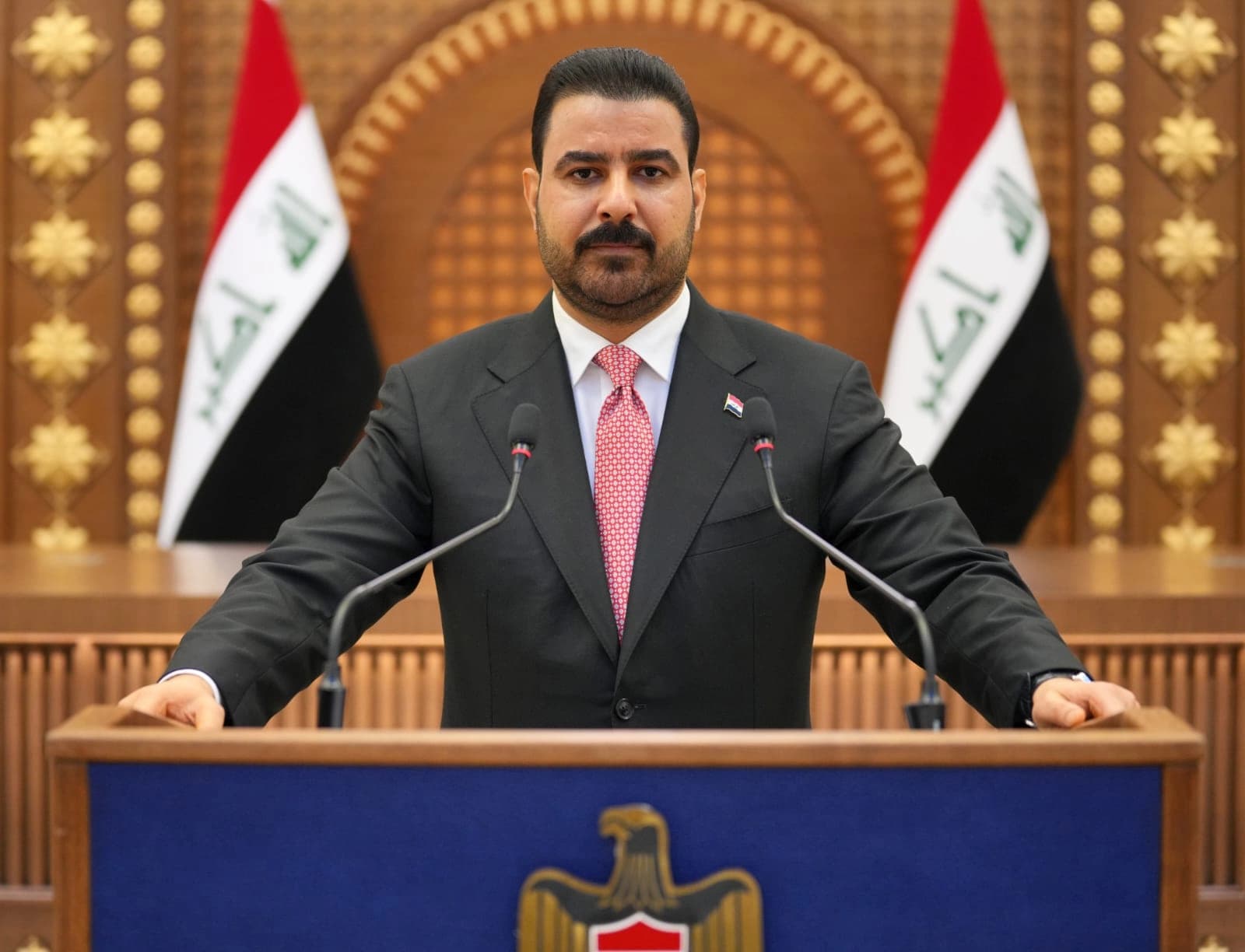

ERBIL, Kurdistan Region - In an address late Wednesday marking “Sovereignty Day,” Iraqi prime minister Ali al-Zaidi declared a “new era” of Iraqi sovereignty as the US-led Global Coalition mission concluded its formal withdrawal from the country.
“Let us declare a new era in which Iraq transitions from an arena of conflict into a nation fully in command of its own decisions, safeguarding its land and sovereignty,” Zaidi stated in a televised statement across Iraq.
The remarks come as the US-led global coalition concludes its military presence in federal Iraq following a bilateral agreement reached between Washington and Baghdad in 2024 amid looming concerns over the possibility of the resurgence of the Islamic State (ISIS) and uncertainties over Baghdad’s ability to consolidate armed groups under the state’s security apparatus.
Aspirations for the disarmament of armed factions and confinement of arms within state control, initially coinciding with the deadline of the mission's withdrawal, did not come to fruition as immense local and international pressure forced the government and the factions to conform to an alternative deadline.
The Islamic Resistance in Iraq declared Wednesday that it is "not bound by any timeline or agreement mentioned—or being mentioned—by any governmental or political party," following the absence of a response from Iraq’s largest political bloc, the Coordination Framework, regarding a signed agreement over a month prior.
The umbrella group of pro-Iran factions added that the weapons of the resistance "will remain a sacred trust in the hands of our fighters," while expressing openness to dialogue that safeguards Iraqi sovereignty.
The prime minister emphasized the long-standing toll on citizens, saying “weapons proliferated across our homeland, turning Iraq into a battleground for others rather than a safe haven” for its people.
Zaidi expressed gratitude to the Grand Ayatollah Ali al-Sistani in Najaf for his role in defending the country, while honoring the sacrifices of Iraqi security forces, including the army, police, counterterrorism units, Popular Mobilization Forces (PMF), and the Peshmerga.
In June 2014, when the Iraqi army was collapsing and ISIS militants were advancing on Baghdad, Sistani issued a fatwa (a religious call to action) urging young Iraqis to take up arms against the group. A few days later, a loose coalition of existing militias announced the formation of the PMF. The militias were officially incorporated into the Iraqi armed forces in 2016, but some operate outside of the state’s control.
Appealing to armed factions whom he described as having "fought for the homeland," Zaidi called on paramilitary groups to come "under a single national doctrine, a single banner, and a unified military and security decision."
“Be at the heart of the state, not outside it,” Zaidi stated. “The place for your weapons and your men is within the state and its institutions.”
“The state does not exclude its sons, but rather channels their potential within the framework of the law and the constitution,” Zaidi said. “This is the equation of sovereignty: one weapon in the hands of the state, an Iraqi land without foreign troops, and a national decision that represents everyone.”
Meanwhile, the Kurdistan Regional Government (KRG) Department of Foreign Relations marked the conclusion of the Global Coalition’s military mission, confirming that the withdrawal proceeded “through full cooperation and coordination” between Iraq and the KRG and that both sides remain committed to working together to prevent security threats, including the resurgence of ISIS.
The formal withdrawal ends an operational mission launched more than 12 years ago at Baghdad's request, after ISIS swept across the Syrian border in 2014 and seized roughly a third of Iraqi territory.
The department lauded the cooperation between Coalition personnel, Iraqi Security Forces, and Kurdish Peshmerga spanning combat support, training, advice, intelligence, and logistical assistance, which “helped protect the Kurdistan Region, liberate communities and achieve the territorial defeat of ISIS.”
“The Department of Foreign Relations presents special tribute to those who lost their lives or were injured during the mission,” read the statement.
The department framed the conclusion of the military mission as a “transition” and “not the end of the partnerships,” stating that the KRG anticipates “security and military cooperation through appropriate bilateral and multilateral frameworks, while opening a broader chapter of diplomatic and economic engagement in trade, investment, education, development and technology.”
United States President Donald Trump on Wednesday confirmed “that the last American forces are leaving Iraq” on the Truth Social platform, adding that "Operation Inherent Resolve ends in 2026" under his administration.
"This orderly departure of coalition forces and equipment from Erbil airbase marks the end of a very expensive excursion into hell," Trump told reporters at the White House, commending the withdrawal as a “great day for America.”
“This Day is a victory for the United States, a victory for Iraq, and a decisive victory over ISIS,” he stated.
.jpeg&w=3840&q=75)