ERBIL, Kurdistan Region - Parties within Iraq’s ruling Shiite Coordination Framework have reached a “final agreement” over candidates for the nine ministries that remain vacant nearly five months after Prime Minister Ali al-Zaidi’s government took office, a senior lawmaker from the alliance told Rudaw on Sunday.
Mohammed al-Baldawi, head of the Sadiqun parliamentary bloc, told Rudaw’s Gashaw Khalid that the parties had settled their disagreements over the remaining ministries and said what he described as US objections to some nominees no longer stood in the way of completing the cabinet.
Zaidi and the Coordination Framework worked together “to resolve the obstacles imposed by the US” regarding some of the nominees, Baldawi said.
“There is no longer any external veto standing in the way of completing the cabinet,” he added.
Parliament approved 14 ministers in Zaidi’s government on May 14, but nine ministries have remained vacant amid disputes among Shiite and Sunni parties and challenges over the parliamentary voting process.
The interior, defense, labor and social affairs, migration and displaced, housing and reconstruction, planning, culture, higher education, and youth and sports ministries remain without confirmed ministers.
Disputes within the Coordination Framework, particularly between former Prime Minister Nouri al-Maliki’s State of Law Coalition and Sadiqun, the political bloc affiliated with Asaib Ahl al-Haq (AAH), have been among the main obstacles to completing the government.
One major point of contention involved Sadiqun’s demand for a ministry and a deputy prime minister position. Baldawi and other members of the bloc have said US opposition to Layth al-Khazali, brother of AAH leader Qais al-Khazali, complicated negotiations over the proposed post of deputy prime minister for security affairs.
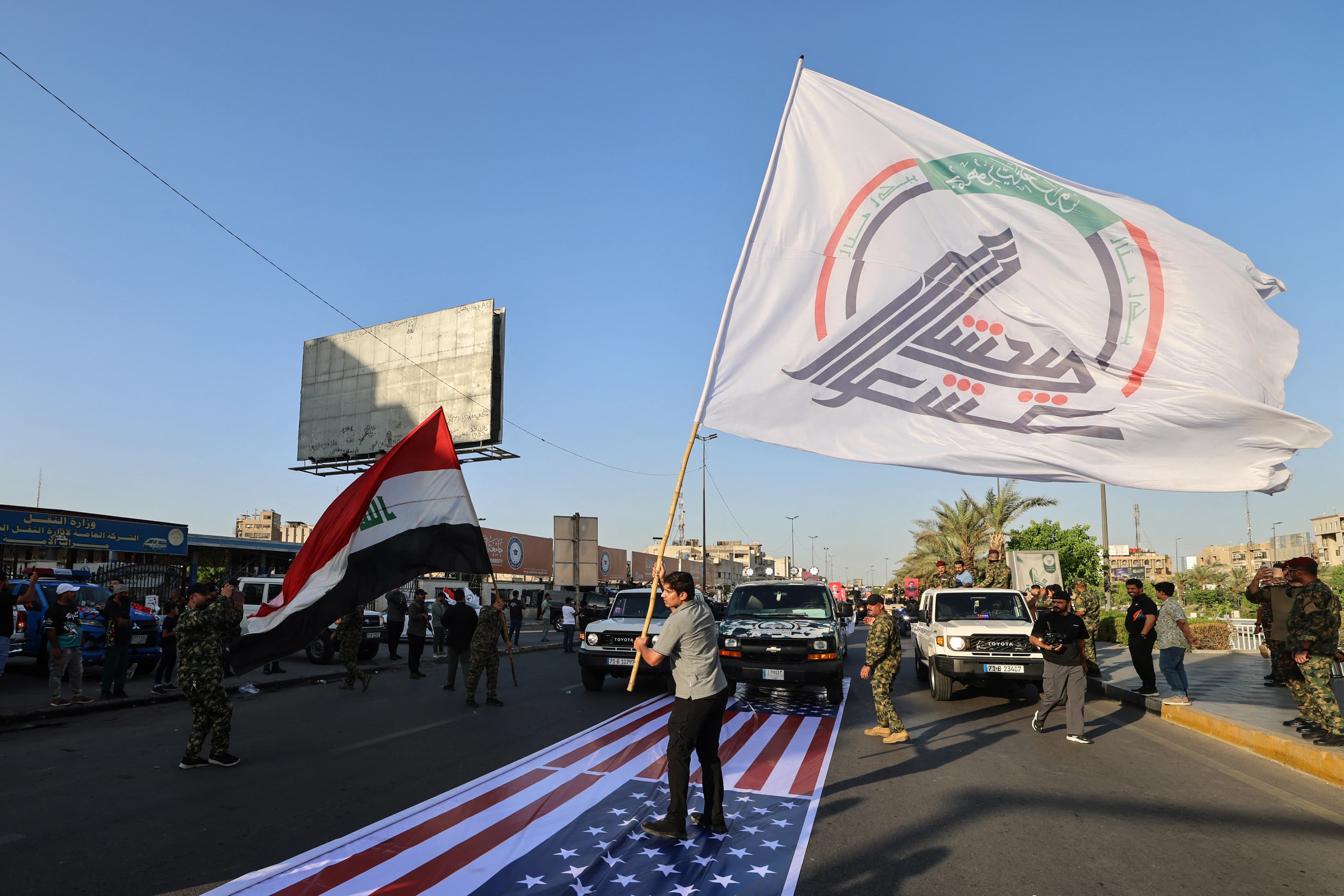
Washington has designated AAH as a Foreign Terrorist Organization and Specially Designated Global Terrorist entity. Qais and Layth al-Khazali are also individually designated by the United States as Specially Designated Global Terrorists and remain on the US sanctions list.
The United States has not publicly confirmed imposing a veto on Khazali’s appointment.
Maliki has also opposed proposals for four deputy prime ministers, arguing that additional posts would be unnecessary and increase government costs. Sadiqun had argued that if it was denied a deputy premiership, it would seek the Interior Ministry, a ministry allocated in political negotiations to the State of Law.
The Interior Ministry has been at the center of another prolonged dispute. Maliki had for months backed former security spokesperson Qasim Atta for the ministry, but Atta faced opposition from Sadiqun and other political forces.
Saud al-Saadi, head of the Hoquq parliamentary bloc, told Rudaw on Sunday that the State of Law had now withdrawn Atta’s candidacy.
“Due to controversy surrounding the previous candidate for the interior ministry, the State of Law Coalition has now nominated Yasir al-Maliki for the post,” Saadi said.
State of Law spokesperson Aqeel al-Fatlawi confirmed the nomination to Rudaw, describing Yasir al-Maliki as the coalition’s “sole and fixed” candidate for the ministry. Yasir al-Maliki currently heads the State of Law parliamentary bloc.
Avesta Mam Yahya, a Kurdistan Democratic Party (KDP) lawmaker in the Iraqi parliament, told Rudaw that lawmakers were expected to convene on Tuesday to vote on candidates for the vacant ministries.
The KDP’s Rebaz Hamlan, nominated for the Housing and Reconstruction Ministry, was among the candidates who failed to secure confirmation during the May vote. Hamlan later challenged the voting procedures before the Federal Supreme Court.
Mam Yahya said Hamlan remains the KDP’s preferred candidate.
“The KDP leadership has determined the names of two other candidates, but we will not disclose them yet,” she said.
Hamlan previously served as a minister in the Kurdistan Regional Government (KRG) and currently serves as an economic adviser to KRG Prime Minister Masrour Barzani.
Negotiations over the Defense and Planning ministries, meanwhile, remain unresolved among Sunni political parties.