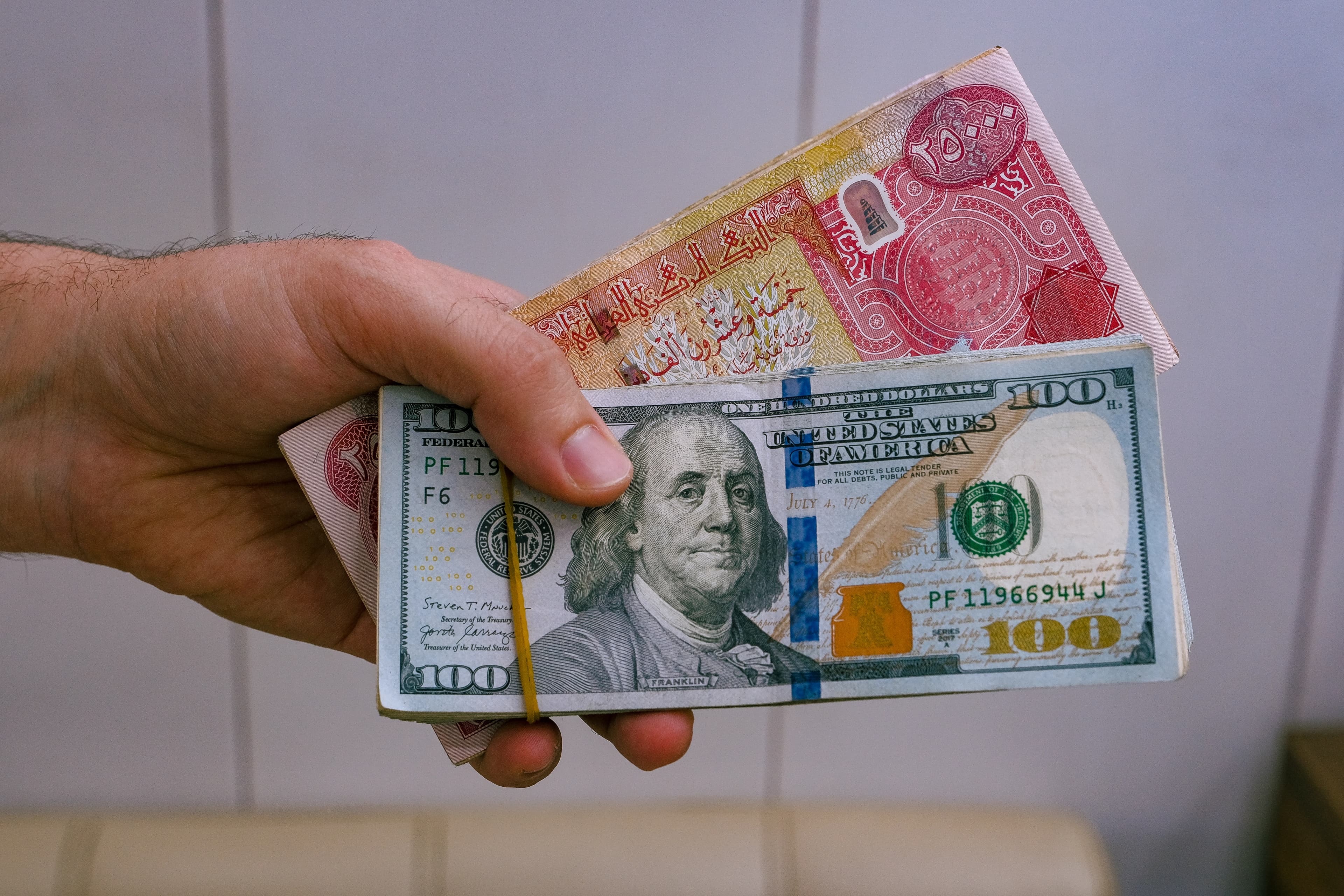

ERBIL, Kurdistan Region - The value of the Iraqi dinar continued to slide on Tuesday, with exchange markets in the Kurdistan Region’s Erbil and Sulaimani provinces trading at 162,000 dinars per $100 amid rumors of an impending official devaluation.
“The value of $100 has reached 162,000 dinars, and it is possible the dinar's value will drop further,” Haji Sabir Bawaji, head of the currency exchange market council in Erbil, told Rudaw's Soran Hussien.
“The main reason for the dinar's depreciation is the talk that the Central Bank [of Iraq] will change the value of each $100 to 150,000 Iraqi dinars,” he added.
The Central Bank of Iraq (CBI) currently sells $100 at an official rate of 132,000 dinars, but recent statements from Iraqi parliamentarians suggesting that the 2027 draft budget bill calculates the exchange rate at 150,000 dinars have sparked market volatility.
“If the value of $100 officially becomes 150,000 Iraqi dinars at the Central Bank, reaching 170,000 dinars in the market will be temporary, and the market rate will stabilize at around 160,000 dinars in the future,” Bawaji anticipated.
For his part, Dhia al-Tai, representative of the Association of Exchange Companies in Iraq, told Rudaw's Sangar Abdulrahman on Tuesday that there is no confirmed intention to change the official exchange rate, stressing that the CBI holds sole authority over the country's monetary policy.
“Changing the exchange rate is an exclusive decision that rests solely with the Central Bank,” Tai said, stressing that “neither the parliament nor the premiership or the finance ministry have the authority to make such a change.”
“The fundamental and primary decision lies in the hands of the Central Bank,” he affirmed.
Additionally, Tai noted that “there has been no official statement from the Central Bank so far regarding a change in the official currency rate,” noting that bank officials have previously issued denials. “The confirmed information from within the Central Bank is that there is no intention to change the exchange rate at the present time.”
Of note, Iraq recorded a gap of more than 29 trillion dinars ($22.4 billion) between government revenue and total spending during the first seven months of 2026, federal finance ministry figures showed on Sunday.
The data further revealed the scale of the fiscal damage the country has suffered since the late February outbreak of the Iran war and the ensuing disruptions to shipping through the Strait of Hormuz, the route used for most of Iraq's seaborne crude exports.
RELATED: Iraq deficit exceeds $22 billion as oil revenues fall