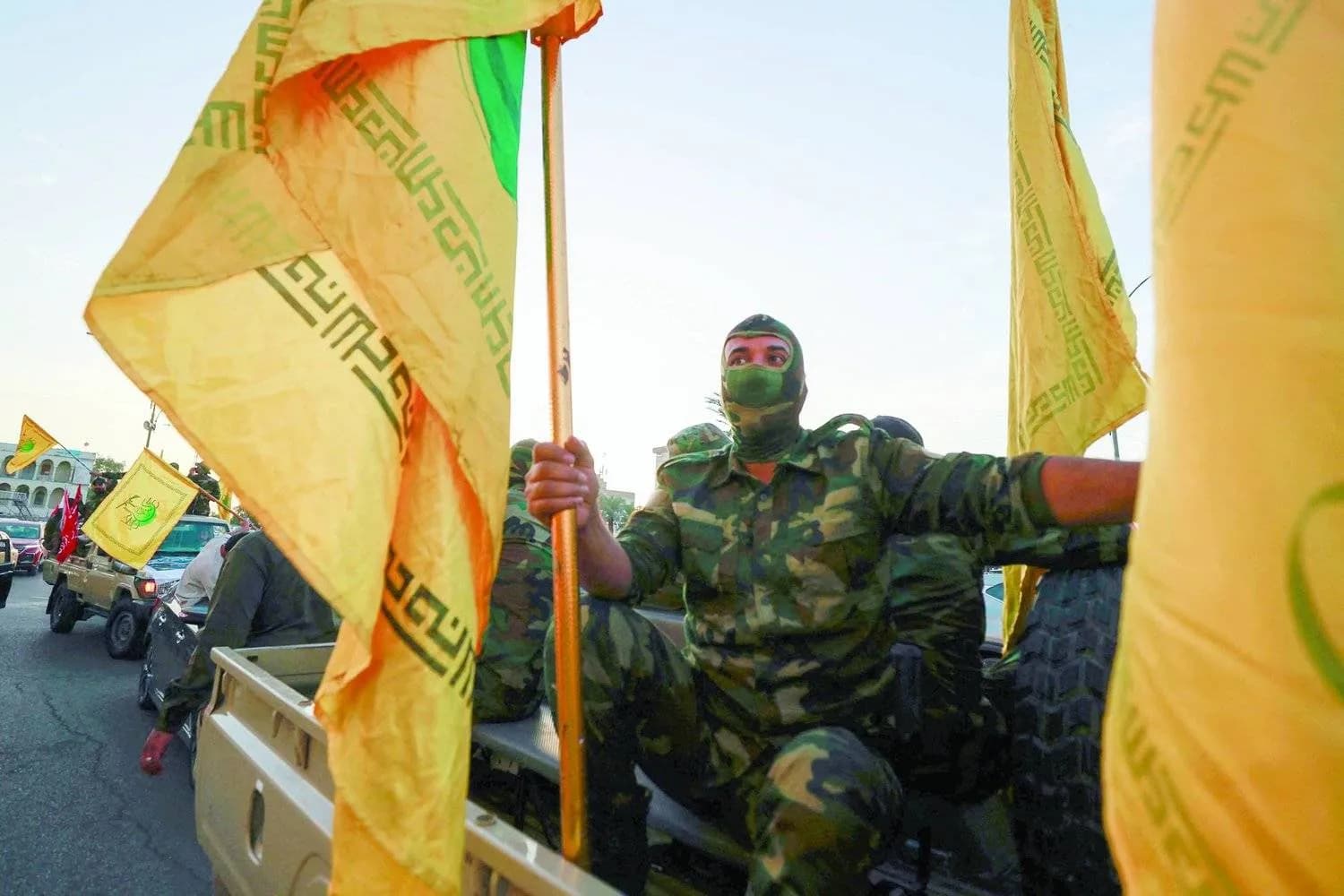

ERBIL, Kurdistan Region - An Iran-aligned armed faction declared on Wednesday that it will neither surrender its arsenal nor join Iraq's political process, directly challenging government initiatives to bring all weapons under state control.
"We affirm that our decision is firm and has not changed regarding our continued non-participation in the political process," military assistant of Harakat al-Nujaba Abdul Qader al-Karbalai stated, noting that "we also affirm regarding the sacred weapons of the resistance that there is nothing in our terminology and literature called (restriction - handover - disarmament).”
The remarks come amid continuing disagreements between the Iraqi federal government and powerful Iran-backed armed groups over Baghdad's policy to integrate non-state weapons under institutional authority, an objective initially set for September 30 before being postponed to June 30, 2027.
Iraqi Prime Minister Ali al-Zaidi met with United States President Donald Trump at the White House on July 14, where he framed the bilateral relationship around economic cooperation and affirmed that restricting weapons strictly to state control remained non-negotiable.
Washington has repeatedly stated that it expects Zaidi to follow through on commitments made to the US administration, including reining in armed factions and preventing cross-border attacks launched from Iraqi territory.
A spokesperson for the US Department of State told Rudaw’s Diyar Kurda on Tuesday that the US anticipates Baghdad's fulfillment of counter-terrorism commitments and aims to build a bilateral partnership that serves mutual interests while ensuring a secure and sovereign Iraq.
On Monday, Zaidi directed all state institutions to file criminal complaints against individuals using media platforms to incite violence or support armed “outlawed groups,” warning that the government will prosecute anyone who obstructs its efforts to bring weapons under exclusive state control.
Political tensions coincide with the recent confirmation of remaining ministerial and deputy positions in Zaidi's cabinet, ending months of political delays following the initial government formation in May.
The parliament approved Laith al-Khazali from the Sadiqoon movement as deputy prime minister, drawing sharp condemnation from US lawmakers due to Sadiqoon's ties to Asa'ib Ahl al-Haq, with both Khazali and the Asa'ib Ahl al-Haq designated by the US as a Specially Designated Global Terrorist (SDGT) since 2020 and a Foreign Terrorist Organization, respectively.
Not all armed factions share the same stance toward state regulation; Kataib Sayyid al-Shuhada offered conditional support for arms control frameworks, while Harakat al-Nujaba and Kata'ib Hezbollah continue to reject compliance with the government's timetable.
"To this day, the Islamic Resistance has not received an official response from the prime minister regarding the weapons regulation document that was agreed upon via the framework negotiation committee, which indicates that it is still at square one," Abu Mujahid al-Assaf, security chief of Kata'ib Hezbollah, said in a statement on Thursday.
Operating under the umbrella of the Islamic Resistance in Iraq, these factions previously launched hundreds of drone and missile strikes against American targets and diplomatic facilities in the country, prompting judicial authorities to warn that attacks on diplomatic missions carry penalties extending to capital punishment.
RELATED: US expects Iraqi PM to deliver on July commitments to Trump, State Department says