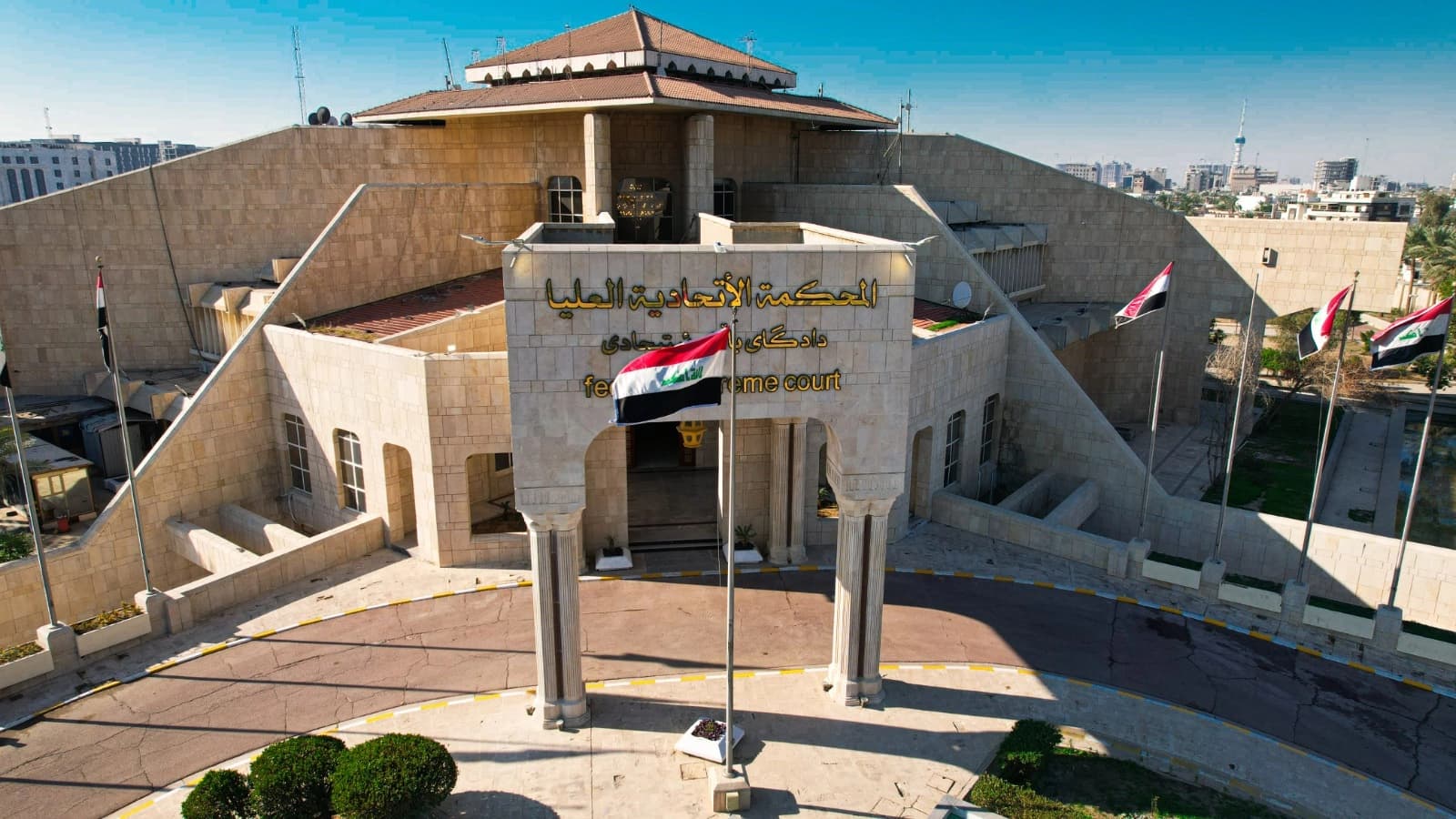

ERBIL, Kurdistan Region - Iraq's Federal Supreme Court on Monday dismissed a lawsuit filed by a Kurdish opposition leader seeking to dissolve the current Kurdistan Region parliament, ruling that the matter fell outside its jurisdiction, as a two-year political deadlock continues to paralyze the legislature.
The lawsuit was filed by Ali Hama Salih, leader of the opposition National Stance Movement (Halwest), who challenged the constitutionality of the Kurdistan Parliament continuing due to its failure to convene since December 2024, when newly elected lawmakers were sworn in.
"The Federal Supreme Court held its session today and decided to dismiss a lawsuit seeking the dissolution of the Kurdistan Region's parliament," the court said in a statement carried by the state-owned Iraqi News Agency (INA).
The court also postponed until December 14 ruling on a separate lawsuit challenging the authority of the Kurdistan Regional Government (KRG), with opposition lawmakers seeking to have the KRG formally designated a caretaker government and its powers restricted.
The ruling comes amid continued disagreements between the ruling Kurdistan Democratic Party (KDP) and the Patriotic Union of Kurdistan (PUK) over the distribution of senior government posts, leaving the Kurdistan Region without a functioning parliament or a new cabinet two years after its October 2024 elections.
Hama Salih criticized the federal court's decision, accusing the KDP and PUK of working to prevent a ruling that could have dissolved the legislature.
"For five days, both sides have been doing everything in their power to prevent the Federal Court from issuing a decision on dissolving parliament," he said in a Facebook statement on Monday.
He alleged that after his movement insisted on proceeding with the lawsuit, the two ruling parties began lobbying other parties in Baghdad to prevent the case from moving forward.
Rudaw English could not independently verify the opposition leader’s claims.
Hama Salih also questioned the court's decision to dismiss the case for lack of jurisdiction after previously accepting it and taking procedural steps toward a hearing.
"The Federal Court had accepted the case, held its first session, and sent official letters to the Kurdistan Parliament and the person who chaired its first session," he said.
"The case had been accepted, and a date had been set for the second hearing. How, then, is it outside your jurisdiction?"
He further claimed the court announced its decision without reading his movement's written submission or hearing its legal arguments.
"Today, without reading our submission or listening to our legal grounds, it immediately said: 'It is outside my jurisdiction,'" he said.
In a statement marking the second anniversary of the elections on October 20, Hama Salih described dissolving the legislature and formally limiting the government's powers to caretaker duties as the best way out of the political deadlock.
The KDP secured 39 seats in the election, followed by the PUK with 23 and the New Generation Movement (NGM) with 15 in the 100-seat legislature.
The parliament has convened only once, in December 2024, to swear in lawmakers. It has not elected a presidency board or held another session since, as negotiations between the KDP and PUK over the formation of the next government remain deadlocked.
On Sunday, Mohammed Sulaiman, the legislature's interim president and a New Generation lawmaker, told Rudaw that the KDP and several opposition parties were prepared to reconvene parliament, but the PUK had yet to agree to holding a session without a prior political agreement.
"So far, PUK officials have not informed us that they would be prepared to reactivate the Kurdistan Parliament without a prior agreement," Sulaiman said.
He warned that convening the legislature without an agreement among the major political parties could lead to deeper disagreements.
The PUK, meanwhile, insists that the parties expected to form the next government must first agree on the distribution of senior posts, including the KRG premiership, Kurdistan Region Presidency, and parliament's presidency board.
The political deadlock has been further complicated by a July agreement between the PUK and NGM, which brought together their combined 38 parliamentary seats. The KDP, which holds 39 seats, has refused to negotiate with the two parties as a single bloc.
The federal court postponed issuing a ruling back on September 20 concerning the constitutional status of the Kurdistan Parliament and the powers of the KRG.