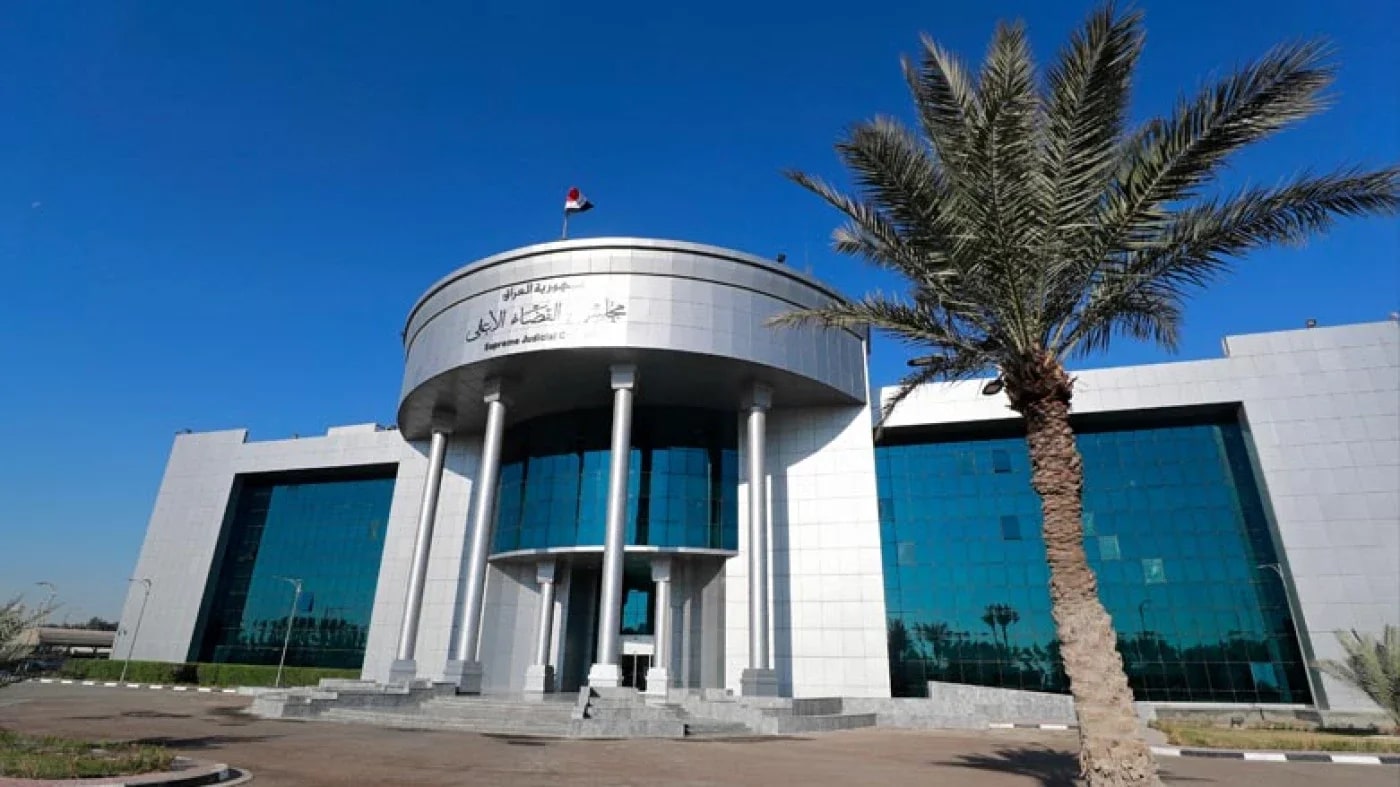

ERBIL, Kurdistan Region - Iraq's Federal Supreme Court (SFC) on Wednesday affirmed Baghdad's authority over international borders, border crossings and the management of oil and gas resources, in a ruling that could strengthen Prime Minister Ali al-Zaidi's push to centralize control over strategic facilities amid escalating tensions with the Kurdistan Regional Government (KRG).
The 18-page ruling, issued in response to a request from Zaidi, comes a day after the Iraqi premier ordered federal authorities to take control of the Kurdistan Region's border crossings and oilfields under Kurdish security control in disputed territories.
The court ruled that the protection, security, and defense of Iraq's international borders “fall within the exclusive powers of the federal authorities,” including borders within areas administered by the KRG, citing Articles 109 and 110 of the constitution.
It added that the federal government has the authority to deploy armed forces and take necessary measures to secure borders with neighboring countries, including those within the Kurdistan Region.
On border crossings, the court affirmed Baghdad's powers of “supervision, monitoring and oversight” at “all border crossings in the Republic of Iraq, including crossings within the Kurdistan Region," the ruling stated.
The court also backed establishing a unified electronic customs and border management system nationwide.
Oil and disputed territories
Addressing one of the most contentious issues between Baghdad and Erbil, the court reaffirmed "the management of extracted oil and gas shall be undertaken by the federal government in conjunction with the governments of producing regions and provinces," citing Article 112.
The court affirmed the federal oil ministry's oversight of production, extraction, marketing and exports, while referring to its previous rulings, including the controversial 2022 decision declaring the Kurdistan Region's oil and gas law unconstitutional.
On disputed territories, the court said the Kurdistan Region's jurisdiction is determined by areas administered by the KRG before March 19, 2003, including territories in Erbil, Duhok, Sulaimani, Kirkuk, Diyala and Nineveh.
It stressed that regional authorities cannot extend their jurisdiction beyond those boundaries merely through subsequent administrative arrangements, while referring to constitutional provisions governing disputed territories.
"The exercise of effective administrative authority by the Region outside that territorial scope does not establish constitutional jurisdiction over it," the ruling stated.
The decision comes amid disagreements over the status of territories contested by Baghdad and Erbil, particularly areas covered by Article 140 of the constitution.
Baghdad defends measures
On Tuesday, Zaidi ordered the federal Border Ports Authority to assume management of crossings in the Kurdistan Region and directed the oil ministry to take charge of oilfields under Kurdish security control in Kirkuk, Nineveh, Salahaddin and Diyala.
The decisions followed an investigation into suspected oil smuggling involving the state-owned North Oil Company.
Zaidi also instructed the KRG not to authorize oil exports except through the federal oil ministry.
In a statement early Wednesday, the prime minister's office defended the measures, insisting they were based on Iraq's constitutional authority rather than foreign pressure.
"All measures undertaken by the government within Iraq's internationally recognized borders reflect its independent national will," the statement said.
The ruling Shiite Coordination Framework also backed Zaidi, describing his decisions as measures to combat corruption, protect public money and strengthen state authority.
Kurdish leaders reject ‘unilateral’ measures
Kurdistan Region President Nechirvan Barzani expressed "surprise and deep concern," rejecting what he described as Baghdad's use of “military language,” stressing that disputes must be resolved through constitutional mechanisms and mutual understanding.
Kurdistan Region Prime Minister Masrour Barzani also rejected Baghdad's directives on Tuesday, saying they “contradicted the understanding held with Baghdad's authorities,” he told reporters.
He described the measures as "baffling" and "in no way acceptable."
In a rare joint statement, the Kurdistan Democratic Party (KDP) and Patriotic Union of Kurdistan (PUK) warned that any attempt to undermine the Region's constitutional rights and achievements constituted a "red line.”
Longstanding constitutional disputes
The confrontation follows years of disagreements over oil exports, border revenues, federal budget allocations and the status of disputed territories.
Tensions intensified after Baghdad regained control of several disputed areas following the Kurdistan Region's 2017 independence referendum.
In February 2022, the Federal Supreme Court struck down the KRG's oil and gas law, significantly restricting Erbil's ability to independently manage and export oil.
More recently, Baghdad and Erbil have disagreed over the 2027 federal budget, including the Region's financial entitlements and the amount of crude oil to be transferred to federal authorities.
On Wednesday, Iraq's Supreme Judicial Council urged both governments to uphold the constitution, emphasising that Iraq remains a federal state and that the Federal Supreme Court has exclusive jurisdiction to interpret constitutional provisions.
The latest ruling provides Baghdad with further legal support for federal oversight, but leaves unresolved how those powers will be implemented without undermining the Kurdistan Region's constitutionally recognized autonomy.