کوردیKURDÎENGLISHTÜRKÇEعربي
Rudaw Logo
Live
Kurdistan
Middle East
OpinionsAnalysisWorldECONOMYInterviewCultureMultimedia
Live
Rudaw

Download the Rudaw app

App StoreGoogle Play
Privacy Policy•Terms of Use

© 2026 All rights reserved.

Rudaw

Download the Rudaw app

App StoreGoogle Play
Privacy PolicyTerms of Use

© 2026 All rights reserved.

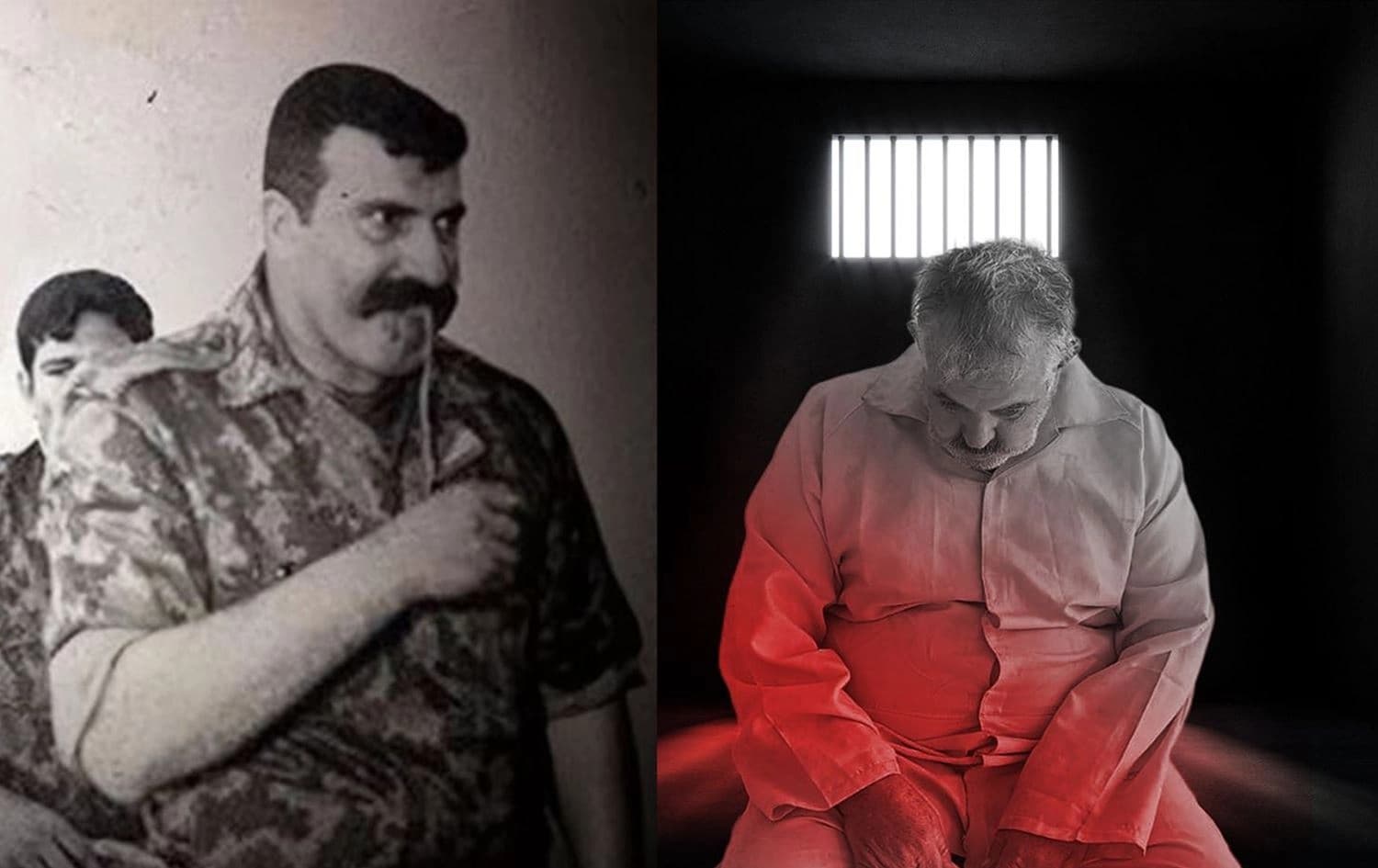
Hajaj Ahmed Hardan al-Tikriti pictured eating a live snake (left). Photo: Submitted. Hajaj Ahmed Hardan al-Tikriti after his arrest. Photo: INSS

Hajaj Ahmed Hardan al-Tikriti pictured eating a live snake (left). Photo: Submitted. Hajaj Ahmed Hardan al-Tikriti after his arrest. Photo: INSS

Iraq

Suspected Anfal executioner had plastic surgery to avoid detection

RUDAW English

RUDAW English

02-08-2025
Listen
0:00
0:00
Text Size
RUDAW English
RUDAW English02-08-2025

Related Articles

Iraqi fighter jets strike ISIS remnants in Anbar
Iraq18-11-2026

Iraqi fighter jets strike ISIS remnants in Anbar

From threatening Europe to life in prison: The Baghdad trial of 15 French ISIS militants
Iraq18-11-2026

From threatening Europe to life in prison: The Baghdad trial of 15 French ISIS militants

Germany pledges continued support for Yazidis, emphasizes Iraqi state responsibility
Iraq18-11-2026

Germany pledges continued support for Yazidis, emphasizes Iraqi state responsibility

ERBIL, Kurdistan Region - A man accused of torturing and executing Kurds in a remote southern Iraqi prison during the genocidal Anfal campaign underwent plastic surgery to avoid recognition and evade justice for decades, a senior local security official said on Friday after news broke of his arrest.

Hajaj Ahmed Hardan al-Tikriti, nicknamed “Hajaj Nugra al-Salman,” was arrested after a months-long investigation. The Iraqi National Security Service (INSS) described him as “one of the most wanted henchmen of the former regime” of Saddam Hussein. 

“Hajaj had previously undergone plastic surgery on his face, the purpose of which was to avoid being recognized,” Kawa Sheikhani, security advisor to Salahaddin’s governor, told Rudaw.

When he was arrested, Tikriti was living in Salahaddin where he worked “in animal husbandry and has eighty sheep and four cows,” according to Sheikhani.

In 1988, Hussein’s Baathist regime launched a genocidal Anfal campaign, systematically targeting Kurdish villages and arresting thousands. Young men were often executed, and women, children, and the elderly were sent to the notorious Nugra Salman desert prison in Iraq’s southern Muthanna province near the Saudi Arabian border. 

The INSS said Tikriti “committed a series of crimes against humanity against hundreds of Iraqi citizens, particularly those of Kurdish origin who were forcibly exiled to Muthanna province. These crimes included torture, murder, and rape inside this infamous detention center.”

Tikriti’s family had claimed he died, according to the INSS. 

Survivors remember Nugra Salman as a place of daily beatings, hunger, and fear, made worse by Tikriti’s brutality.

More than 182,000 people were killed and over 4,500 villages were destroyed in eight phases of the Anfal campaign that culminated with the 1988 chemical weapon attack on Halabja.

RELATED: Iraq arrests accused Anfal executioner

Malik Mohammed contributed to this report.


Related Articles

Iraqi fighter jets strike ISIS remnants in Anbar
Iraq18-11-2026

Iraqi fighter jets strike ISIS remnants in Anbar

From threatening Europe to life in prison: The Baghdad trial of 15 French ISIS militants
Iraq18-11-2026

From threatening Europe to life in prison: The Baghdad trial of 15 French ISIS militants

Germany pledges continued support for Yazidis, emphasizes Iraqi state responsibility
Iraq18-11-2026

Germany pledges continued support for Yazidis, emphasizes Iraqi state responsibility

Questions