کوردیKURDÎENGLISHTÜRKÇEعربي
Rudaw Logo
Live
Kurdistan
Middle East
OpinionsAnalysisWorldECONOMYInterviewCultureMultimedia
Live
Rudaw

Download the Rudaw app

App StoreGoogle Play
Privacy Policy•Terms of Use

© 2026 All rights reserved.

Rudaw

Download the Rudaw app

App StoreGoogle Play
Privacy PolicyTerms of Use

© 2026 All rights reserved.

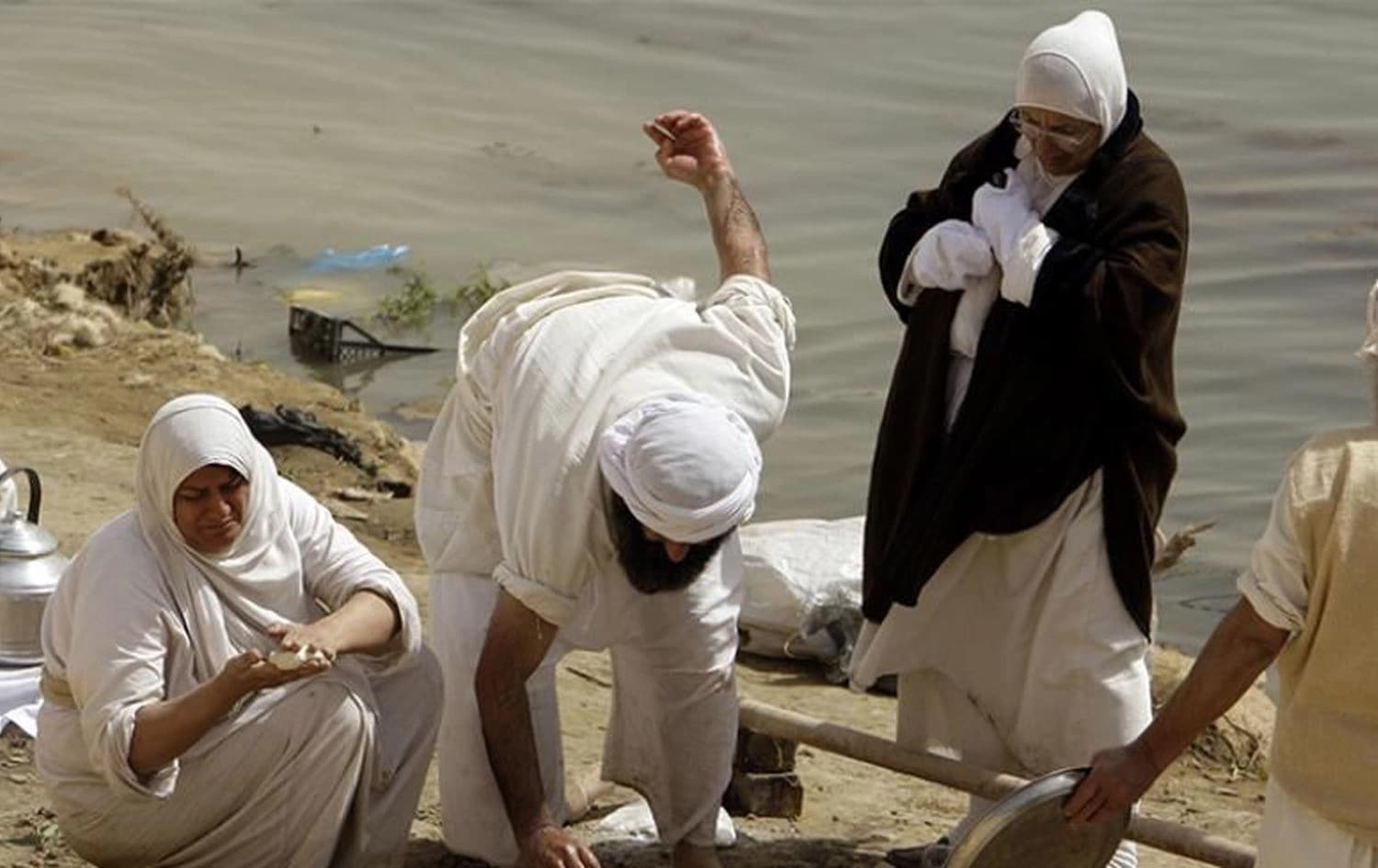
A Sabean-Mandaean woman prepares food to mark Eid al-Khalqeh on the banks of the Tigris River in Baghdad. File photo: AFP

A Sabean-Mandaean woman prepares food to mark Eid al-Khalqeh on the banks of the Tigris River in Baghdad. File photo: AFP

Iraq

Iraq’s Sabean-Mandaean community shrinks amid continued marginalization

RUDAW English

RUDAW English

04-09-2025
Listen
0:00
0:00
Text Size
RUDAW English
RUDAW English04-09-2025

Related Articles

Iraqi fighter jets strike ISIS remnants in Anbar
Iraq18-11-2026

Iraqi fighter jets strike ISIS remnants in Anbar

From threatening Europe to life in prison: The Baghdad trial of 15 French ISIS militants
Iraq18-11-2026

From threatening Europe to life in prison: The Baghdad trial of 15 French ISIS militants

Germany pledges continued support for Yazidis, emphasizes Iraqi state responsibility
Iraq18-11-2026

Germany pledges continued support for Yazidis, emphasizes Iraqi state responsibility

ERBIL, Kurdistan Region - The number of Sabean-Mandaean community members in Iraq has dropped to below 50,000, a local leader said Wednesday, lamenting that the community lacks proper representation in security positions. 

Sabeans are followers of a monotheistic religion that predates Christianity and Islam and have struggled since 2003 to cling to their faith amid sectarian tensions experienced in the country during the following years.

“There are no positions for Mandaeans in the army or police, and we do not have any members in the security forces,” Ghanim Hashim, head of the Mandaean Council of Elders, told Rudaw on Wednesday.

“We only have 20 members hired as personal guards for the protection of the temple alone,” he added. 

The Mandaean Temple is in the Qadisiyah neighborhood of the capital, Baghdad, on the banks of the Tigris River. The temple serves as a gathering place for Sabeans to celebrate their holidays and religious occasions.

According to Hashim, the community’s members in Iraq have dropped to below 50,000, mostly in Baghdad and the southern provinces.  

Around 600 Sabean-Mandaean families also live in the Kurdistan Region, he noted, adding that they “enjoy freedom and a sense of security, and they have their own businesses there.” 

Nearly 100,000 Sabeans lived in Iraq until 2003, before the country was plunged into bloody sectarian and religious conflict, in which minority groups suffered most, according to data from the Sabean-Mandaean Affairs Council. 

In the 1970s and 1980s, as Iraq experienced a profound economic boom despite its bloody wars, the Sabaeans, like most other minority groups, were a relatively integrated community with nearly 100,000 families, the majority of whom lived in Baghdad, the Nineveh Plains, and Kirkuk.
 

Related Articles

Iraqi fighter jets strike ISIS remnants in Anbar
Iraq18-11-2026

Iraqi fighter jets strike ISIS remnants in Anbar

From threatening Europe to life in prison: The Baghdad trial of 15 French ISIS militants
Iraq18-11-2026

From threatening Europe to life in prison: The Baghdad trial of 15 French ISIS militants

Germany pledges continued support for Yazidis, emphasizes Iraqi state responsibility
Iraq18-11-2026

Germany pledges continued support for Yazidis, emphasizes Iraqi state responsibility

Questions