
ERBIL, Kurdistan Region - Iraq is drafting a tripronged emergency plan to tackle a $9.5 billion monthly financial deficit caused by plummeting oil exports and the closure of the Strait of Hormuz, the prime minister’s financial advisor said Friday.
“Iraq is facing a financial gap estimated at $9.5 billion per month as a result of the decline in oil exports,” Mazhar Mohammed Salih told the state-run Iraqi News Agency (INA). He noted the federal finance ministry’s plan centers on “internal and external borrowing, in addition to measures to maximize non-oil revenues through taxes, fees, and financial reforms.”
Iraq’s monthly revenues have fallen to nearly half its expenditures due to declining oil exports in the wake of the Iran war, forcing Baghdad to consider domestic or foreign borrowing.
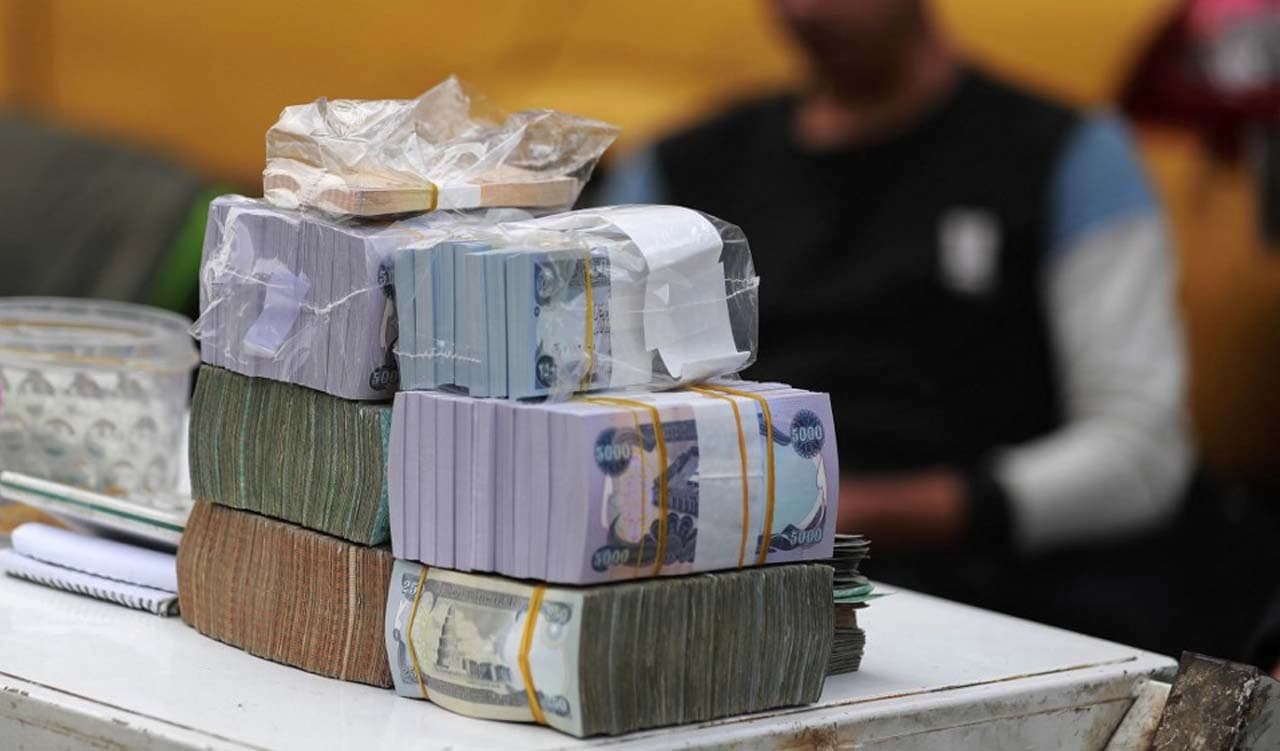
Revenues dropped to roughly 4 trillion dinars (over $3 billion) against monthly obligations exceeding 8 trillion dinars (over $6.1 billion), Salih told Rudaw earlier in May, warning that the country’s public finances have entered a “sensitive phase.”
In his Friday remarks to INA, the premier’s financial advisor cautioned that while internal borrowing serves as a quick fix to cover state salaries, it risks draining bank liquidity and harming the private sector.
Meanwhile, external borrowing secures necessary dollars, he explained, but comes with strict reform conditions and increased debt burdens, adding that maximizing non-oil revenues through automated taxation, reducing the informal economy, and tightening border customs is the most strategic long-term solution.
The current crisis serves as a “true test” for Iraq’s oil-reliant economy, Salih noted, stressing that emergency measures will fail without genuine institutional changes, including overhauling state-owned banks, cutting wasted funds in government contracts, and activating a public-private partnership law to create jobs and shield the country from future geopolitical shocks.
The latest efforts by Baghdad come as the strategic Strait of Hormuz, through which at least one-fifth of global oil supplies pass, has been subject to tit-for-tat restrictions between the United States and Iran since the outbreak of the six-week war in late February 28, which was temporarily halted on April 8 through a Pakistani-brokered ceasefire.
Less than a week after the ceasefire, the US government in mid-April imposed a blockade on vessels arriving at and departing from Iranian ports, effectively preventing Iran from exporting oil and forcing it to significantly reduce production.
Tehran responded by impeding naval traffic in the Persian Gulf and the Gulf of Oman, tampering with vessel navigation signals, imposing unofficial taxes, and targeting ships that do not comply with its “instructions” or fail to obtain “permission” to pass.
Amid the maritime escalation, Iraqi oil exports dropped to 18.6 million barrels in March, generating about $1.96 billion in revenue, compared with more than 99 million barrels and $6.81 billion in February, according to figures provided by Baghdad’s oil ministry.