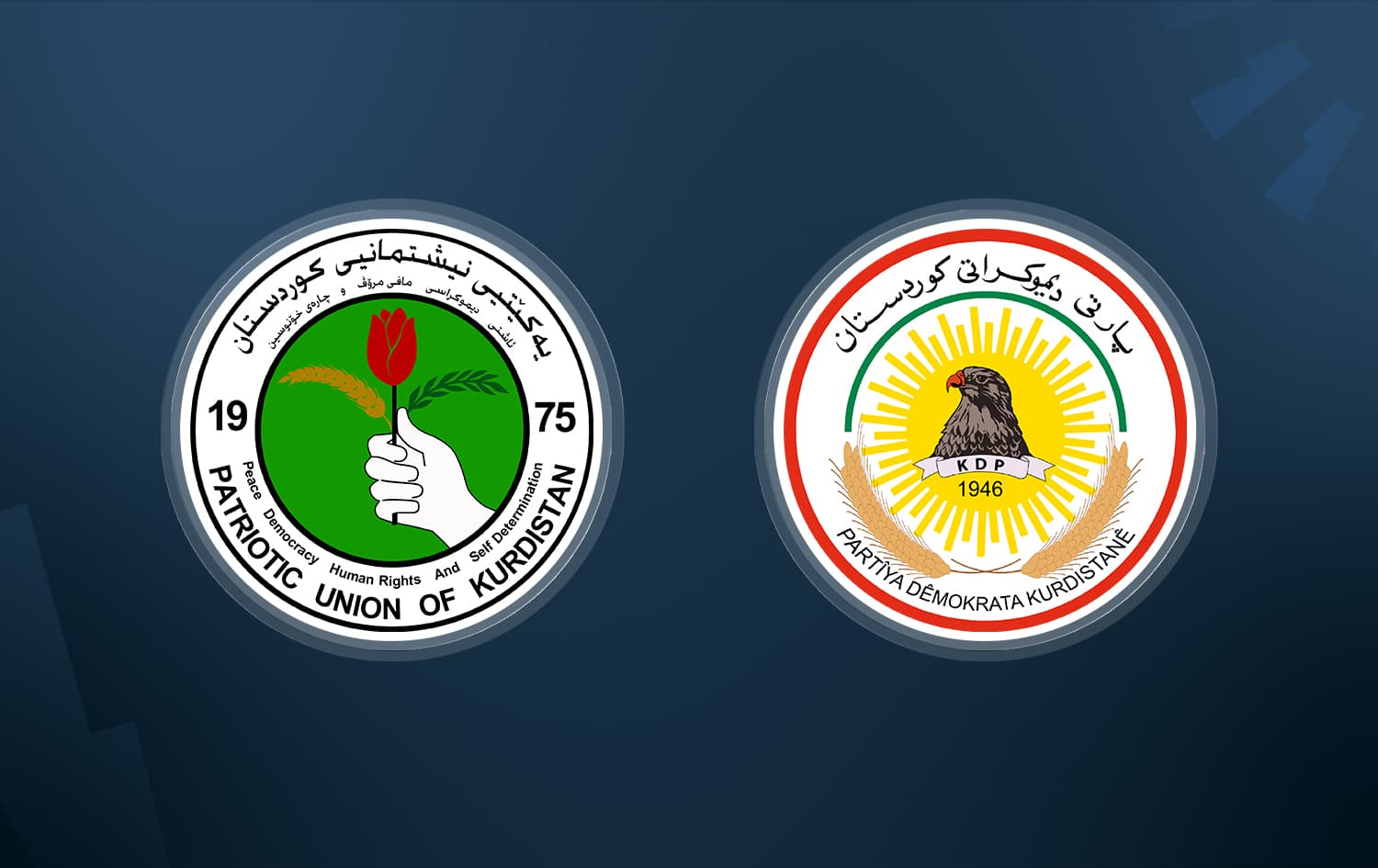
ERBIL, Kurdistan Region - Relations between the two major ruling parties in the Kurdistan Region are further strained following the misinterpretation of messages delivered by a key mediator, two sources in one of the parties revealed on Wednesday, as disagreements between the two political forces have entrapped the region in a 19-month political stalemate.
“The contents of the letters were misinterpreted, which caused great concern among the leadership of both sides and further complicated the situation,” a source from the Patriotic Union of Kurdistan (PUK) told Rudaw.
Commenting on the mediating efforts, another PUK official said that Kurdistan Islamic Union (KIU) leader Salahaddin Bahaaddin urged both ruling parties to return to the negotiating table and “steer clear of certain words and phrases used in the letters and to bring forward the positive aspects contained therein.”
This comes amid attempts by the two parties to form a KRG cabinet. The KDP won 39 seats and the PUK held 23 in the October 2024 elections, with neither side able to secure an absolute majority. With both sides reportedly presenting irreconcilable demands, the formation of the tenth Kurdistan Regional Government (KRG) cabinet has yet to take place.
Nevertheless, the political landscape in the Region necessitates consensus and participation of both parties in the government formation process, as each maintains significant administrative and security control over their respective geographical areas.
Talks between the KDP and PUK are largely stalled over the division of ministerial and other key government posts, as well as an agreed governance structure.
A coalition between the PUK and the New Generation Movement (NGM), an opposition party with 15 seats, further flared tensions.
The PUK and NGM seek to enter government formation talks as a single block with 38 seats - a demand that the KDP staunchly rejects.
Shaswar Abdulwahid, the leader of the NGM, said in a press conference on Tuesday that his movement has decided to take premiership in the next government and that they submitted the proposal to the PUK for consideration.
“I am sure they [the PUK] will agree with us… because we have the same number of seats as the KDP,” he said.
Meanwhile, the KDP rejects the coalition between the two, claiming that it was forged when Abdulwahid was in a PUK-held prison.
"For the formation of the government, we deal with our comrades in the PUK as the PUK; the issue of the New Generation is a separate matter,” Ahmad Kani, member of KDP’s Central Committee, told Rudaw in late May.
Ahmad Hamid contributed to this report from Erbil, Kurdistan Region.