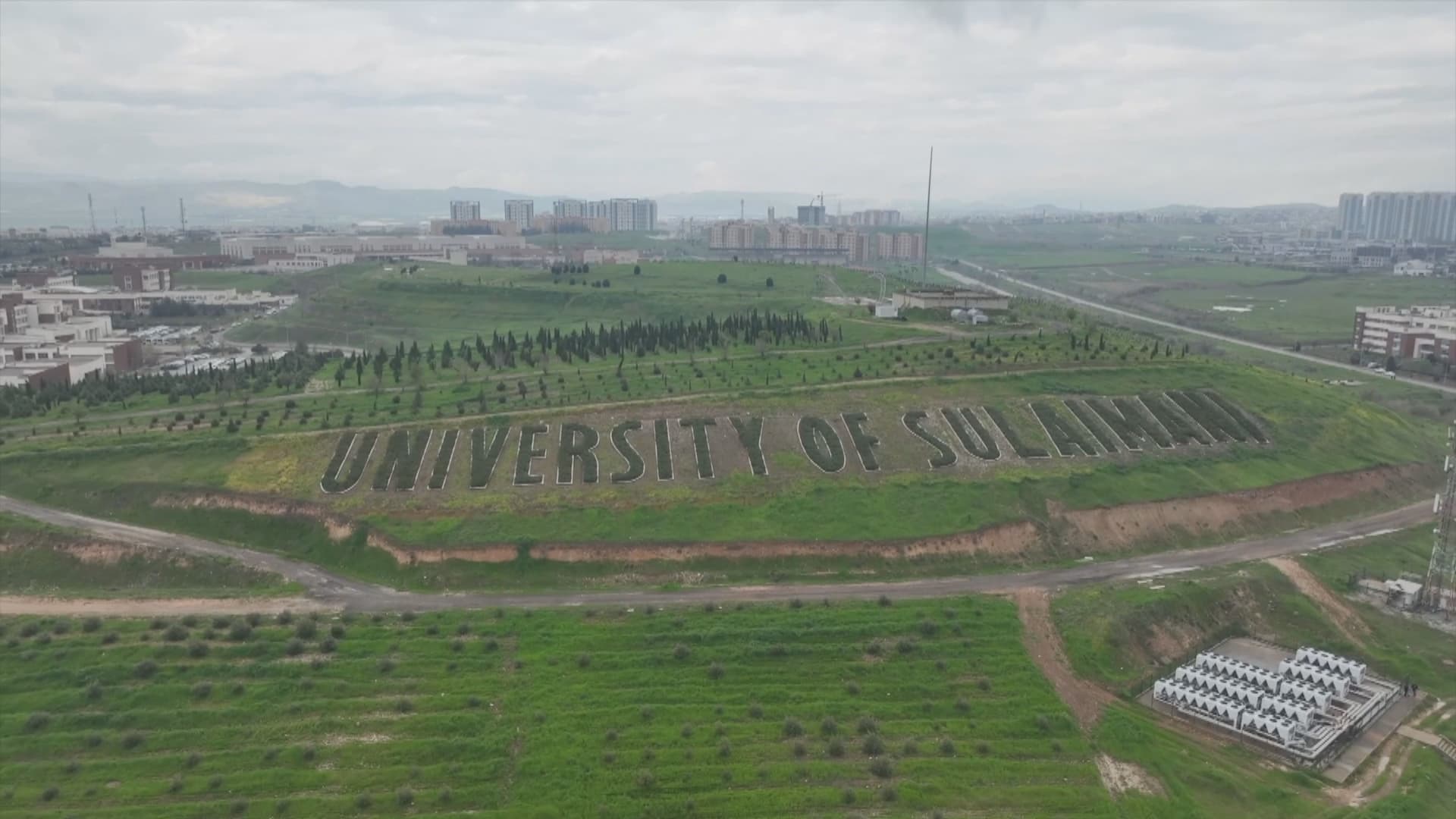

ERBIL, Kurdistan Region - The UAE-based Dana Gas announced its decision on Thursday to temporarily suspend all operations in its giant gas field near Sulaimani, citing “credible threats” and escalating regional tensions.
“All main production facilities associated with Khor Mor [in Chamchamal] have ceased to work temporarily,” their statement read.
The decision to suspend operations comes after eight one-way drones targeted Erbil on Wednesday night as the US and Iran continue to exchange strikes amid increasing hostilities.
Dana Gas has stated that they will “monitor” the situation in coordination with the Kurdistan Regional Government (KRG) and the federal government to reinstate production.
Khor Mor resumed operations in mid-April after more than 42 days of disruption caused by the US-Israeli war against Iran, which began on February 28.
Khor Mor field, located east of Sulaimani province, supplies the Kurdistan Region’s electrical and cooking gas demands. Its earlier shutdown resulted in the reduction of five to eight hours of available power in most areas as well as a sharp rise in cooking gas prices.
In March, Kurdistan Region Presidency spokesperson Dilshad Shahab asserted that halting operations in the field was primarily driven by the fear of attacks launched by armed groups in Iraq rather than “out of fear of being directed from Iran, America, or Israel.”
Even before the ensuing escalations, the field has been a primary target for Iranian-backed armed groups in Iraq. An earlier drone attack in November 2025 led to a palpable loss of 80% in output across the Kurdistan Region.
The “Islamic Resistance of Iraq (IRI)” - an umbrella group of armed factions backed by Iran - joined in on Tehran’s retaliatory strikes against the US during the war, claiming responsibility for hundreds of internal attacks against US interests in the country as well as throughout the region.
Based on Rudaw's records, Iran and the IRI have struck the Kurdistan Region with upwards of 800 drones and missiles, resulting in multiple casualties as well as disruption of economic activities.
Kurdish officials have asked Baghdad to deploy air defenses to safeguard oil companies operating there. A security team from the Iraqi government visited Erbil in mi-June to execute preliminary investigations regarding the procurement of air defense systems, pending purchase from Baghdad.
In his landmark meeting with the US President Donald Trump on Tuesday, Iraqi Prime Minister Ali al-Zaidi vowed to disarm the groups by late September whose expected departure coincides with the exit of US and other international military and advisory missions in Iraq.
“The programme of the government is to restrict the possession of weapons to the state. We will co-operate with those who surrender their weapons,” Zaidi said, adding that “after September 30, we will not allow any entity besides the state to carry any weapons.”
Influential and prominent armed groups, such as Saraya al-Salam and Asa’ib Ahl al-Haq, have already announced their plans to disarm and join the official Iraqi security apparatus, with at least three armed groups, including Harakat Hezbollah Al-Nujaba and Kata’ib Hezbollah, refusing to disarm.
IRI issued a statement on Saturday saying that their weapons are "never a bargaining chip" but rather "a doctrine and a trust carried by our fighters."
"We will not stop at what we have achieved," the statement said. "We will continue with all our determination to develop our military and security capabilities, both qualitatively and quantitatively, and raise the readiness of our forces in line with the growing challenges and threats posed by the Zionist-American enemy."
[Updated at 7:17 pm]
.jpg&w=3840&q=75)