
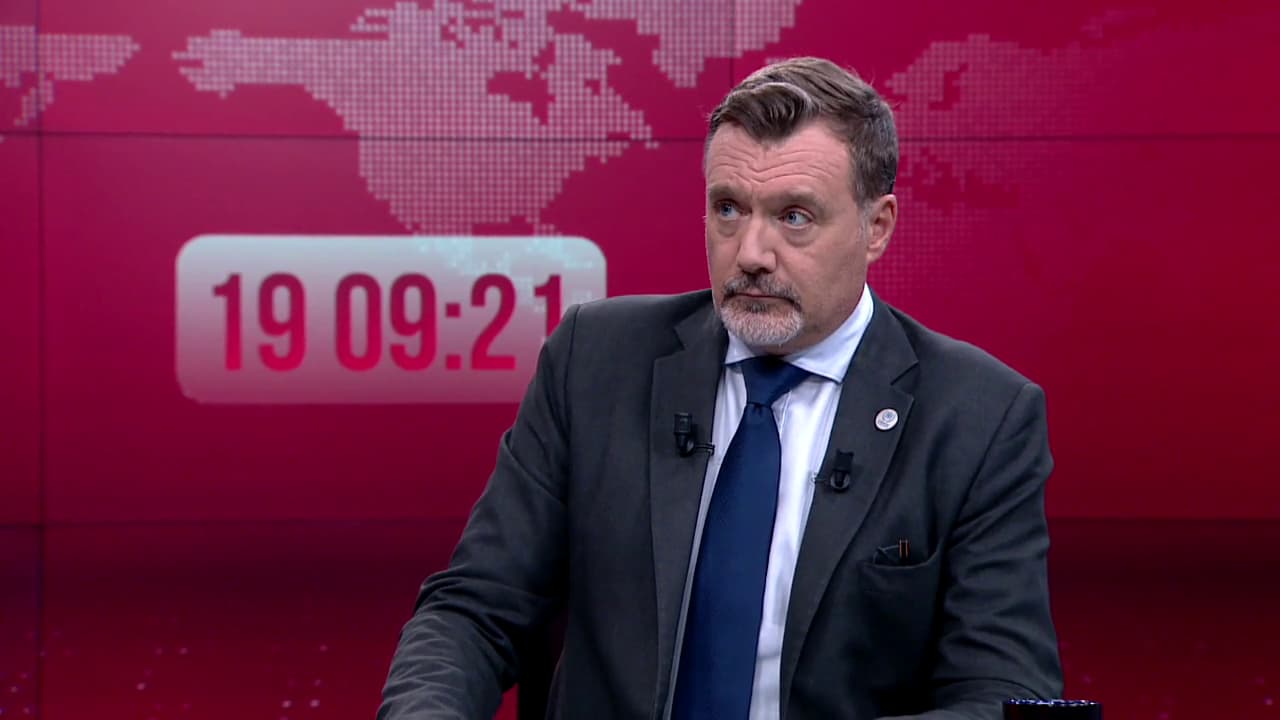

ERBIL, Kurdistan Region - The representative of the United Nations High Commissioner for Refugees (UNHCR) in Iraq on Wednesday commended the Kurdistan Regional Government (KRG) for its continued willingness to host hundreds of thousands of Syrian refugees.
“In all of my meetings with the Kurdistan Regional Government, all of them have said very clearly that as long as the refugees from Syria wish to remain here in the Kurdistan region of Iraq, they are welcome to remain,” UNHCR Iraq representative Toby Harward told Rudaw’s Dilbixwin Dara in an interview.
Harward conveyed that the UNHCR is “deeply grateful” for “all the support and assistance and the vision that the Kurdistan Regional government has provided over this long period of exile.”
Iraq currently hosts more than 343,700 refugees and asylum-seekers amid a complex political and security environment, with around 88 percent originating from Syria, as of late September, according to the latest UNHCR data.
"There are about 280,000 Syrian refugees in the Kurdistan Region of Iraq who have been here primarily since 2012, 2013," Harward stated regarding the demographics of the displaced population.
While a vast majority remains in the region, Harward noted that "about 10,000 registered Syrian refugees have returned, although we believe the figures are likely a little bit higher than that."
“A big majority remains in the Kurdistan Region of Iraq,” he added.
Nearly 80 percent of the refugee population resides in the Kurdistan Region. Around 41.8 percent of the refugee population resides in Erbil, 26.6 percent in Duhok, and 11 percent in Sulaimani, according to the report.
Harward underscored the importance of a shift from “short-term humanitarianism towards longer term refugee inclusion” and developing “refugee self-reliance” to be able to contribute to the local host economy beyond “short-term humanitarian responses.”
He underlined the UN agency’s core objective “to advocate with the local authorities to ensure that refugees can live lives as closely as possible to citizens” and access services, schools, health services, social protections services as well as “access to livelihoods” to contribute to the local economy and services before they are able to return to their home country.
Harward emphasized that the Syrian government priority is directed towards “internal displaced persons” within Syria.
"They have a vision called no camp, no tents policy, and they want to ensure that all internally displaced persons have the opportunity to return to their areas of origin and wait a little bit to allow Syria to have the absorption capacity to rebuild and then to accept more refugees," Harward said, regarding the Syrian government's current capacity for returnees.
The UNHCR official emphasized the situation of humanitarian assistance has “decreased globally,” and that “the same levels of funding that traditional donor countries used to provide for humanitarian emergencies is no longer there."
He nevertheless stated that while it would take time for Syria to rebuild, he was “optimistic that Syria is on the right track,” stating his organization’s aim to aid more refugees in returning to their hometowns.

.jpeg&w=3840&q=75)