
ERBIL, Kurdistan Region - The Kurdistan Region’s internal political rivalries and institutional paralysis have weakened its bargaining position with Baghdad and accelerated the erosion of its federal powers, a monitor warned, urgent immediate reforms to avert further fragmentation.
“The primary danger facing the entity of the Kurdistan Region, prior to any external plots or threats, is the internal loss of the functional meaning of institutions,” the Pay Institute for Education and Development, a nonprofit research monitor, said in its fifth report on the sixth term of the Kurdistan Parliament on Tuesday.
The report, titled The Kurdistan Region on the Brink of an Institutional Vacuum, was published with support from the US National Endowment for Democracy (NED) on the second anniversary of the Region’s parliamentary elections. It describes the Region as being at one of the most perilous junctures in its history, citing prolonged parliamentary paralysis, an extended caretaker government, the absence of a regional constitution and the continued division of security forces along partisan lines.
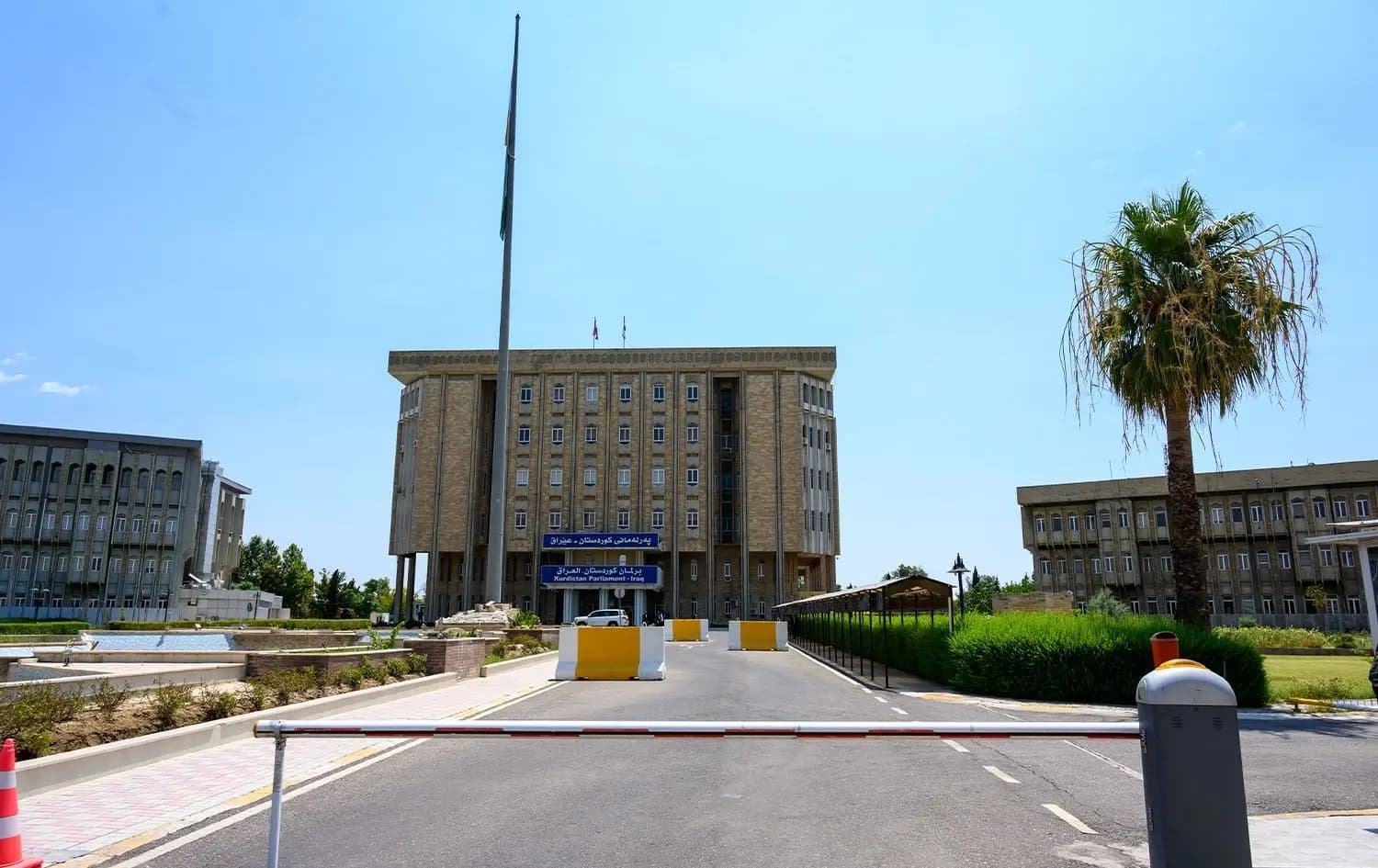
The Kurdistan Region held parliamentary elections in October 2024, yet nearly two years later, the tenth Kurdistan Regional Government (KRG) cabinet has yet to be formed, leaving the Kurdistan Parliament unable to begin its regular work.
The ruling Kurdistan Democratic Party (KDP) and the Patriotic Union of Kurdistan (PUK) remain at odds over the allocation of senior government positions and the Region’s governance structure, prolonging the political deadlock since the elections.
Tensions further escalated in July when the PUK and the New Generation Movement (NGM) agreed to combine their 23 and 15 parliamentary seats, respectively, forming a 38-seat bloc to challenge the KDP, which holds 39 seats in the 100-member legislature.
The KDP has rejected the alliance, contesting its legitimacy on grounds that it was formed last year while NGM leader Shaswar Abdulwahid was imprisoned in a PUK-controlled facility in connection with a blackmailing lawsuit.
Without “urgent and radical reforms,” the report warns, the Kurdistan Region risks being reduced from a constitutionally recognized federal entity to “a local administration entirely dependent on Baghdad.”
The study argues that internal divisions have allowed Iraq’s federal authorities to expand their influence over the Region’s finances, revenues and governance, while diminishing its ability to defend its constitutional prerogatives.
“Constitutional rights cannot be defended without strong, functional institutions,” the report states.
“When the Kurdistan Region paralyzes its parliament, maintains leadership positions in a caretaker capacity, neglects to draft a constitution, and keeps revenues opaque, the central authority in Baghdad exploits these vulnerabilities to encroach upon the Region’s federal powers.”
Elections and institutional paralysis
The report highlights the gap between the Region’s democratic commitments and its political record, noting that only six general elections were held between 1992 and 2024, despite nine being scheduled under the legal calendar. This, in turn, “demonstrates that regressions and postponements of the democratic process in the Kurdistan Region have become a common norm.”
While the sixth parliamentary term commenced following elections on October 20, 2024, disputes between political parties have prevented lawmakers from electing a parliamentary leadership board and establishing permanent committees. Members were sworn in on December 2, 2024, but the legislature remained unable to resume normal operations.
The report says the impasse has effectively halted legislative activity and parliamentary oversight, leaving government decisions and senior appointments without adequate scrutiny.
It also points to the prolonged caretaker status of the Kurdistan Regional Government’s ninth cabinet, whose term was due to end in July 2023. The absence of clear legal restrictions on caretaker administrations in the Region, the study argues, has allowed the cabinet to continue exercising full governmental powers without a renewed parliamentary mandate.
Provincial councils and several independent oversight bodies have also faced expired mandates or prolonged delays in renewing their leadership, further weakening institutional accountability.
The report stresses "historical sacrifice must not be used as an excuse for unchecked power, delaying elections, or eroding accountability,” adding that “the martyrs did not sacrifice their lives for political parties to own the Region; rather, they sacrificed so that the people of Kurdistan could enjoy freedom and the rule of law.”
No regional constitution after more than two decades
The absence of a Kurdistan Region constitution is another central concern in the report, which describes the issue as an “unfulfilled legal obligation” and a “major obstacle to stable governance.”
More than 21 years after Iraq adopted its permanent constitution in 2005, the Kurdistan Region has yet to adopt its own basic law, despite several previous drafting initiatives.
A draft constitution approved by 97 lawmakers in 2009 was intended to proceed to a public referendum but never reached that stage. Subsequent efforts were derailed by political disagreements, including disputes over presidential powers and the distribution of authority among the main Kurdish parties.
The Institute argues that the failure to adopt a constitution reflects political calculations rather than a lack of legal expertise.
According to the institutions, the lack of a constitution stems not from a shortage of expertise or legal texts, but “from partisan disputes over the distribution of power and posts.”
It calls for a constitution that clearly defines the powers of the Region’s presidency, parliament and government, guarantees judicial independence, limits caretaker administrations and protects the rights of ethnic and religious communities.
The report also maintains that the Region’s constitutional standing under Iraq’s 2005 Constitution remains substantial, citing provisions recognizing the Kurdistan Region as a federal entity and granting regional authorities legislative, executive and judicial powers.
However, it argues that these guarantees become increasingly difficult to defend when regional institutions fail to function effectively.
Divided security forces and financial dependence
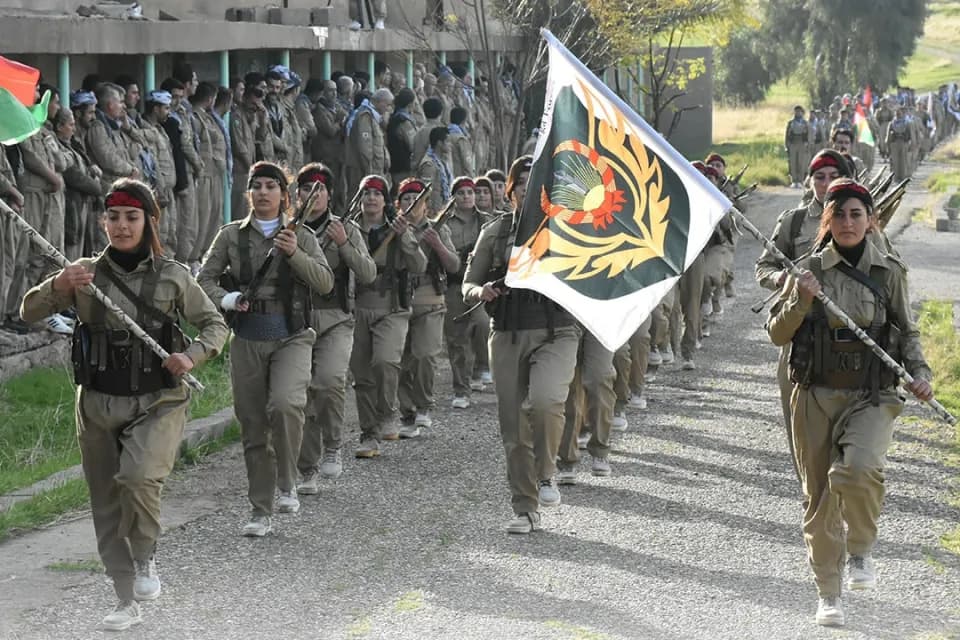
The study identifies the continued fragmentation of the Peshmerga and other security institutions as a major threat to the Region’s cohesion.
After 34 years of self-government, the Peshmerga, Kurdish Asayish security forces and intelligence agencies remain divided between rival party structures, with the KDP holding predominant influence in Erbil and Duhok and the PUK in Sulaimani and Halabja.
The report argues that administrative steps to bring military units under the regional Ministry of Peshmerga do not amount to genuine unification while commanders continue to answer to party leaderships.
It calls for a unified command structure, government control over weapons depots and military bases, and an end to operational orders issued through partisan channels.
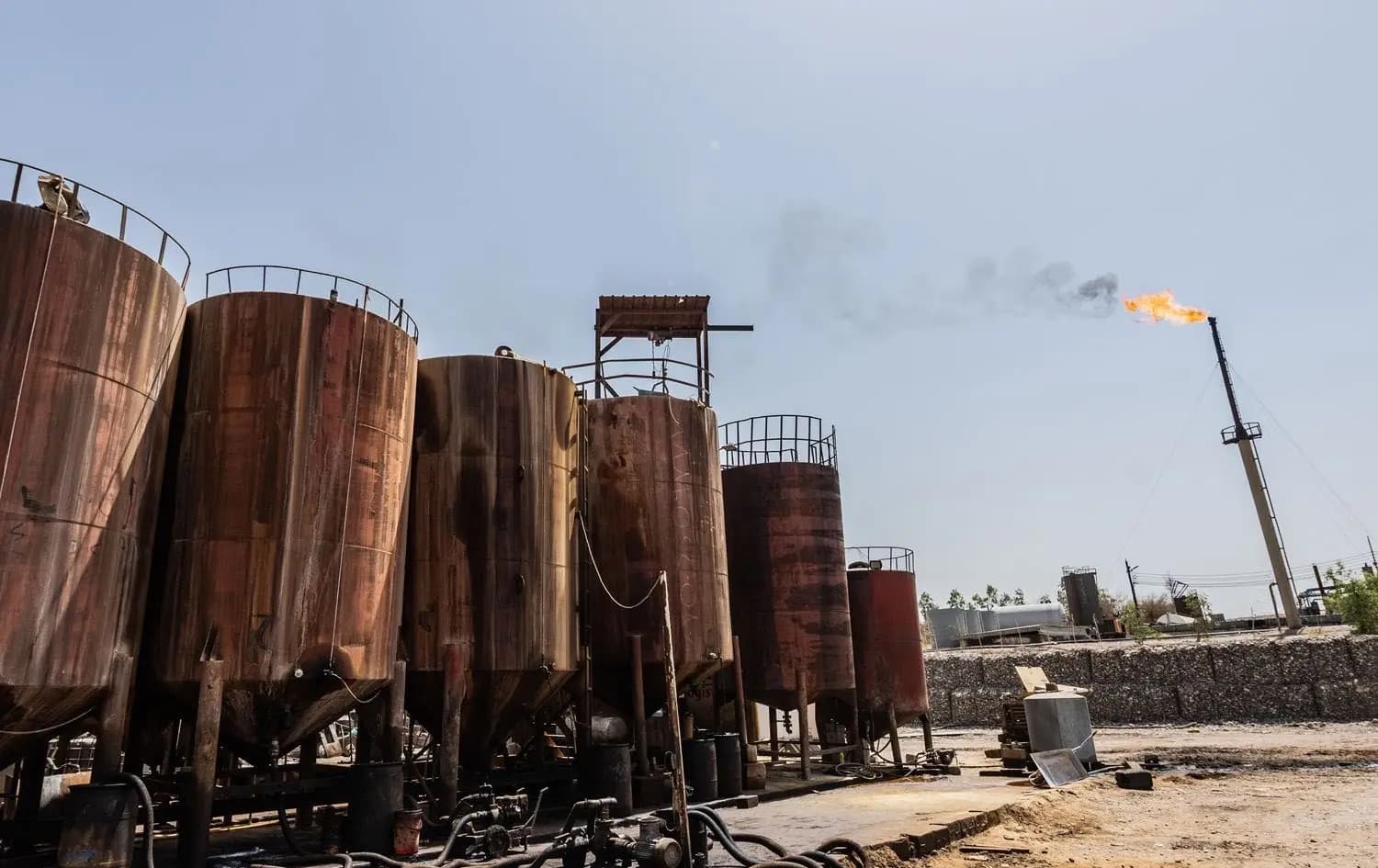
The Region’s financial position has also deteriorated, according to the report, particularly following the suspension of Kurdish crude oil exports after an international arbitration ruling in Paris in March 2023.
Under federal budget arrangements, Kurdish oil must be exported through Iraq’s State Organization for Marketing of Oil (SOMO), while non-oil revenues are subject to federal auditing. The resulting dependence on transfers from Baghdad has left regional public employees increasingly reliant on Iraq’s Ministry of Finance for salary payments.
The report describes this shift as an “erosion of regional citizenship,” arguing that financial dependence has weakened the Region’s economic autonomy and political leverage.
It warns that Baghdad could increasingly bypass the Kurdistan Regional Government and deal directly with individual governorates or security institutions, deepening the divide between the Region’s two main political administrations.
Other risks include a possible reduction in international coalition support for partisan security forces, growing public disillusionment and continued youth emigration amid economic hardship and political stagnation.
Calls for urgent reform
To reverse the decline, the Institute proposes a phased reform plan beginning with the immediate resumption of parliamentary work, the election of a parliamentary leadership board and the establishment of permanent committees.
Within 30 days, it recommends launching a new constitutional drafting process, publishing a comprehensive account of oil and non-oil revenues and expenditures, and ending party-based military and security command structures.
Within 60 to 90 days, the report calls for the formation of a new cabinet under a reform agenda, a timetable for provincial council elections and the establishment of a unified treasury and revenue management system.
Over the following six to 12 months, it urges the completion of a regional constitution for parliamentary approval and a public referendum, alongside the full integration of military and intelligence institutions into unified regional structures.
The report assigns responsibility to political parties, regional institutions, the judiciary, civil society and the public, while warning Baghdad against exploiting the Region’s internal weaknesses to impose excessive centralization.
“The entity of the Kurdistan Region is a national trust,” the report concludes. “Defending it cannot be achieved by deflecting blame onto others, but through shouldering historical responsibility - by the Presidency, Parliament, Government, Judiciary, political parties, civil society organizations, and citizens alike.”
“The time has come to transition from partisan rule to constitutional, institutional governance, before history closes the window of opportunity.”