
ERBIL, Kurdistan Region - A senior official from the Kurdistan Democratic Party of Iran (KDPI) told Rudaw English on Tuesday that the party would not lay down its weapons or abandon its struggle for Kurdish rights, rejecting Tehran's demands the same day after Iran claimed Baghdad had agreed to expel Iranian Kurdish opposition groups or hand them over to the Islamic Republic.
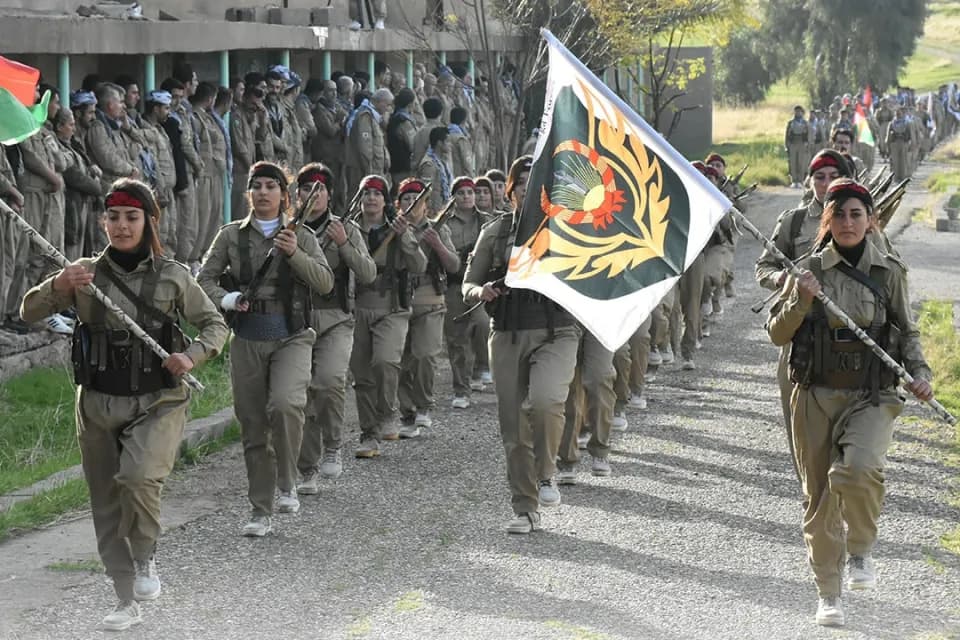
"For us, laying down weapons is something we will not entertain because our arms in Eastern Kurdistan are for defending the Kurdish movement and achieving the rights and aspirations of Kurdistan, and preventing a genocide of the people of Kurdistan," Hama Nazif Ghaderi, head of KDPI public relations and a member of its politburo, told Rudaw English.
Ghaderi said neither the Iraqi federal government nor the Kurdistan Regional Government (KRG) had informed his party of any decisions made during Monday's joint security meeting between Iraqi, Iranian and Kurdish officials in Baghdad.
Amjad Hussein Panahi, head of communications for the Iranian Kurdish opposition group Komala, and Adib Khalidiyan, head of the Kurdistan Freedom Party (PAK) relations, separately told Rudaw on Tuesday that authorities in Baghdad and Erbil had not notified their parties of any decision requiring them to leave the Kurdistan Region.
Their remarks came after Iranian Ambassador to Baghdad Mohammed Kazem Al-e Sadegh claimed Tuesday that the two countries had agreed to either expel Iranian Kurdish opposition groups from Iraq or hand them over to Iran.
The ambassador said in a post on X the decision was reached during a Monday meeting of the joint committee overseeing a March 2023 security agreement, attended by Iraqi National Security Advisor Qasim al-Aboudi, Iranian representatives and a KRG delegation.
However, the Iraqi readout of the meeting made no mention of expelling or handing over the groups, instead emphasizing continued security coordination and the implementation of existing commitments.
KDPI rejects Iranian demands
Ghaderi dismissed Tehran's demands as illegitimate, insisting that the party's armed activities were directed at defending Kurds inside Iran, where he accused the authorities of widespread repression.
"Our weapons are for self-defense and to defend Iranian Kurdistan, which has been militarized by the Islamic Republic of Iran regime. It arbitrarily arrests people, imprisons them, and then hangs them," he said.
He stressed, however, that the KDPI remained committed to respecting Iraqi and Kurdistan Region sovereignty and would not launch military operations from their territory.
"We have reiterated that we will not use the soil of Iraq and the Kurdistan Region for military activities. We haven't done that, and in the future, we will continue respecting the sovereignty of Iraq and the Kurdistan Region and their political system," he said.
Ghaderi said the party had maintained contact with the Iraqi government, Kurdish authorities and the United Nations Assistance Mission for Iraq (UNAMI) over the years regarding its presence and status in the country.
He expressed confidence that the existing understanding with Baghdad and Erbil could be maintained through further dialogue, describing the party's ties with both governments as "friendly and deep-rooted."
"In our view, the demands of the Islamic Republic carry no legitimacy. We will not commit to such demands," he said.
Ghaderi also dismissed statements by Iranian diplomatic representatives as incompatible with international norms, saying his party would not be intimidated or abandon its pursuit of Kurdish rights.
Security agreement and refugee protections
Iraq and Iran signed a security agreement on March 19, 2023, under which Baghdad committed to disarming Iranian Kurdish opposition groups based along the shared border and relocating them away from areas bordering Iran.
In September of that year, Iraqi authorities announced that the groups had been disarmed and their border headquarters evacuated, with arrangements underway to accommodate their members as refugees.
However, Tehran has continued targeting Iranian Kurdish opposition positions in the Kurdistan Region. On October 12, two drones struck a KDPI camp in Erbil's Koya district, causing material damage but no reported casualties. A senior KDPI official previously told Rudaw that the party had been targeted 166 times since the outbreak of the US-Israeli war against Iran in late February.
Last week, Aboudi told Rudaw that Baghdad was committed to resolving the issue peacefully, including establishing camps away from the Iranian border while the United Nations processed asylum applications for thousands of people.
Ghaderi said the Iranian Kurdish groups' status as political refugees entitled them to protections under international norms and placed humanitarian responsibilities on Baghdad and Erbil.
"We believe that the Iraqi and Kurdistan Regional governments have a humanitarian duty within the framework of the Universal Declaration of Human Rights to protect our people and to oppose any Iranian intervention," he said.
He added that the KDPI would continue engaging with both governments while respecting their policies and sovereignty.
Asked what the party would do if Baghdad or Erbil formally conveyed a decision requiring it to leave or face handover to Iran, Ghaderi declined to speculate.
"We will cross that bridge when it comes to it," he said, adding that Iranian Kurdish opposition parties had made every effort to take the positions of the Iraqi and Kurdistan Region authorities into consideration.