
ERBIL, Kurdistan Region - Iranian Kurdish dissent groups based within the Kurdistan Region jeopardized the security of the Region during the regional conflict earlier this year, Kurdistan Region President Nechirvan Barzani said Monday, reaffirming Erbil’s neutral position while stating that no armed group should pose threats to neighboring countries.
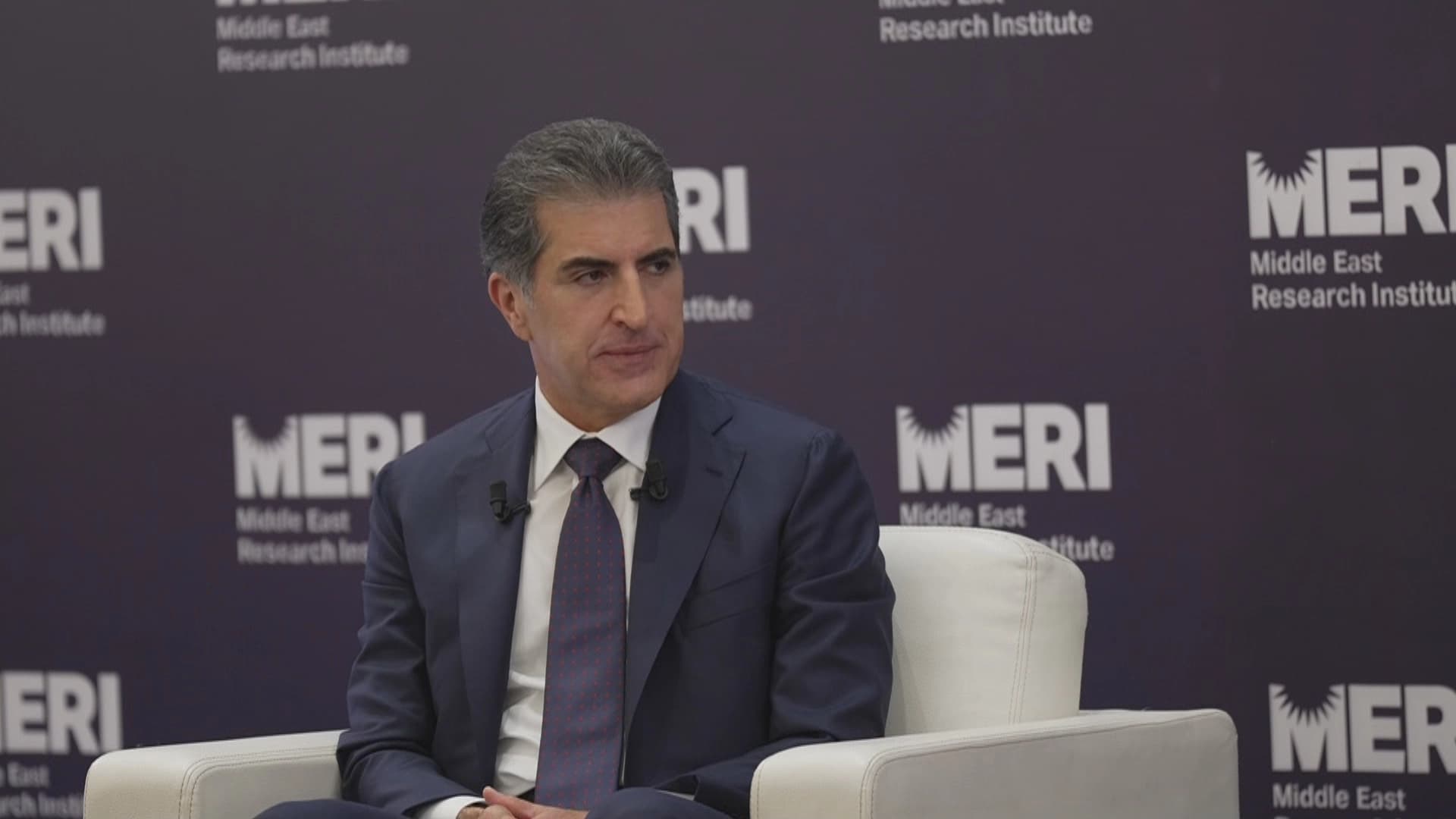
“Iranian Kurdish opposition groups, unfortunately, acted very irresponsibly, placing the Kurdistan Region in a dire situation and under immense risk,” President Barzani stated during a panel at the annual Middle East Research Institute (MERI) Forum in Erbil.
The US and Israel in late February launched a military campaign against Iran, triggering a regional conflict that lasted for nearly six weeks. Despite assurances from Kurdish leaders reiterating the Region’s neutral position in the conflict, Iran and its aligned groups have struck the Region with more than 1,000 missiles and drones, with the latest drone attack targeting a Kurdish opposition group east of Erbil.
Of note, there are no records of opposition groups within the Kurdistan Region staging attacks against Iran or within the Kurdistan Region itself.
By contrast, strikes from Iran and Iran-aligned Iraqi armed groups have killed 32 people, with at least a dozen of them civilians and non-beligerents, while injuring around 155 others, according to Rudaw tracking.
President Barzani said Monday that “from the onset of the war,” he has been in contact with the ruling Patriotic Union of Kurdistan (PUK) and both sides confirmed that the Kurdistan Region “would not become a party to a conflict that was not our war.”
“Sharing a 600-kilometer border with Iran, it is unreasonable for any armed group to operate from the Kurdistan Region and threaten our neighbors,” he added, noting that such a behavior violates “international law, traditions, and the [Iraqi] constitution.”
Kurdish opposition groups, which seek greater rights for Iran’s marginalized Kurdish population, have historically been locked down in an intermittent conflict with the Islamic Republic for decades and were relocated to the Kurdistan Region in the early 1990s.
Earlier on Monday, the spokesperson for the Kurdistan Democratic Party of Iran (KDPI) said they have given Baghdad and Erbil guarantees not to serve as “rear fronts” of their struggle against Iran.
“The Democratic Party [KDPI] sees no need in its struggle to send units of Peshmerga into Iranian Kurdistan to wage armed conflict or take military action, while hundreds of thousands of people inside the country are engaged in their own civil struggle,” Khalid Azizi told Rudaw.
Speaking about the prospects for advancing Kurdish rights in Iran, Barzani said on Monday that “opportunity will come” but Kurds have to negotiate their demands peacefully with Tehran.
Meanwhile, hours before Barzani’s speech, PUK leader Bafel Talabani said discussions with Iranian officials about a peace process between the Kurds and Tehran had kicked off.
“This is also a process we have begun and are ready for. It will be a lengthy process, but it will be successful," he said.
RELATED: PUK leader pitches Kurdish mediation in US-Iran conflict, peace talks with Tehran